









I’ve always loved Miami. Long before luxury condos climbed into the clouds over its downtown, before the crypto conferences and tech founders started remaking it into a kind of tropical Silicon Valley, there was something magnetic about the Magic City.
I moved there from Virginia in the early 1980s, when my father transferred with Eastern Air Lines, and it was like stepping into another dimension. The beaches, the fashion, the easy confidence of it all. Miami always seemed a few steps ahead of the rest of the country, as if it were trying out tomorrow a little early.
Decades later, it still has that feeling. Only now, the future isn’t just aesthetic — it’s operational.
Spend some time in Brickell, as I did on a recent business trip, and you’ll see what I mean. Four-wheeled delivery robots cruise down crowded sidewalks carrying pizza and pad thai to customers’ doorsteps.
Driverless white Jaguars with spinning rooftop sensors glide through traffic to pick up and drop off passengers. And almost no one looks twice.
Curious about how it works, I decided to take a Waymo from my hotel to a CVS a few blocks away to pick up a few essentials I’d forgotten.
It was surprisingly easy. I downloaded the app, entered my information and requested a ride. The robotaxi slid up to the curb a few minutes later, my initials glowing on its rooftop display. When I climbed inside, a calm voice welcomed me by name, and with one press of the “Start Ride” button, we were off.
The car was spotless and brimming with creature comforts: adjustable climate control, extra legroom settings and even a selection of iHeart radio stations. It followed every rule of the road, narrated key moments of the trip and told me exactly when to exit. And once I got used to the steering wheel turning on its own, it started to feel surprisingly normal.
That may be the biggest takeaway from the autonomous revolution unfolding across Florida: What once felt futuristic is becoming routine.
As Associate Editor Michael Fechter reports in this issue, U.S. Sugar is deploying driverless tractors to cultivate sugarcane fields. The technology addresses a labor challenge — seasonal tractor-driving jobs are difficult to fill — while improving efficiency. Like Waymo’s cars, the tractors use lidar sensors, GPS and cameras to navigate with remarkable precision. They can operate nearly around the clock, avoid obstacles that damage equipment, and reduce maintenance costs in the process.
In Clearwater, BayCare Health System has been testing out robotic transport systems that may one day ferry patients around hospitals. And at PortMiami, robots developed by WorkWise Robotics are tidying up the cruise terminals. Workers who once handled the cleaning manually are now learning to operate and supervise the machines — a reminder that automation can reshape jobs and not just replace them.
Drones also are reshaping modern battlefields. In “Sea Change,” on page 48, South Florida Editor Mike Vogel reports on how Florida boat builders are entering the fast-growing market for uncrewed drone vessels. It’s another sign of where automation is headed: Humans still direct the mission, but machines increasingly take on the risky or routine tasks. Looming above all this is perhaps the most ambitious frontier yet: electric air taxis.
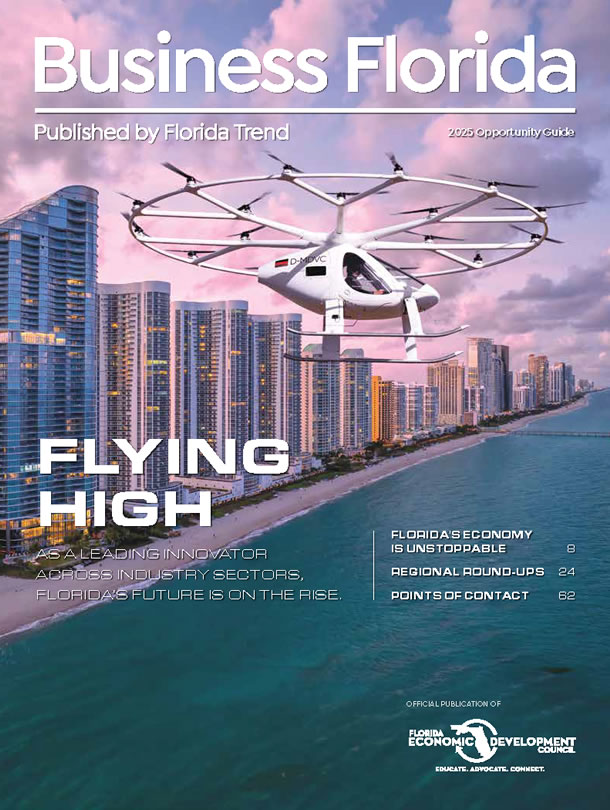
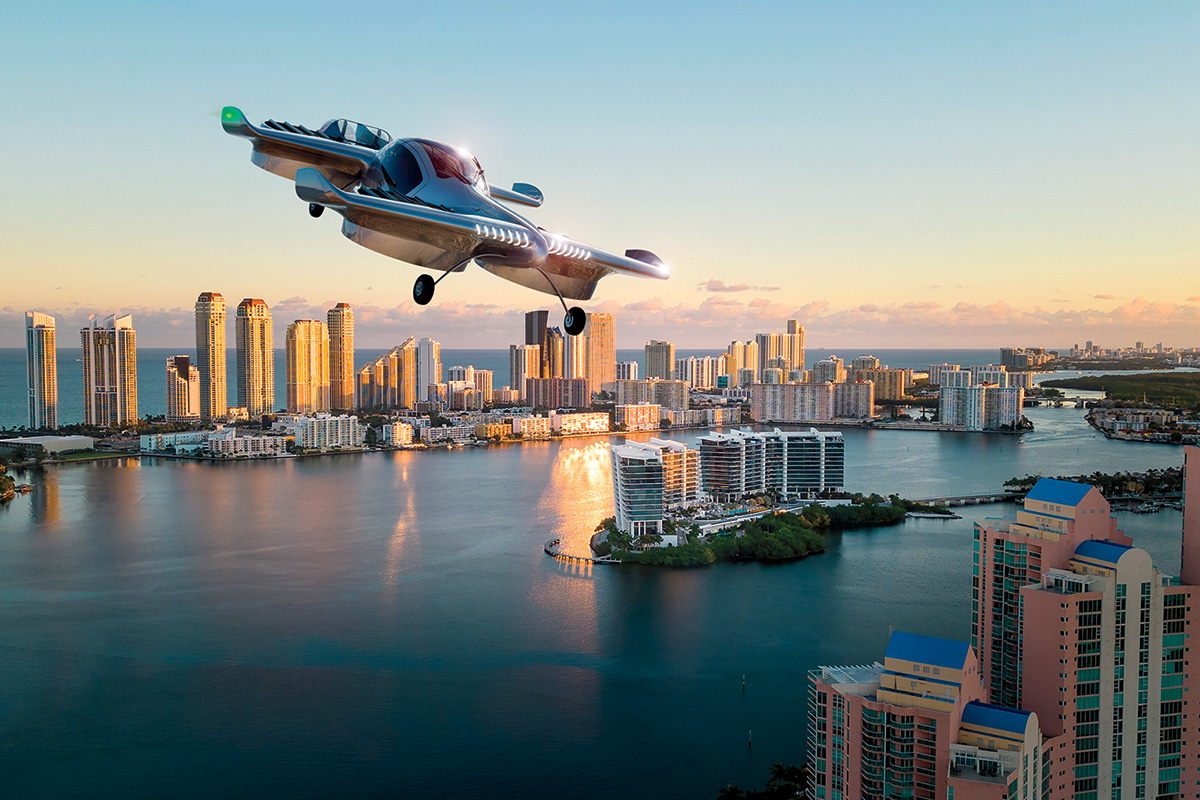
Electrical vertical takeoff and landing aircraft, or eVTOLs, promise to move passengers above the gridlock that’s increasingly defining fast-growing metro areas like Miami, Tampa and Orlando. Early versions will launch with pilots on board as regulators and the public grow comfortable with the technology. But the industry’s long-term vision is autonomous flight.
Of course, autonomy is not flawless. Around the time of my trip, Waymo vehicles made headlines after driving into flooded streets during severe weather in other states — a reminder that even sophisticated systems can struggle with unpredictable conditions. The same questions about safety, regulation and public trust will inevitably follow autonomous aircraft and other emerging technologies.
Regardless, Florida leaders and cities like Miami are smart to lean in. Not because the technology is perfect, but because it’s arriving fast, and the places willing to test it in public will help shape it, rather than reacting to it later.
The week I was in Miami, the Miami-Dade Aviation Department announced a collaboration with Bell-Dancy Industries to prepare Miami International Airport and Miami Executive Airport for the arrival of electric air taxis. Through a testing initiative called “Safeland,” the county will begin building the digital and physical infrastructure needed to manage next-generation aircraft in real-world urban airspace.
“Our job is to be ready — not just to welcome this technology, but to ensure it arrives in a way that is safe, seamless and serves all of South Florida,” Miami-Dade Aviation Director Ralph Cutié said in an announcement.
Judging by the way Waymo chauffeured me through the chaos of Miami traffic for a $10 CVS run, I suspect the region will handle the air taxi era just fine. Miami has always known how to make room for the next big thing. Even when the thing arrives without a driver.
— Amy Keller, Executive Editor, akeller@floridatrend.comAmy Keller
Amy Keller is executive editor of Florida Trend and oversees the magazine’s editorial department. Keller’s writings have also appeared in Salon, The New Republic, Broadcasting & Cable magazine, REALTOR Magazine, the Atlanta Jewish Times, the Detroit Jewish News and other publications. Keller graduated from The Ohio State University with a degree in journalism.