







Six years ago this month, Kevin Levi took his own life. He was 42, a 15-year veteran of the Pinellas County Sheriff’s Office and a husband who adored his two German shepherds, Cain and Samantha. Friends and family remember him as “sweet, smart, strong and silly,” a “prolific giver of bear hugs” and someone who “had a way of making everyone feel loved,” according to his obituary.
But in the end, even a life punctuated by humor and warmth couldn’t shield him from the pain inside. Like many law enforcement officers, Levi struggled with job-related depression and PTSD. “Something that a lot of people don’t understand is that cops are regular people just like us,” Lauren Levi told a local TV news channel days after her husband’s death. “They’re regular people. Nobody’s brains are made to see the things that they see on a daily basis.”
Kevin Levi’s story is part of a tragic pattern. Research shows law enforcement officers have a 54% increased risk of suicide compared to civilians, and more die by suicide each year than in the line of duty. The nonprofit Blue H.E.L.P. reports that more than 1,043 first responders (including 786 law enforcement officers) have been lost to suicide since 2020, though actual numbers are higher because of underreporting.
Jonathan Vazquez, an active law enforcement officer and K9 handler, serves as board president of the Sun Coast Police Benevolent Association, the union representing members of local law enforcement agencies in Pinellas County. Time and again, he’s seen the toll trauma can take — and how stigma can prevent people from seeking help.
Vazquez was a soldier before he became a cop, served in combat in Iraq and recalls a similar dynamic in the military. Soldiers would witness fellow soldiers getting blown apart by IEDs, leaving their bodies “unrecognizable,” but few would seek psychological help, fearing others would think they were trying to shirk their duty.
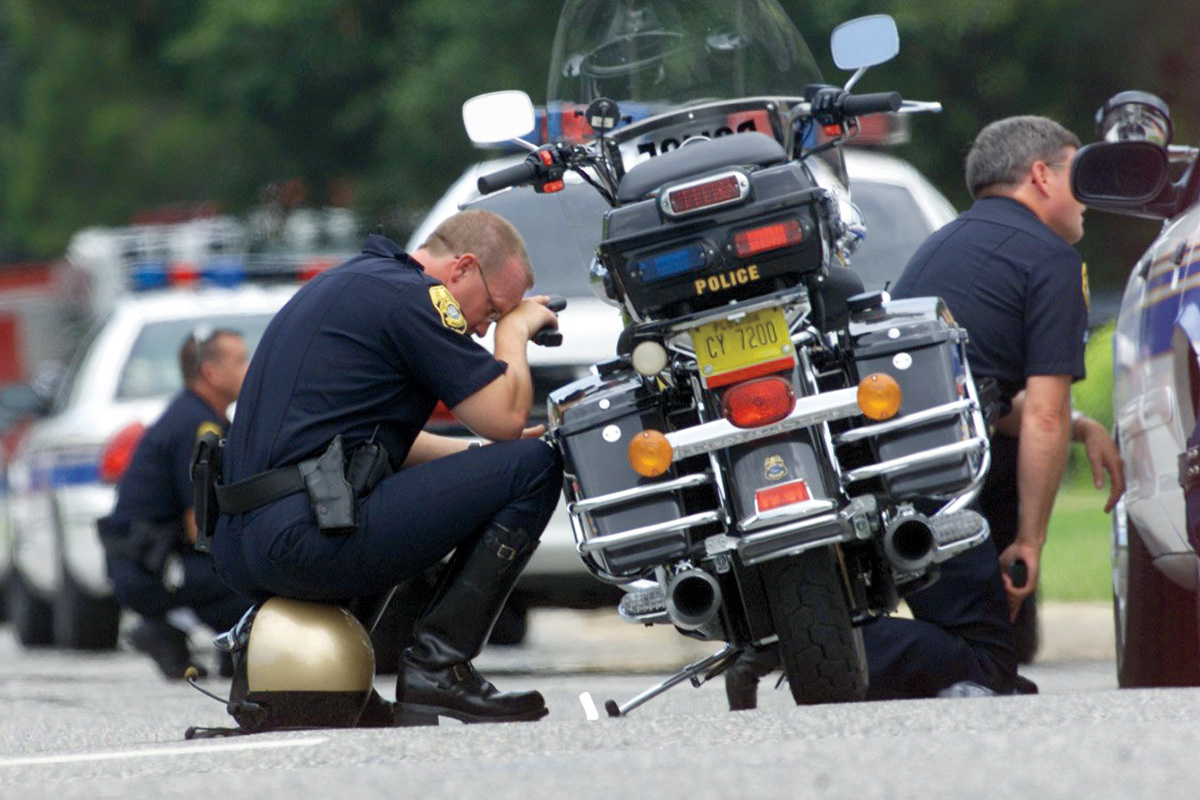
Policing carries its own war stories, he says. A toddler drowning at a backyard pool party. The mangled victims of rollover car crashes. A father who accidentally runs over his child in the driveway. The horrors of the beat don’t stay at the scene, and officers can be reluctant to use their department’s employee assistance programs. “There’s a special door. It’s not labeled, and you go there and you talk to a counselor. There’s still a stigma with that. It’s in the hallways of your agency, where your coworkers and your administration and everybody’s located,” Vazquez says.
Thanks to Vazquez and his colleague, Sun Coast PBA General Counsel and Executive Director Sasha Lohn, some encouraging change is afoot. In 2023, at their urging and with the support of some key state lawmakers, St. Petersburg College launched a specialized program for law enforcement officers across the Tampa Bay region.
The Applied Mental Health Advanced Technical Certificate program — the first of its kind in Florida — provides education about mental health for first responders, with key components examining cumulative stress responses, signs of distress, and pathways to wellness and resiliency. While participants must already have an associate degree, the 18 college credits they earn in the program can be used toward a bachelor’s degree. They pay no tuition, thanks to gifts from the Pepin Family Foundation and the Tampa Bay Area Chiefs of Police Foundation.
It’s a worthwhile investment. “Building psychological understanding builds psychological flexibility, builds emotional awareness,” says Kim Molinaro, a psychology professor who teaches courses in the program. And officers who possess that psychological flexibility, she says, can better serve not only their peers, but also the public. “The largest mental health institution is jail. … Our law enforcement officers, our first responders in general, are interfacing with serious mental illness on a regular basis.”
Looking to the future, St. Petersburg College officials are eager to expand the program to include other first responders, such as firefighters and paramedics. And the Sun Coast PBA’s Lohn hopes the program will provide a potential launchpad for a new generation of therapists who can understand better than anyone the challenges first responders face.
Retirement, she notes, is a milepost where some officers “tend to spiral … because their whole identity for 25 or 30 years has been as a law enforcement officer, and then they hand in their badge and give the uniform back and then who are they? So our long-term goal is to sit at the Psy.D. and Ph.D. graduation ceremonies for some of these police officers who fall in love with this program, got their 18 college credits for free and then continued, got their master’s and then got the terminal degree in the field so we can refer clients to them in retirement.”
If you know a first responder who may be struggling, help is available. CopLine provides 24/7 confidential services for officers who are dealing with stressors encountered on and off the job. Call 1-800-COPLINE (267-5463). First responders can also receive confidential support from the First Responder Hope Line at 1-866-4FL-HER0.
— Amy Keller, Executive Editor, akeller@floridatrend.comAmy Keller
Amy Keller is executive editor of Florida Trend and oversees the magazine’s editorial department. Keller’s writings have also appeared in Salon, The New Republic, Broadcasting & Cable magazine, REALTOR Magazine, the Atlanta Jewish Times, the Detroit Jewish News and other publications. Keller graduated from The Ohio State University with a degree in journalism.