






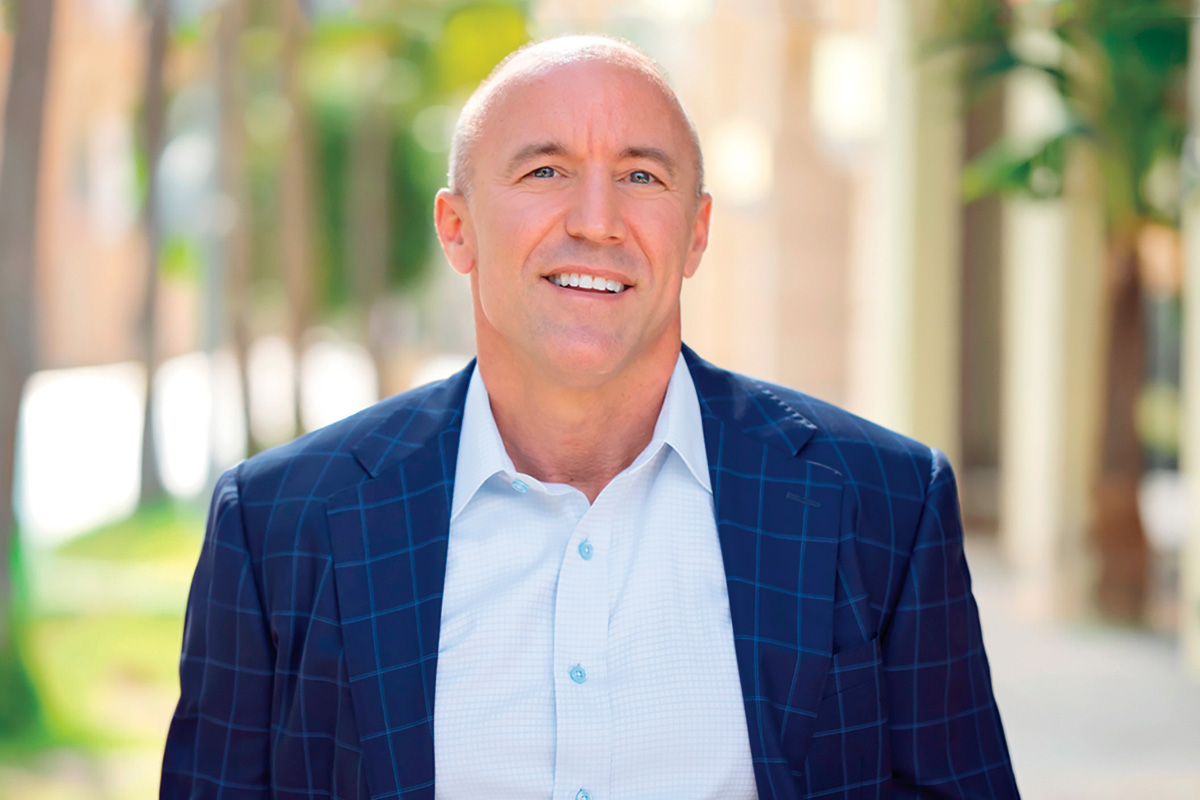


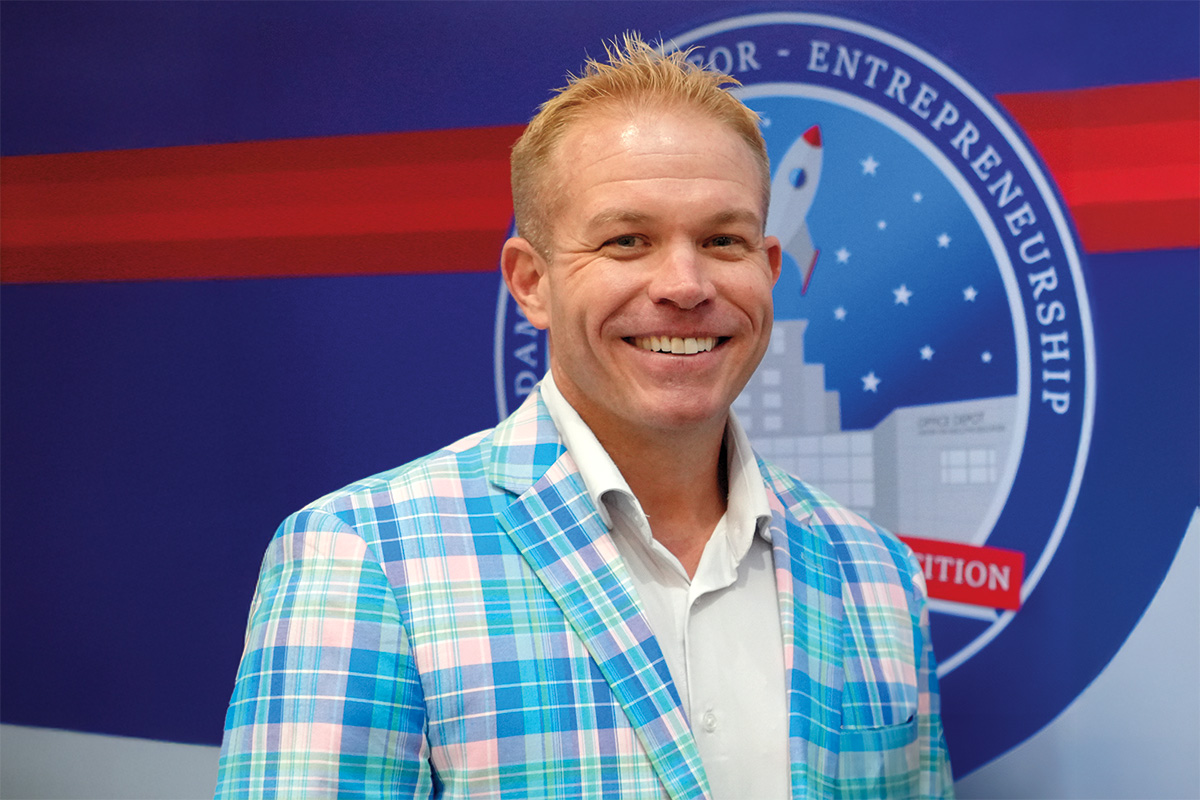
Entrepreneur and University of Central Florida alumnus Barry Miller has donated $50 million to his alma mater — its largest-ever individual philanthropic gift. UCF's business school will become the Barry S. Miller College of Business, while the funds will help establish five endowed faculty chairs and a new master's degree program, expand access to internships and increase UCF's corporate partnerships.
Miller, who graduated from UCF in 1995 with a degree in finance, is the president and co-founder of Voloridge Investment Management in 2009 and Voloridge Health in 2023. He was inducted into the UCF College of Business Hall of Fame in 2022.
"There are many foundational aspects I gained by attending UCF," Miller says, "including many relevant courses like statistics, economics, marketing, accounting, etc., and outside of the classroom I met many of the most important individuals in my life, including my wife, best friend and business partner, and many close friends."
Headquartered in Jupiter, Voloridge Investment Management is a high-tech hedge fund, using advanced data science to make investment decisions. It has about $9.5 billion in assets under management. Similarly, Voloridge Health sifts through vast amounts of health care data — billions of data points are created every day, the company says — to create predictive models that are intended to help medical providers improve the long-term health outcomes of their patients.
Giving more UCF students the tools to succeed in a data-driven economy, Miller says, was a key motivation for his gift.
"We have ambitious plans at UCF to evolve with business trends, notably artificial intelligence in the workplace, to ensure UCF is pioneering how academic institutions can adapt and produce graduates with sought-after skills and knowledge," he says.
College Sports Task Force
Last season, before he moved on to the NFL, University of Miami quarterback Carson Beck earned about $5 million a year in Name, Image and Likeness (NIL) money. DJ Lagway, then the University of Florida's quarterback, earned about $4 million. In fact, Florida leads the nation in NIL deals, although typical earnings are more in the $5,000 range.
Now a major change in the NIL system is coming: A proposed settlement in the lawsuit House v. NCAA is expected to allow schools to start paying athletes directly — a change that could lead universities to distribute millions of dollars each year.
To get ready for that, the Florida Board of Governors, which oversees the state university system, recently formed a task force of athletic directors, trustees and outside advisers to confront the financial and legal uncertainty surrounding NIL. The goal is to ensure that Florida remains competitive with other states such as Texas and North Carolina in the rapidly changing landscape of collegiate athletics.
The task force is expected to meet for months before making recommendations to the BOG.
Florida has already moved to adapt to the changing times. In 2025, the BOG approved a policy allowing each public university to access up to $22.5 million per year — through loans or transfers from auxiliary funds such as printing and parking services — to support athlete compensation over a three-year period. The move was intended to help universities prepare for the new revenue-sharing rules.
Tall Hall
Florida International University is building a huge new dorm called Sunblazer Hall that will stand 17 stories high, making it the tallest residence hall at a higher education institution in the state university system. It'll have space for 1,174 beds and will wrap around other buildings in a curve reminiscent of a crescent moon shape.
"We are limited in our space, so instead of building wide, we are building up," says David Snider, senior vice president and chief financial officer. "It will be the crown jewel of campus."
Four other buildings are also under construction on FIU's main campus: a medical center, a chapel, an innovation complex with research labs, and a food hall with five dining venues.
UF Opens in Jacksonville
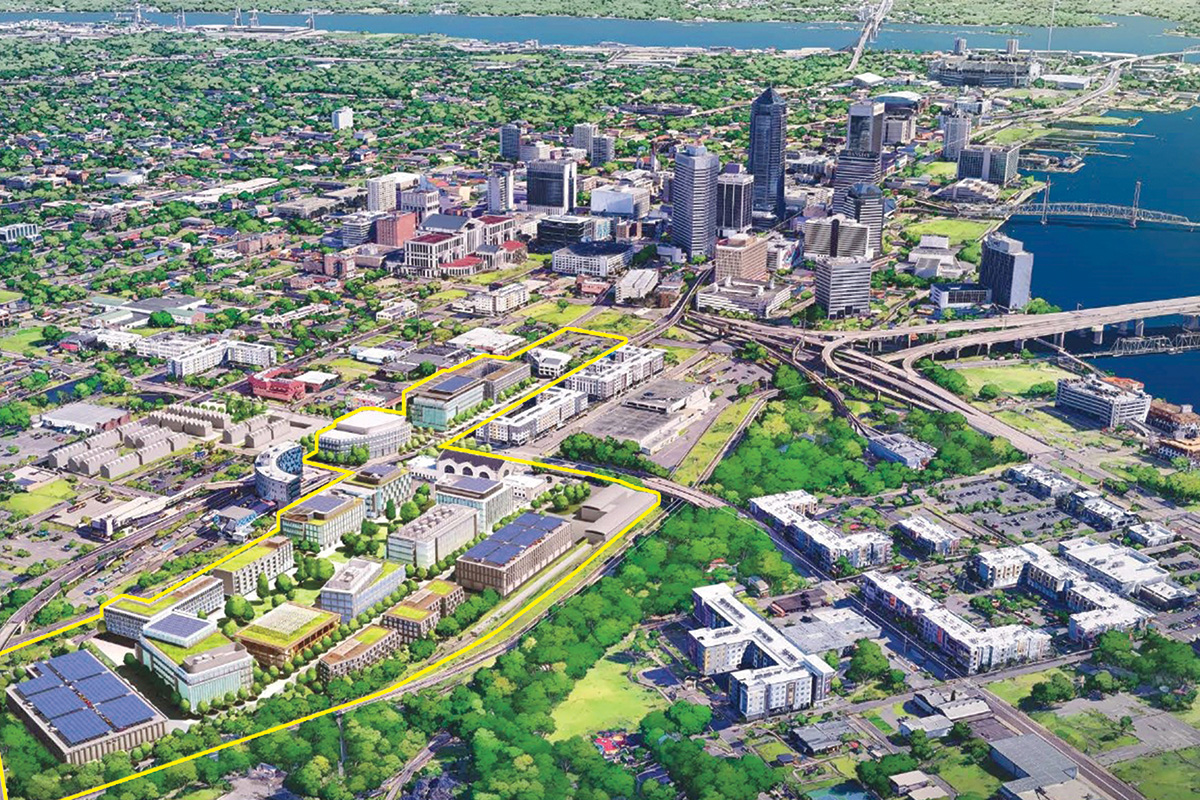
It's been in the works for years, but the University of Florida's long-awaited graduate campus in Jacksonville is about to hit a milestone: Its first actual classes begin in August.
They'll start in a renovated building on West Bay Street, as UF's first new building on the Jacksonville campus isn't slated to open until 2029. The campus will be located in downtown's historic LaVilla neighborhood.
The city of Jacksonville has kicked in $105 million toward construction as well as more than 20 acres for the campus. UF plans to offer graduate programs in business, health care and emerging technologies there.
Following a competitive process, UF just chose a lead developer to build its new campus: Maryland-based Edgemoor Infrastructure & Real Estate, a national development firm.
Entrepreneurship at FAU
Florida Atlantic University's College of Business recently launched something it calls the Entrepreneurship Institute. It merges multiple entrepreneurship initiatives across FAU, including the Runway at Florida Atlantic, the Wave Program, the Adams Center for Entrepreneurship, the Business Pitch Competition and the Veterans Florida Entrepreneurship Program.
The idea is to have one dedicated program overseeing all aspects of business creation, accelerating innovation and expanding entrepreneurial opportunities across South Florida. The goal is to support business founders from early-stage ideation through venture growth and scale.
"Entrepreneurship is a powerful driver of innovation, job creation and economic growth," says Kevin Cox, the new Entrepreneurship Institute's director. "By integrating these programs into a single institute, FAU is expanding its ability to connect students, alumni, veterans and community entrepreneurs with the right access and tools to build successful businesses."
Aerial Integration
USF researchers are helping to map a safe path for the era of air taxis.
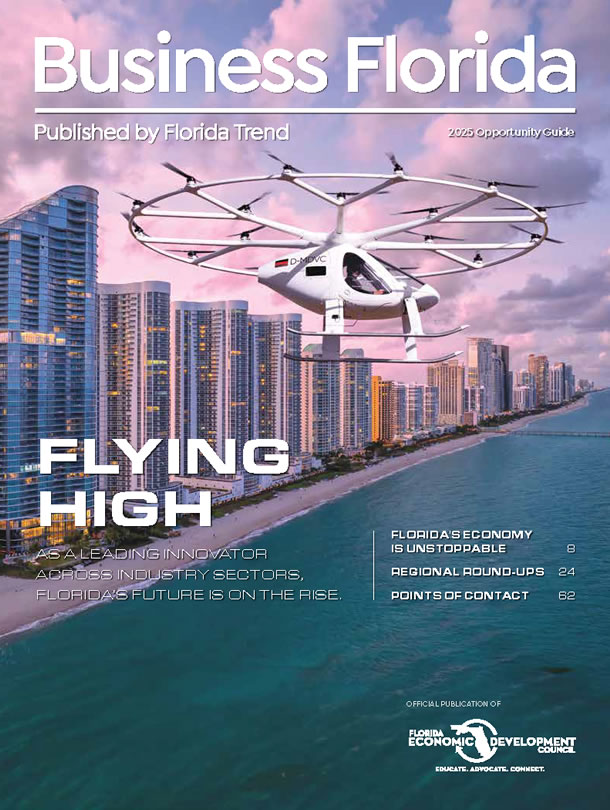
They're technically called electric vertical take-off and landing vehicles, or eVTOLs, but most people just call them flying cars. On behalf of the Florida Department of Transportation, researchers at the University of South Florida are studying how this technology could be safely integrated into the state's transportation system.
In theory, a future air taxi service could be reserved or scheduled on demand. Passengers would book flights through an online scheduling system and arrive at a small landing site, or vertiport, to board the aircraft. Typical trips in urban areas would last about 10 to 20 minutes, with air taxis traveling 100 to 200 miles per hour at altitudes between 500 and 3,000 feet, USF says.
"This is a great opportunity for Florida to become a pioneer in this emerging mode of transportation," says USF professor Yu (April) Zhang, program director of the USF AAM Research Program. Her team is analyzing potential vertiport locations, passenger usage patterns and how much road traffic might shift to the air in urban and rural areas. Florida's efforts are focusing on passenger transportation, cargo delivery, automation and emergency medical response.
FSU and Open Government
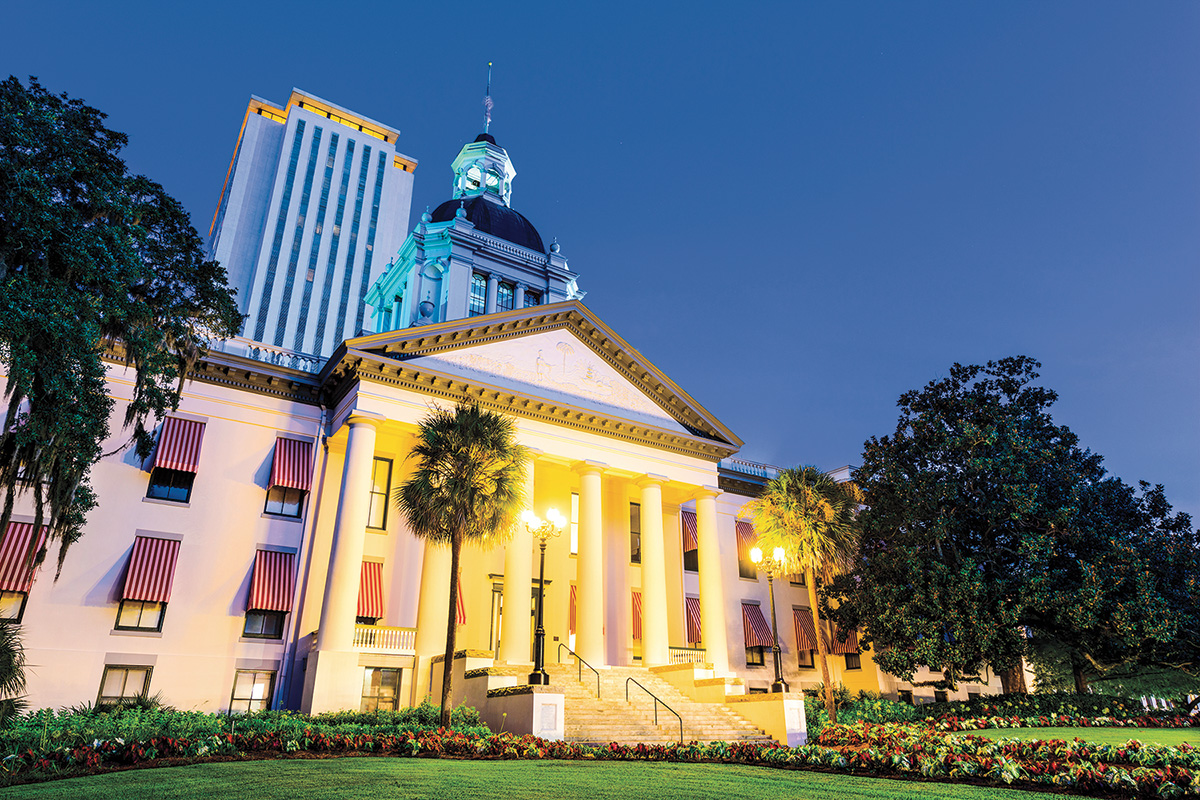
Want to know how the government is spending your tax money? Florida State University can help you with that, and it's never been easier.
FSU's public policy institute has launched a redesigned digital transparency platform, FloridaOpenGov.com, that gives the public clearer access to Florida state and local government data. The updated site — a project of FSU's DeVoe L. Moore Institute — allows users to explore information on Florida's K-12 education system, state and local payroll, and other public spending categories through interactive visuals and searchable datasets.
Florida Open Gov was developed by the institute's Data Analytics Group, a faculty-mentored and student-led team within FSU's College of Social Sciences and Public Policy. The redesign modernizes the layout and functionality of the platform to make complex data easier to interpret for policymakers, journalists, educators and citizens. All datasets are sourced directly from the Florida Department of Education and other state agencies.
"One of our goals moving forward with the revamp of the website is to build capacity for Florida teachers, parents and students to be able to tell compelling stories with the data in order to inform policy decisions within and across districts and schools," says Crystal Taylor, the institute's director of research.
The update reflects years of work by faculty mentors and successive student analytics teams to expand the scope of the platform, refine usability and improve visual clarity.
Alexis Staveski, manager of the Data Analytics Group, says new visualizations on the website include "District Grades Over Time," "Free Lunch Rates vs. Grades," "District Grades vs. Salary," "District Enrollment Map" and "Graduation Rate by Special Category Map," among others.
Key features include:
Searchable datasets on education, payroll and spending
Interactive charts and maps for easy comparison
Featured blogs depicting how data can inform policy
"As part of our research internship, we believe that data and storytelling go hand in hand," Taylor says. "Our data analytics interns not only pick up data cleaning and visualization skills, we also set expectations from the start that they have to be able to explain, 'What does this data mean for Floridians?'"
Degree Dividends
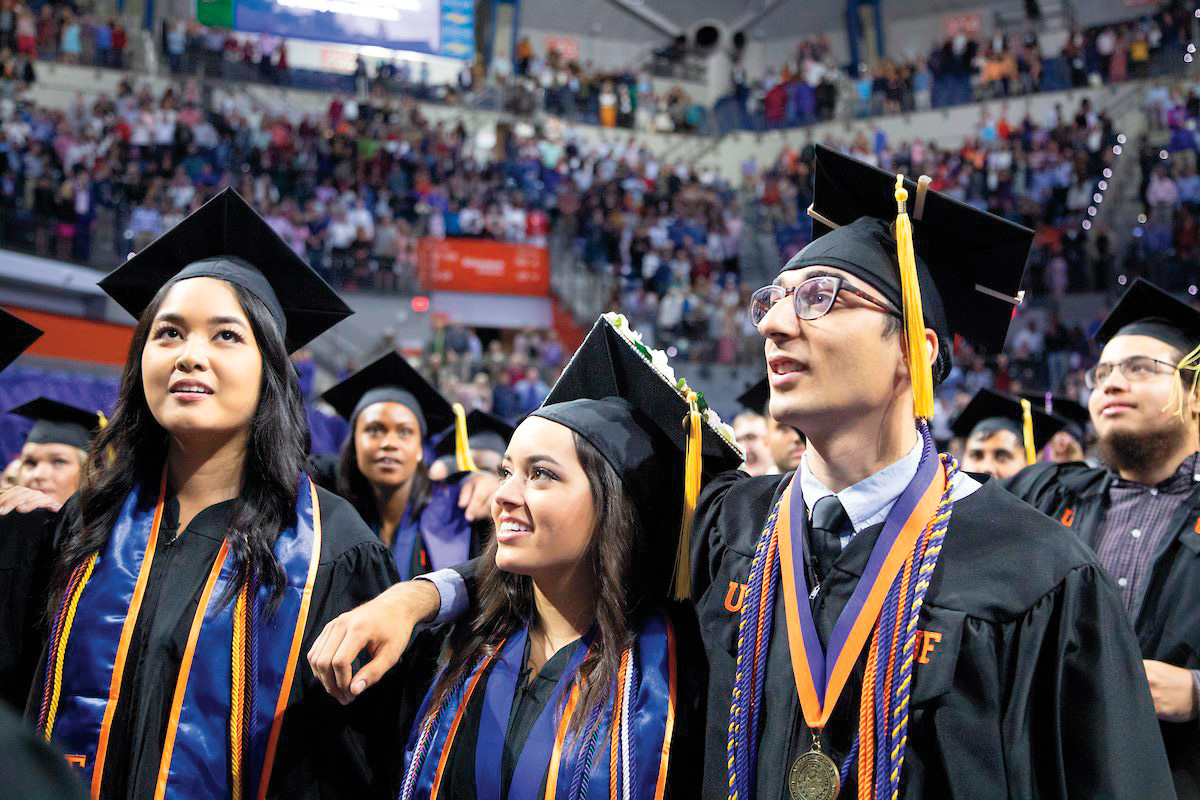
Graduates of state universities in Florida earn an average of $55,988 one year after earning a bachelor's degree, according to the Florida Department of Education. This varies by school, with the University of Florida and Florida Polytechnic University neck-and-neck atop the list. (Florida Poly had the top spot not long ago.) UF grads earn an average of nearly $60,000 one year after graduation. And this doesn't include private universities like Embry-Riddle Aeronautical University, Florida Tech and Nova Southeastern University.