

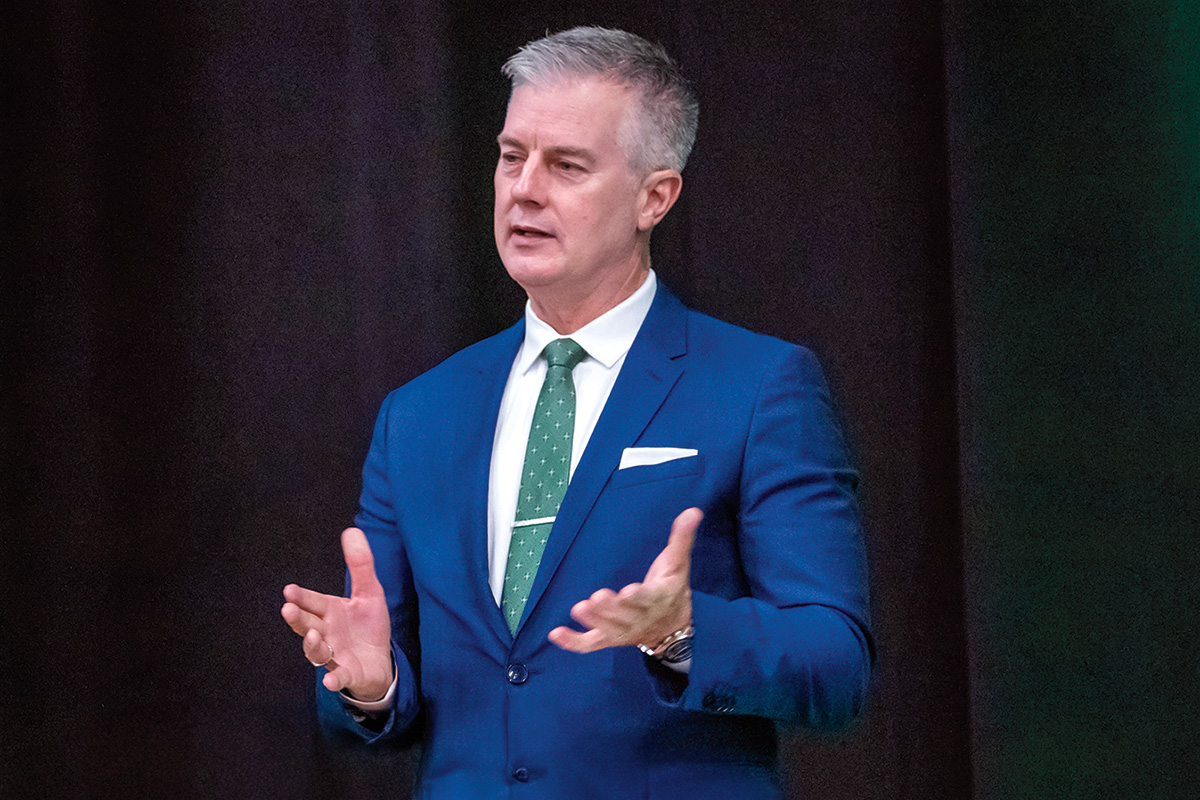
Jim Burkee, president of Saint Leo University, sees the H-1B hiring pause as an opportunity. He hopes to position his small Catholic school in Pasco County as an avenue for Tampa Bay employers to circumvent the new state and federal restrictions.
Florida's private universities are not beholden to the Board of Governors nor its H-1B hiring moratorium. And, unlike companies in the private sector, institutions of higher education are exempt from an annual nationwide cap of 85,000 H-1B visa allowances. That means, Burkee says, private schools like Saint Leo are allowed to hire H-1B visa holders and have much better odds with their visa applications. As long as the candidates already hold an American visa and live in the U.S., their applications should also bypass Trump's $100,000 fee.
The win for Saint Leo? It would create a job pipeline for graduates. Here's how, Burkee says: Around 20% of Saint Leo's 2,000-some on-campus students are international. Upon graduation, the school would sponsor their transfer to H-1B visas. These visas allow for concurrent employment, which lets the visa holders work for multiple employers at the same time. So, the newfound graduates can work for private companies while being sponsored by Saint Leo. As of press time, Burkee said the school would be rolling out a "detailed package for employers" within the next few months.
"It's a low-cost, high-success way of meeting the needs (employers) have in some of these areas of high-technical specialization," he says, referencing a projected workforce shortage of STEM professionals in the U.S. "All we want to do is use our special place to help regional employers access that strong pool of talent."