



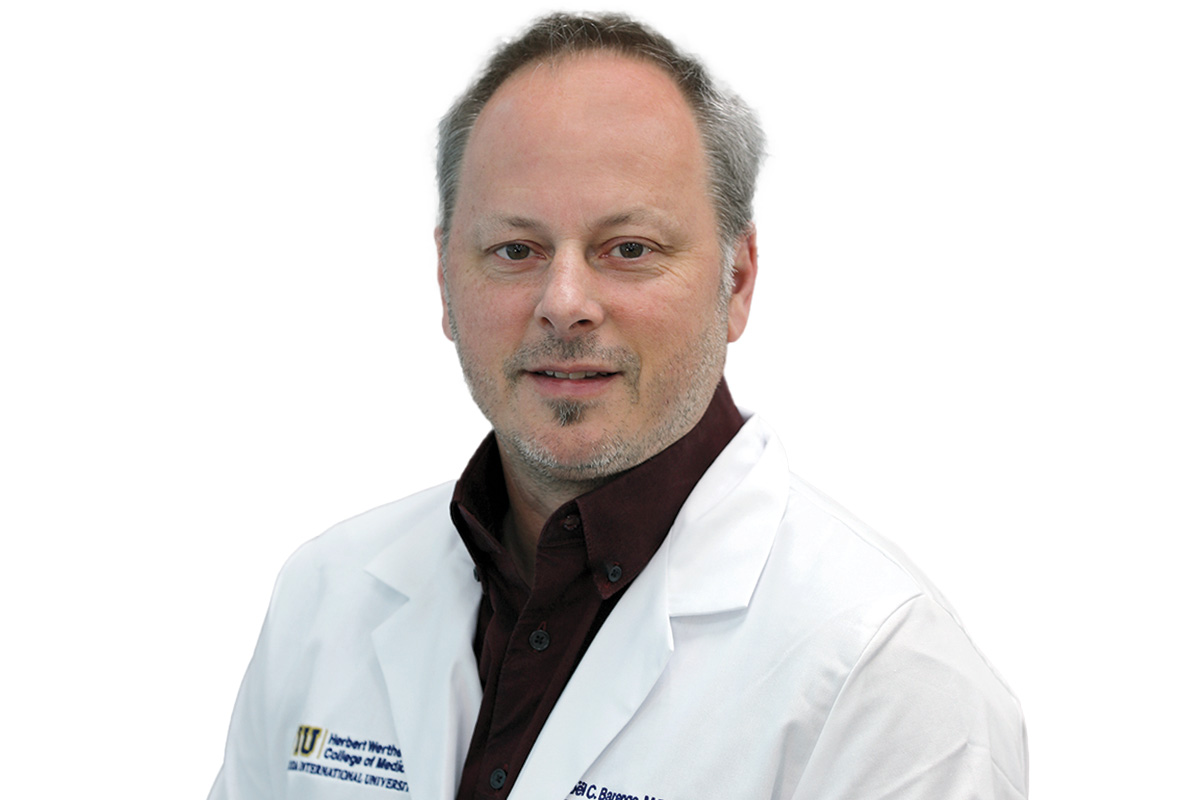
Dr. Noël Barengo, a professor in Florida International University's Herbert Wertheim College of Medicine, knows of at least one international applicant who was recently turned away from a job at the university due to their visa status. The applicant was vying for a position within the FIU Robert Stempel College of Public Health & Social Work.
Born in Switzerland, Barengo himself came to the U.S. under an H-1B visa before receiving a green card, which was naturalized a year ago. "My fellow (faculty) who came with the H-1B — we contribute a lot to research, to teaching, to the growth of the state university system," he says.
Barengo says the right H-1B hire can generate significant benefits for schools. A shining example: Markus Thiel, an FIU politics and international relations professor and director of the school's Miami-Florida Jean Monnet European Center of Excellence. Originally from Germany, Thiel moved to Florida in 2001 for his doctoral studies. He applied for the H-1B visa as a visiting professor at FIU and is now a U.S. citizen. Over the last 20 years, he has taught thousands of students and obtained more than $1 million in grant funding for the university.
"They're very active in finding fundings for their projects, and these fundings generate administrative income," Barengo says about H-1B visa holders. Losing those contributions from incoming hires, even temporarily, is top of mind. "We don't know, in numbers, what the impact will be" from the hiring pause.