





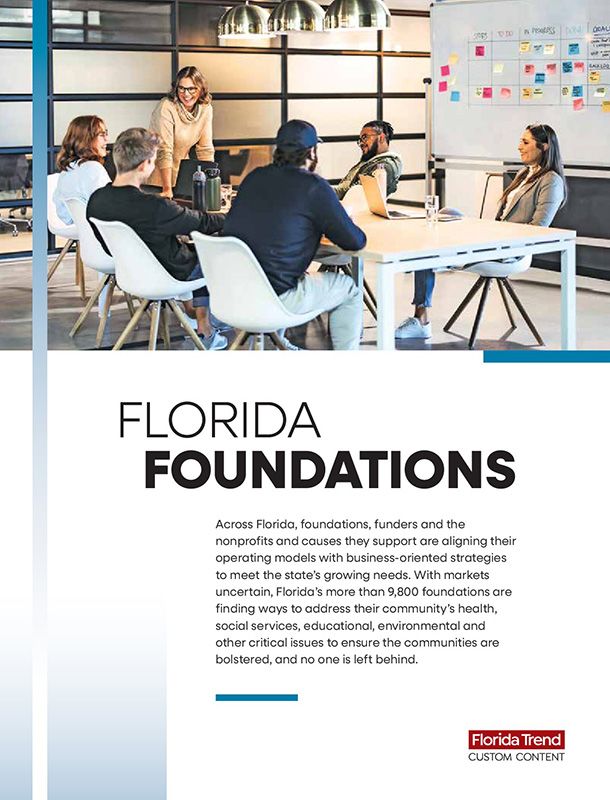




Florida consumers aren't the only ones struggling with rising costs of essential goods and services and other economic headwinds: Nonprofits across the state have encountered a confluence of challenges that threaten their ability to deliver vital programs, jeopardizing their role as a key cog in the state's economy and a safety net for residents.
Florida's 22,710 nonprofits employ some 456,000 people, accounting for about 7% of the state's workforce and more than $27 billion in annual wages, according to the Jacksonville-based Florida Nonprofit Alliance. FNA says the nonprofit sector rivals construction and manufacturing in terms of workforce size.
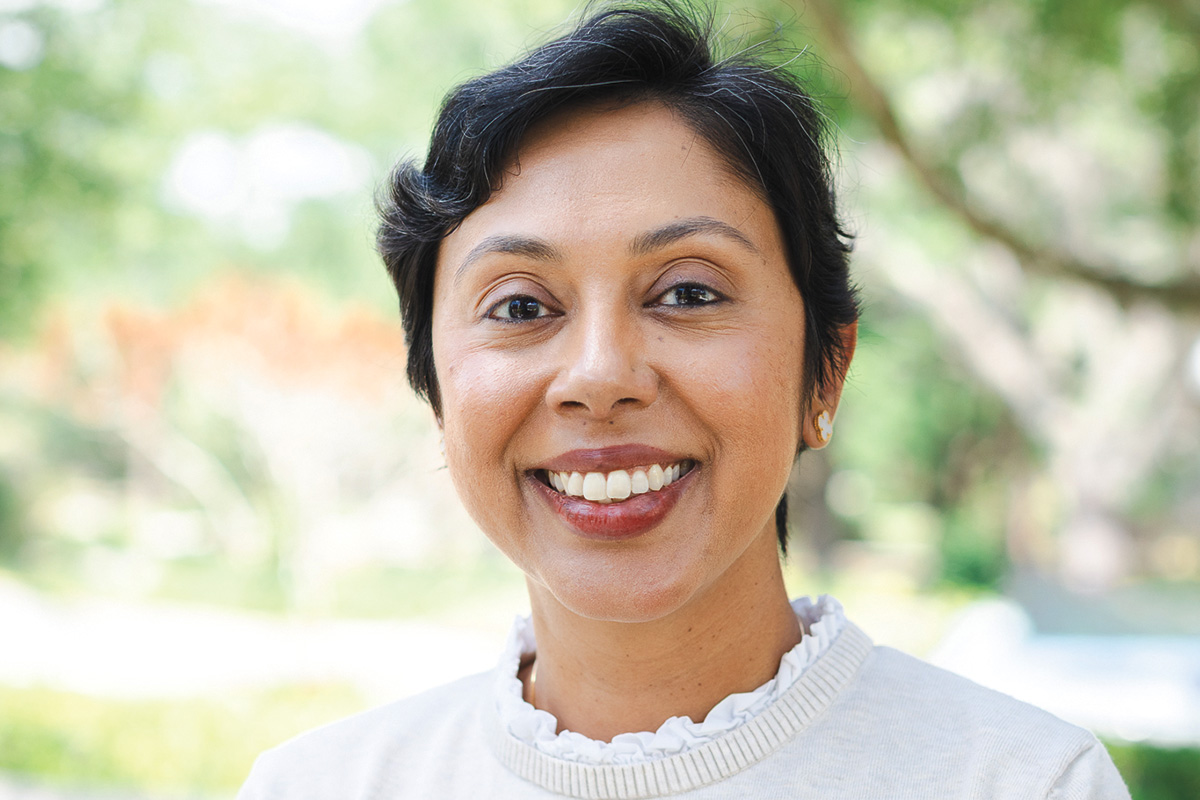
"Nonprofits play an outsized role in strengthening Florida communities," FNA President and CEO Sabeen Perwaiz says. "Funders, elected officials, businesses and nonprofit leaders must work together to ensure the sector remains sustainable. If we went away, who would do the work?"
But a quadruple-whammy of decreased government support, rising costs, consumer belt-tightening and surging demand for services has left nonprofits reeling. Nearly 60% of the 1,082 respondents to FNA's latest Florida Nonprofits Survey published in March say they faced increased costs for recurring expenses in 2025, and more than one-third saw an increased demand for services and support. At the same time, 40% of respondents reported that fundraising for program expenses had declined.
Such trends are unsustainable and have led to rising concerns among nonprofit leaders.
"I'm approaching my 20th year in this sector," says Derrick Chubbs, president and CEO of Second Harvest Food Bank of Central Florida, which serves residents of seven counties via five food bank locations and a fleet of 22 trucks, "and I can comfortably say I've never seen it like this."
In some ways, it's worse than the COVID-19 era, he says. "I'm not saying that the pandemic wasn't difficult, because it really was, but what we're struggling with now is a combination of so many factors that we can neither control nor predict. It's impacting our sector and, as a result, it's impacting those who depend on our services."
Chubbs adds that he increasingly hears from residents who'd never had to rely on food banks but now find their household budgets stretched to the breaking point — people, he says, who insist they "did everything right" by working hard, being frugal and saving money.
The rise in demand has also strained Second Harvest's budget: Its gross revenue declined by $5 million from 2024 to 2025, while expenses rose by $3 million; during that time, its net income went from more than $6.6 million to a loss of nearly $1.2 million.
Miriam Singer, the president and CEO of Jewish Community Services (JCS) of South Florida, says her organization also is experiencing a surge in people seeking help. "We are seeing situations where individuals who before never had to seek the support of nonprofits (now need it) to sustain themselves, to stay in their homes, to feed their children, to provide health care, even to go to their jobs and seek medical help," she says.
Along with that, the JCS of South Florida is experiencing an uptick in calls to the mental health and suicide prevention hotlines it operates for residents of Miami-Dade and Monroe counties. There's a domino effect: The people who staff such crisis lines are taxed physically and emotionally from the increased workload.
Federal funding cuts are taking a toll on Florida nonprofits, and more challenges may be on the horizon. Last year's "One Big Beautiful Bill" resulted in tax code changes that are expected to reduce corporate charitable giving to the tune of a $45-billion drop over the next decade, according to Ernst & Young.
To wit, FNA's survey also measured staff burnout, with 21% of respondents saying staff burnout is higher than the year before — the highest rate since 2021, when nonprofits were still dealing with increased demand related to the pandemic. Eight percent of respondents say they eliminated more staff positions than the year before — again, the highest rate since 2021.
Several of the nonprofits that FLORIDA TREND spoke with are pursuing new revenue streams.
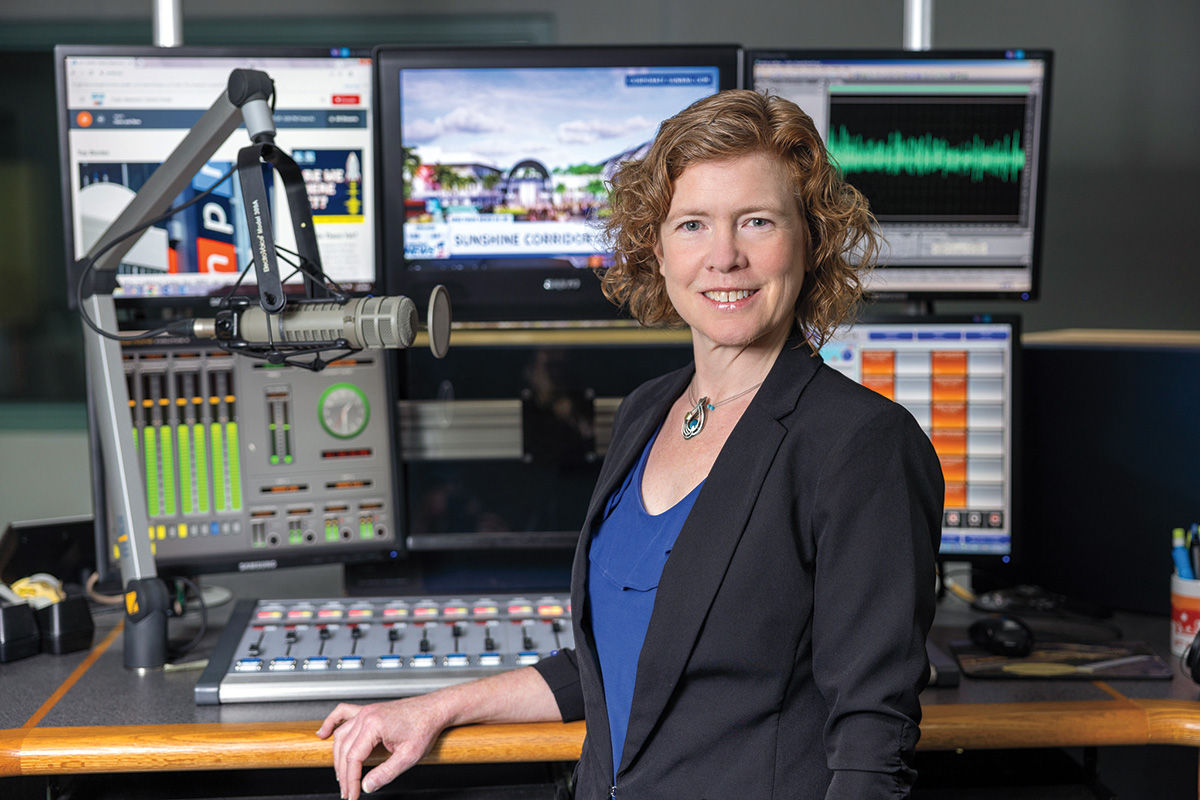
"I am not sitting around holding my breath waiting for government funding to come back," says Judith Smelser, the president and general manager of Orlando-based Central Florida Public Media, formerly known as WMFE. "If it does, great, but we need to build a self-sustaining model of support."
Central Florida Public Media suffered a $400,000 hit to its budget when the federal and state governments canceled funding for public TV and radio outlets last year. Smelser responded by suspending a fellowship program for young journalists and cutting some costly national shows. Listeners responded by donating more than $221,000 when the station held an emergency, one-day fund drive, and turning out in droves for Punk for Public Media, a benefit concert featuring local bands that raised $8,500.
"We didn't have to lay anybody off," she says, "and I'm grateful and thankful for that, because our community came out for us and really made a difference."
Smelser says she's felt the funding axe hanging over the station's head for years now, and that's part of the reason why the organization rebranded. Central Florida Public Media, she says, better reflects the station's wide range of programming, from terrestrial and internet radio to email newsletters, informative social media posts and streaming video and audio podcasts.
"We've increased our video work by about 75%, year over year," Smelser says, adding that she and her team are well aware that social media users prefer to consume short bursts of news and information via video. To that end, it has rolled out "Florida Minute," a quick video newscast that appears on Instagram, YouTube and TikTok.
"We're recognizing social media platforms not just as ways to promote what we're doing on the radio or our website," Smelser says, "but as platforms in their own right, and we see a real opportunity in converting those audience members into donors, because they're not always the same as our radio audience."
Second Harvest Food Bank of Central Florida, likewise, has taken creative steps to improve its long-term financial health amid economic uncertainty. Chubbs, the president and CEO, says sustainable revenue streams, including a full-service, professional catering business, are already up and running.
"That's one piece of social entrepreneurship that we're actively trying to grow," he says.
The food bank also has event spaces that can be rented for occasions such as weddings, corporate meetings, birthday parties and family gatherings, and it's developed a spinoff of its catering business that will produce medically tailored meals and sell them to AdventHealth and Orlando Health. That initiative grew out of a pilot project — funded by the DaVita Giving Foundation, the charitable arm of Davita, a Denver-based health care company that specializes in the treatment of kidney disease — that created healthy, low-sugar meals for patients suffering from renal failure.
"We're providing healthy meals for prenatal care, so expectant mothers get a balanced meal for their children," Chubbs says. "We're in the food business. We know how to do this."
In addition to meals for pregnant women, Second Harvest also cooks for patients with heart issues who've been discharged and must adhere to a special diet lest they wind up back in the hospital.
"The health care organizations will tell you it's not necessarily the initial trip to the doctor; it's usually the second, third or fourth trip that costs them money," Chubbs says. "So, if we can provide healthy, balanced meals for these patients, then the health care organizations or maybe even the insurance industry might be willing to fund us to do this work."
Florida Epilepsy Services, a nonprofit health care provider based in the Tampa suburb of Brandon, has been anything but passive in its confrontation with funding cuts. Executive Director Lenore Brinson says she's "applying for every grant I can possibly find." A mix of billboards, radio ads and social media campaigns have been effective in raising much-needed awareness and funds. FES, she adds, was "a dying agency" just a few years ago, and that was before recent Florida Department of Health funding cuts.
FES hasn't gone to the same entrepreneurial lengths as Second Harvest, but it did recently merge with the Epilepsy Foundation of America, increasing its flow of charitable donations. Brinson also takes heart in the fact that FES has existed since 1973 — when it was founded by the parent of a child with epilepsy — and survived numerous up-and-down economic cycles during that time. She thinks of her organization as a lighthouse, a beacon of hope for struggling Floridians and their families, and she is "very optimistic" about its future.
"I see us growing," she says. "Yes, we will face challenges, but you just have to be creative when it comes to funding. You can't depend on one funding source. The goal is to keep the lighthouse lit."