












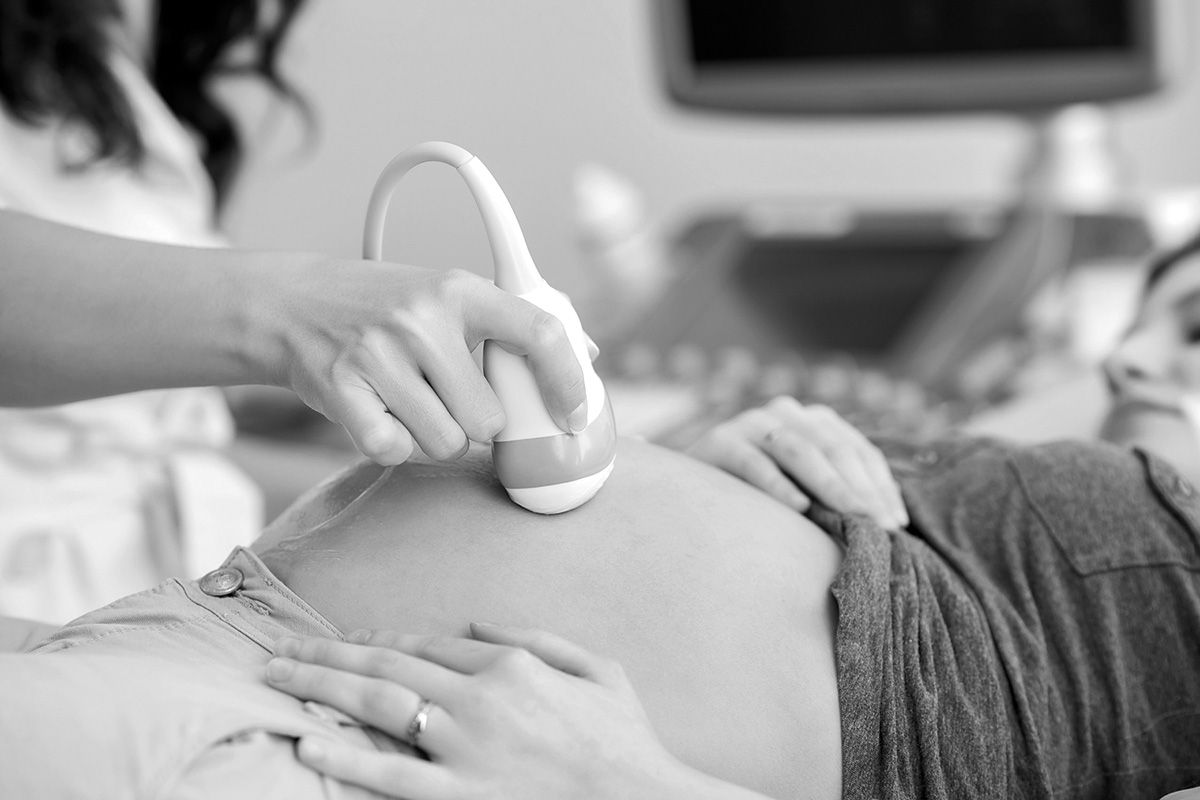
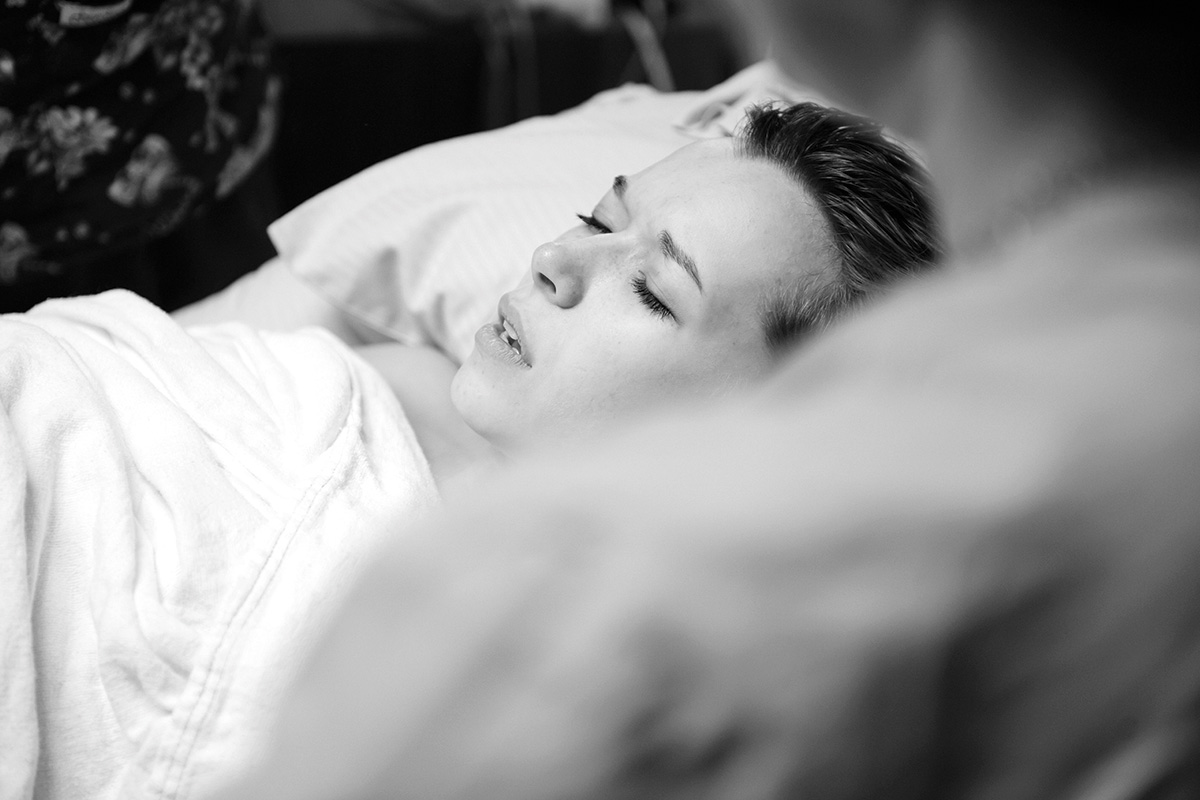
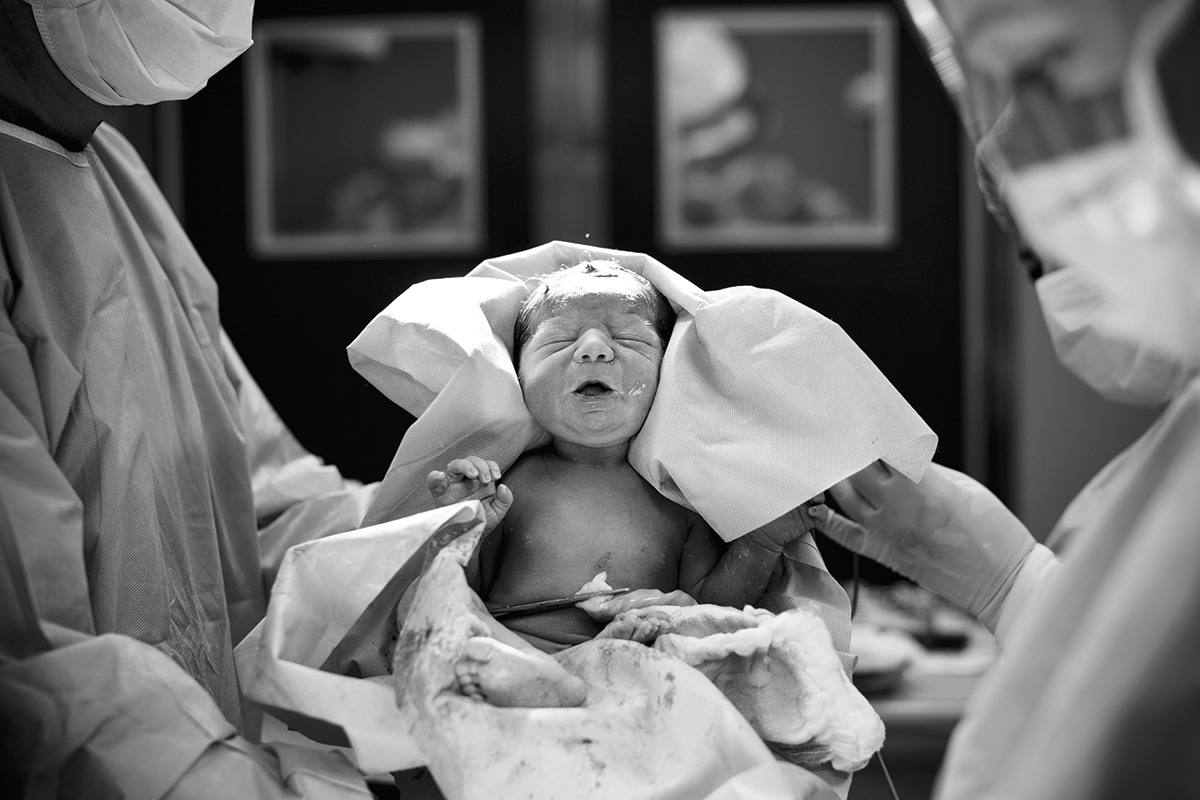
Hospitals have long echoed with the wailing cries of newborns, their delivery wards reigning as the dominant setting for American births for around a century. In Florida, though, that could change.
Since 2019, at least 21 Florida hospitals have shuttered their labor and delivery units. Some traditional birth centers — an alternative option for low-risk patients to give birth under the midwifery model of care — are also closing their doors. One in five counties now lacks comprehensive obstetric services, stretching maternity care deserts across the state, particularly in rural regions.
As remaining delivery sites hemorrhage money, and hospitals jettison those services, a potential solution arises from the Florida Legislature: advanced birth centers, a new type of birthing facility signed into law within 2024's "Live Healthy" legislative bundle.
Like traditional birth centers, advanced birth centers would offer non-hospital birth settings for low-risk pregnancies and would forge partnerships with local hospitals for transferring patients in need. Where they diverge — quite widely, opponents say — is that the new facilities can provide C-sections, anesthesia and labor inductions. They must also be able to provide blood transfusion services in case of emergencies, such as hemorrhaging — a leading cause of maternal mortality in Florida. Open 24/7, they would be staffed with an obstetrician, an anesthesiologist and a registered nurse, at minimum.
Legislators pitched advanced birth centers as the middle ground between hospitals and traditional birth centers. Proponents hope they can offer another option for expecting families amid the state's gaps in obstetric care. But some in the medical community have raised concerns about this new type of facility, questioning their safety protocols, doubting their business model or fearing their impacts to traditional birth settings.
'LOCKED IN A TIME WARP'
The loss of 20-plus labor and delivery units has poked holes in obstetric care across Florida.

Along with low Medicaid reimbursement rates, Florida hospitals also suffer from rising labor costs. Florida Hospital Association President and CEO Mary Mayhew says staffing costs have increased more than 35% from pre-pandemic levels.
At least two closures are tied to Steward Health Care's 2024 bankruptcy, which led to the condemnation of its North Shore Medical Center obstetrics unit in Miami-Dade that year and its former Rockledge Hospital in Brevard County in 2025. Two Ascension hospitals have closed their obstetric units since 2019, along with two Jackson Health System units. At least five HCA hospitals quietly shuttered their labor and delivery services over the same period. Cleveland Clinic and Tenet Healthcare have both consolidated such services between hospitals. Most recently, in October, the labor and delivery unit at the UF Health Leesburg Hospital closed its doors.
The vast majority of hospitals face the same problem: The birthing business model just doesn't make sense anymore.
Rural hospitals have long struggled with maintaining labor and delivery units because of their lower patient volume — but as of late, hospitals in urban Florida are also feeling the strain. The state's overall birth rate declined 12.1% from 2016 to 2024. (The national birth rate dropped by 12.6% within the same timeframe.) The population boom that dominates headlines is mostly comprised of established families or older adults, contributing to less demand for costly labor and delivery services.
Low Medicaid reimbursement rates exacerbate those financial woes, says Mary Mayhew, president and CEO of the Florida Hospital Association that represents more than 200 hospitals and health systems.
In 2024, Medicaid covered 39.2% of all births in Florida. That's down from 48.3% in 2018 but still accounts for roughly two out of every five deliveries in the state. Hospitals are only reimbursed 48 cents on the dollar for such services. (And that's up from 35 cents on the dollar in 2024.) "The Medicaid reimbursement rate has largely been locked in a time warp," Mayhew says. "For every baby born by a mother covered by Medicaid, a hospital loses money — more than half of the cost being reimbursed."
Another pain point is a growing shortage of OB-GYNs.
According to a 2025 state survey, nearly 38% of Florida's 1,461 OB-GYNs who deliver babies were planning to discontinue obstetric care within the next two years. More than a third attributed their exit decision to liability exposure, high medical malpractice litigation or the cost of professional insurance.
Maternity Care Deserts
One in five Florida counties are maternity care deserts, where women travel 3.7 times farther for delivery. About 11% of women lack a birthing hospital within 30 minutes.
Some of Florida's hospital labor and delivery units and traditional birth centers, faced with financial and staffing woes, are closing their obstetric services.
"Florida has some of the highest medical malpractice premiums in the country. Premiums for OB-GYNs are at the top of that chart," says Mayhew, calling Florida "one of the most litigious states." It doesn't have caps for noneconomic damages, which she says "has just led to the floodgates being wide open. It isn't because the outcomes or the quality is worse here in Florida. This has become a cottage industry in the legal profession."
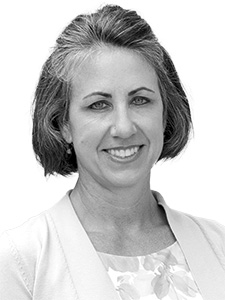
Frustrated by outdated reimbursement rates, Kaleen Richards of the Tree of Life birth center has tried and failed to negotiate with private insurers. Her running tally of unanswered emails to such companies? Twenty-four and counting, as of press time.
The state's traditional birth centers — staffed and typically owned by midwives — feel similar strains, says Kaleen Richards, a nurse practitioner, certified nurse-midwife, and founder and president of a gynecology practice and birth center in Altamonte Springs called Tree of Life. She is also president of the Florida Birth Center Alliance.
Some 1,446 births — or about 0.6% of Florida's total birth count — took place in freestanding birth centers last year, according to provisional state data. That's down from about 1,850 births in 2017, the highest count since the '90s. (The number of recorded home births has tripled since the early 2000s, rising to around 3,100 in 2024.) In 2019, there were 37 birth centers in Florida, with 32 remaining today.
Richards says she has been fighting for 15 years to improve insurance reimbursement rates for birth centers. Her cash rate for patients without insurance is $8,000, which covers prenatal and postpartum care along with the delivery itself. Her contracts with private insurers, though, have been locked at around $4,800 for a decade. That doesn't include a facility fee to help cover overhead costs for running her operations.
"I'm not asking to be a millionaire here, you know? I'm asking to be able to keep my lights on," she says. "My mantra when I go to Tallahassee (is) ... where are the warriors protecting our most vulnerable population — pregnant women and infants?"
LEGISLATIVE PUSH
State lawmakers first deliberated on advanced birth centers in 2018, when then-Rep. MaryLynn Magar (R-Tequesta) — now a member of the State Board of Education — introduced a bill featuring the new type of facility.
During a January 2018 committee hearing, she said the idea came from her conversation with a pregnant neighbor, who was interested in birth centers but unsure if she wanted an epidural. Her research led her to the Wesley Medical Center in Kansas, a hospital with a connected physicianled birth center that conducts C-sections. A 2015 study analyzing more than 32,000 births at the facilities found deliveries at the birth center resulted in fewer C-sections and fewer negative outcomes than deliveries at the hospital.
Magar's resulting legislation for advanced birth centers offers women and families "more options" and better quality and outcomes, she said in 2018. "You don't have all those larger costs associated with an in-hospital birth as you might in an out-of-hospital stay. With (many) of our births being paid for by Medicaid, this could also be a great savings to the state down the road."
At the time, the loudest public support came from representatives of Women's Care Florida, a specialty women's health physician group founded in 1998 by a small group of OB-GYNs. It has since grown to 92 locations in the state, eight in Arizona and one in Kentucky. Its 400- plus providers perform more than 24,000 deliveries per year.
The company was interested in building advanced birth centers should the legislation pass, said Dr. Robert Yelverton, an OB-GYN and "founding father" of Women's Care Florida, of which he was president and CEO for a time. At subcommittee meetings, he spoke to legislators' safety concerns about the new facilities, saying he worked with the American College of Obstetricians and Gynecologists' Florida district to develop the concept. Then-CEO Andrew Mintz told the committee that the model would lower the cost of care, improve the quality of care and enhance patient experience — all "Triple Aim" goals that employers, patients and payers seek from health care. "We're introducing a concept that we think hits the Triple Aim and provides for appropriate safety protocols."
With its 2024 law creating advanced birth centers, Florida became the first state in the country to allow C-section births out of hospital settings.
The 2018 bill died before reaching the House floor, but Sen. Gayle Harrell (R-Stuart) revived it the following year, telling FLORIDA TREND that the American College of Obstetricians and Gynecologists' Florida district and Rep. Magar brought the bill back to her attention. In her 2019 pitch, Harrell emphasized that safety standards for advanced birth centers would mirror those for existing ambulatory surgery centers, which provide elective surgical care outside hospital settings. It still failed to reach the Senate floor.
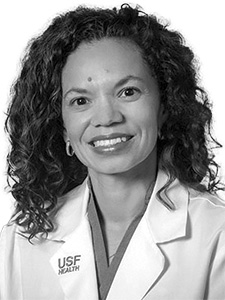
Jessica Brumley, director of USF's division of midwifery, says she's concerned advanced birth centers could pull resources from hospitals serving high-risk pregnancies. "Where does this fit in our current model and the way we finance (it)?" she asks.
Advanced birth centers finally gained traction in the 2024 session, when they were tucked into then-Senate President Sen. Kathleen Passidomo's (R-Naples) expansive "Live Healthy" legislative package. Similar safety concerns about advanced birth centers trailed the bill, though none stopped its progress as in years past.
When the package became law in March of 2024, Florida became the first state in the country to allow C-section births outside of hospitals.
"With the problem we're having with maternity deserts, and in looking at where we've come over so many years with ambulatory surgical centers ... this, to me, was a very innovative idea that I thought was the next step in OB," says Harrell, who ran her late husband's OB-GYN practice for 30 years. "I would encourage hospitals to get involved in this and be creative and innovative. Set the stage. Let's make Florida the leader in this."
MUDDYING THE WATERS
Health care associations and their lobbyists had differing takes on the bills, with organizations such as the Florida Medical Association, the Florida Osteopathic Medical Association and the Florida Chapter of the American College of Surgeons supporting advanced birth center legislation and others — including the Safety Net Hospital Alliance of Florida, which includes 14 hospital systems — voicing safety and workforce concerns about the model.
The Florida Hospital Association has remained a vocal opponent from the get-go. "The idea behind the law is that you can easily identify a high-risk pregnancy versus a low-risk pregnancy. The reality is pregnancy can become high-risk in the blink of an eye during delivery," says Mayhew of the Florida Hospital Association. "When that happens, minutes matter. ... Access to sophisticated, comprehensive hospital services is needed immediately and can't be an ambulance ride away."
Another point of contention with advanced birth centers is their name.
By definition, the new type of facility is different from traditional birth centers, says Jessica Brumley, the director of the division of midwifery at the University of South Florida's Morsani College of Medicine. Under the midwifery model of care, birth centers offer natural, vaginal births. They do not typically provide interventions such as C-sections, inductions or epidurals — which would be offered at advanced birth centers. "To sort of muddy the waters with this concept of an 'advanced' birth center — that is really concerning for me as a midwife," she says. "I believe that it confuses people more than they are already confused about our very difficult health care system and how to navigate it during pregnancy."
Florida Trend reached out to some of the state's largest hospital systems for this report. HCA and Tampa General Hospital declined interview requests. AdventHealth did not respond in time for publication.
Matt Zuino, president and CEO of Jacksonville-based Baptist Health, says he supports any effort to combat unmet needs in his regional market, which is booming in population and demand for health care services. It's important that any advanced birth centers that come to fruition have some sort of "affiliation or agreement" with local hospitals if "things go south" with a birth, he says. "I support it — I just want to make sure access is coordinated, so that we can continue to make sure patients get the level of care they need as quickly as they need it."
Two years after advanced birth centers became law, they're still awaiting formal rulemaking from the Florida Agency for Health Care Administration.
Women's Care Florida, the physician group that said it helped craft the idea of advanced birth centers, has been quiet since the 2019 legislative session.
New York-based private investment firm Lindsay Goldberg acquired the company in October 2017, followed in December 2020 by London-based private equity firm BC Partners. Mintz, the CEO and president, worked for the group until December 2020. Yelverton, the OB-GYN, died in 2023.
Women's Care Florida did not accommodate Florida Trend interview requests for this report. Instead, a representative pointed to an online statement published in June 2024. "Women's Care did not sponsor birth center bill (SB 7016), and we are not currently offering, nor do we foresee offering, cesarean section procedures outside of the hospital setting," it reads. "Viewpoints expressed on this subject by a former physician at Women's Care are his alone and do not represent the views of the company. Women's Care is proud to lead women's health across the state of Florida and our nation."
THE TIMELINE AHEAD
Two years after advanced birth centers were signed into law, the Florida Agency for Health Care Administration was still working on official rulemaking, as of press time.
In a 2024 report to the Legislature, the agency said it was using peer literature reviews and listening sessions with stakeholder groups — including health systems and hospital associations — to develop standards for advanced birth center facilities, staffing, equipment, transportation and transfer agreement protocols.
"Every (C-section) — including a planned (C-section) that is considered low-risk — has a higher risk of hemorrhage, hysterectomy, renal failure, sepsis and risk to the fetus," the agency wrote at the time. "It may not be possible to ensure timely transfer of the patient and fetus to a hospital for lifesaving support from some complications."
The agency held a rulemaking workshop last September and introduced draft regulations for advanced birth centers, which largely follow the legislation that created them.
Some highlights include that hospital transfers must be no less than 30 minutes away from any birth center. The agency also clarified a suite of requirements for advanced birth centers, including a requirement that at least two RNs must be present when inducing or augmenting labor. Expectant mothers with cardiac conditions, chronic health conditions or a history of adverse birthrelated events are too high-risk for advanced birth centers. Each center must have policies for maternal and fetal monitoring and obstetric emergency responses.
Multiple sources reported that no party spoke in support of the model at the workshop. "We fought against it," recalls Richards of the Florida Chapter of Birth Centers, who attended the workshop as a representative of the American College of Nurse-Midwives' legislative committee. "This is not a birthing center."
She says she isn't aware of any existing birth center looking to become an advanced birth center. "Everyone who's truly concerned about maternal and infant morbidity and mortality knows that we need more options, but with that, we need increased reimbursement," she continues. "No one's going to start a business that they can't keep in business."
When asked for updates on rulemaking, the Agency for Health Care Administration declined an interview with FLORIDA TREND. After the regulatory rule, Medicaid will need at least a year to develop and codify reimbursement methods for advanced birth centers before the first of their kind can open.