










In 2023, Moffitt Cancer Center debuted its expanded Innovation and Entrepreneurship Office to help commercialize its research products. Now, it has launched AccelerOnc Studio, the nation’s first venture studio solely dedicated to oncology innovation.
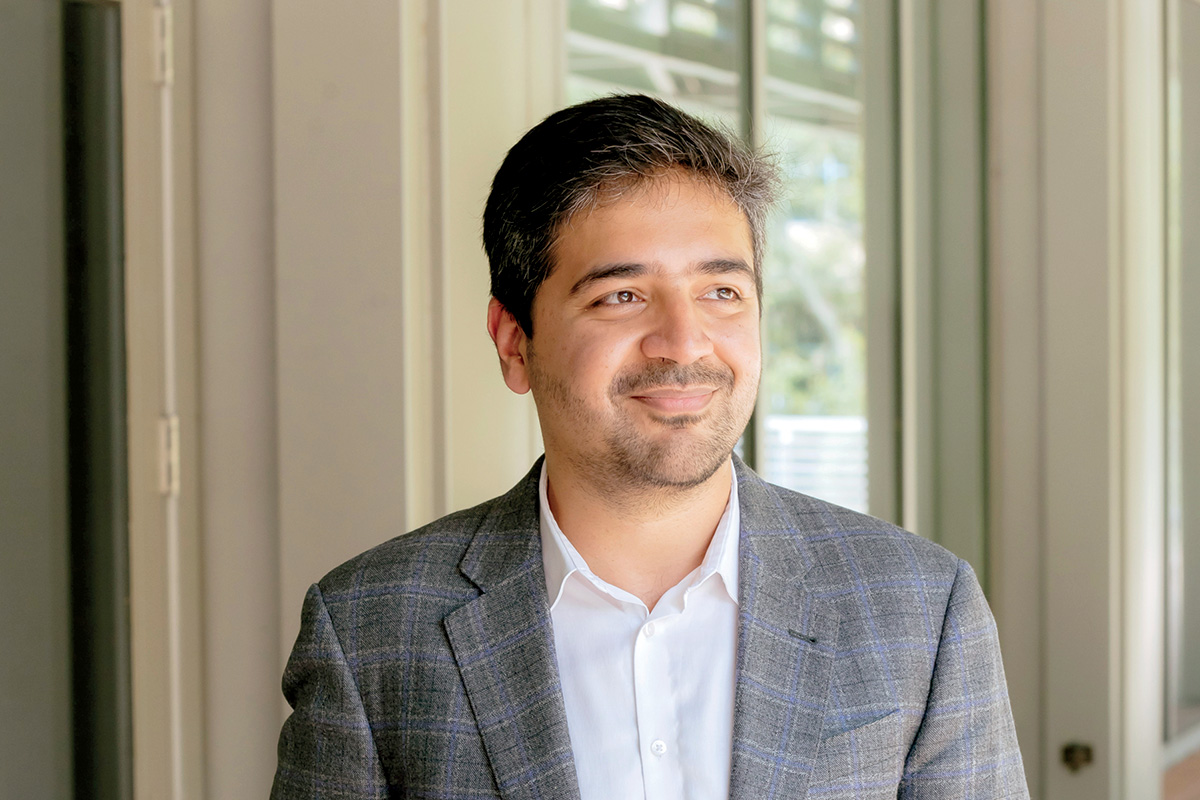
The cancer research nonprofit in Tampa has been awarded more than 120 patents over the last five years, says Dr. Kamal Jethwani, who leads AccelerOnc Studio. But many of those findings “sit on a shelf.” Others are only used within the Moffitt ecosystem, lending to its cancer survival rates that are up to four times better than the national average.
“Up until now,” he says, “we had no real way of bringing that research or expertise out to the world and scaling that in any meaningful way.”
Publicly launched in September, AccelerOnc focuses on fostering cancer care innovations that use data, digital or AI technology. The segment requires more of a business mindset than traditional therapeutics, Jethwani says, calling for a dedicated initiative.
The studio’s business model starts with an idea — a piece of intellectual property that could make a difference in worldwide cancer care. Right now, only Moffitt-based research is targeted. Approved ideas receive strategic business plans. Then, the AccelerOnc team will run the resulting businesses for about 24 months before spinning them out to the market. All the while, the companies can earn investments from Moffitt — seed money has ranged from $2 million to $5 million per company so far, Jethwani says — along with external capital.
“Right off the bat, we’re now incubating these companies significantly cheaper and more effectively than we would otherwise,” he says. “Because this talent and this team is vetted, we’re increasing our chances of success.”
As of press time, the venture studio had publicly announced two companies in its portfolio.
OncoBrain — developed and led by Gilmer Valdes, director of clinical AI at Moffitt — aims to create the world’s first AI oncologist. Today’s cancer treatment guidelines can change by the month, and physicians may struggle to keep up with changing best practices. OncoBrain scrapes 95 public databases and Moffitt data to offer treatment recommendations based on the most up-to-date research.
“If I can put this in the hands of the community oncologist, they don’t have to worry about keeping up,” Jethwani says. “The thinking pattern has been developed alongside oncologists. How an oncologist processes data, how it thinks — it makes that available anywhere.” Twenty-six Moffitt clinicians are using the tool already. “We have very high levels of accuracy.”
The second company, ClearOnc Insights, uses AI to combat disparities in accessing oncology treatment. Its digital platform connects remote patients to Moffitt oncologists for expert medical opinions, regardless of their location or case complexity.
“My thinking was, how do we break out of the model we have today in oncology where it’s all brick and mortar?” Jethwani says. “ClearOnc Insights is about democratizing Moffitt expertise. … The hope is that anyone whose cancer treatment costs more than $30,000 should come to us for a second opinion before they go and invest in that, because we have an opportunity here to improve it.”
A third company — likely to be announced this month — will help pharmaceutical companies design better clinical trials by offering a virtual patient cohort. So far, the tech has translated to around a billion dollars in savings for some companies by getting their products to market faster.
In total, AccelerOnc aims to spin out up to nine companies over the next two to three years.
“My ultimate dream for our impact in the world is that we end up playing a significant role in making cancer a chronic disease and not a cause for mortality,” Jethwani says. “I strongly believe that the way we do that is not just new drug discovery — which is a very important piece of the pie, but not the whole thing. I think that equal and equitable distribution of innovation to people is where we’re going to get the most impact.”