




South Florida State College — with campuses in Highlands, DeSoto and Hardee counties — offers several options for nursing education, from an 11-month certificate in practical nursing to a bachelor’s degree in nursing.
Bolstering training for its 230-some nursing students is the school’s robust collection of simulators.
“We’re fortunate with the amount that we have, considering the size of our college,” says Emily Vickers, the program’s simulation technology specialist. “Not as many other programs have quite the spread that we do, but we are small.”
Most of the equipment is high-fidelity manikins from Norway-based company Laerdal Medical. For example, meet SimMan: an adult patient simulator used for advanced clinical scenarios, including trauma, critical care and emergency response. He exhales carbon-dioxide, his chest rising and falling. His blood pressure levels are adjustable. He even blinks and bleeds. He’s the college’s “most used and abused” manikin, Vickers says.
There are also the three pediatric simulators — a newborn, an infant and a 6-year-old. There’s the SimMom that mimics every stage of labor, delivering up to four babies a day depending on the class. There’s even a manikin with adjustable skin that can simulate a geriatric patient, providing hands-on training from birth to end of life.
During the 2020-21 fiscal year, South Florida State College received $500,000 in state funding to buy the manikins and open its Clinical Immersion Center — what it calls the hub of clinical education for the college’s rural three-county district.
“Prior to that, I know that (the nursing program) had highfidelity manikins, but they were kind of dated,” Vickers says. “We did a lot of trade-ins with Laerdal and got the newest ones.”
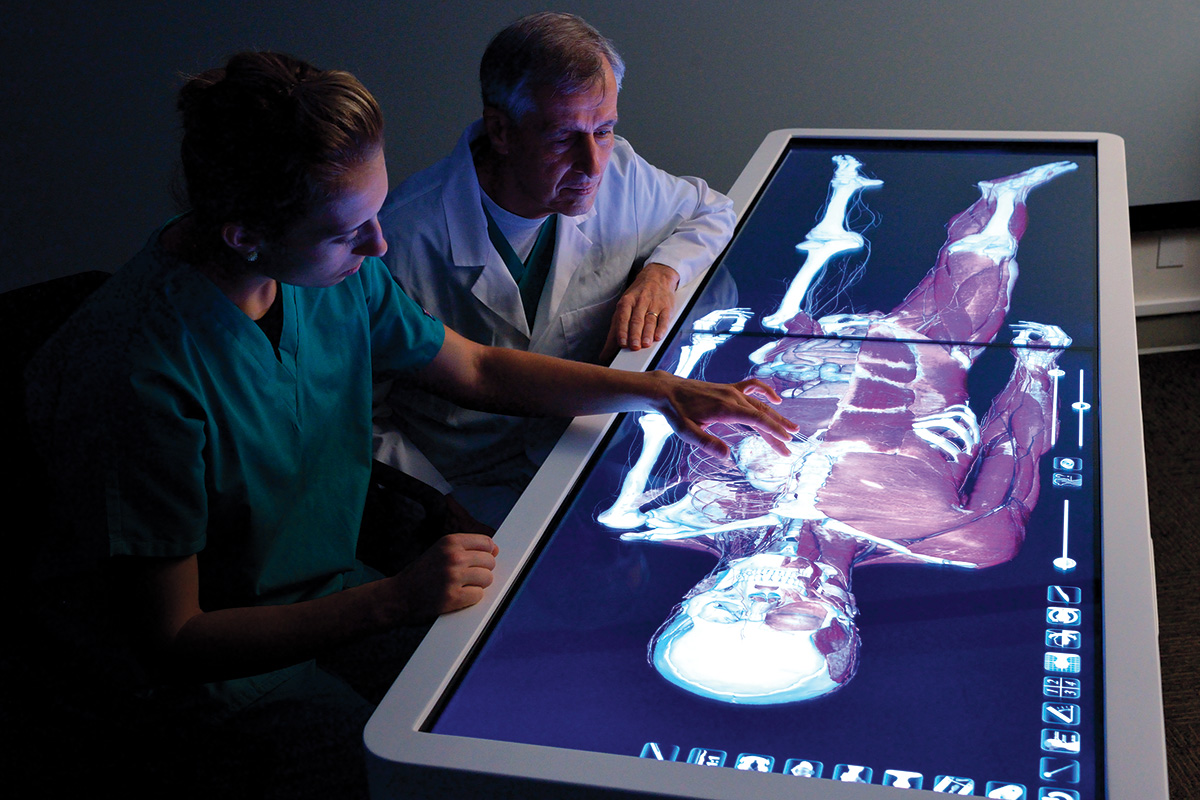
This summer, the nursing program acquired an Anatomage table — an interactive display depicting digital cadavers. It resembles a morgue table but whirs to life like a computer, allowing students to study human anatomy and dissections.
The college purchased the tech with funding from the U.S. Department of Labor’s Strengthening Community Colleges Training Grants program. “It’s really cool for our students to learn more that way, because you’re able to actually look and pull apart and pick apart every single body from head to toe,” Vickers says.
Another new addition to the school’s repertoire? Wearable simulators from the Delaware-based company Avkin, financed by Florida’s Linking Industry to Nursing Education (LINE) Fund and an AdventHealth donation. Students and instructors can don the devices and practice a variety of medical procedures on each other, including wound care, catheter and chest tube insertions, and injections.
Thanks to $50,000 from the Thakkar Family Foundation and LINE funds, South Florida State College also will soon purchase virtual reality headsets to simulate virtual clinicals.
Sim Upgrades
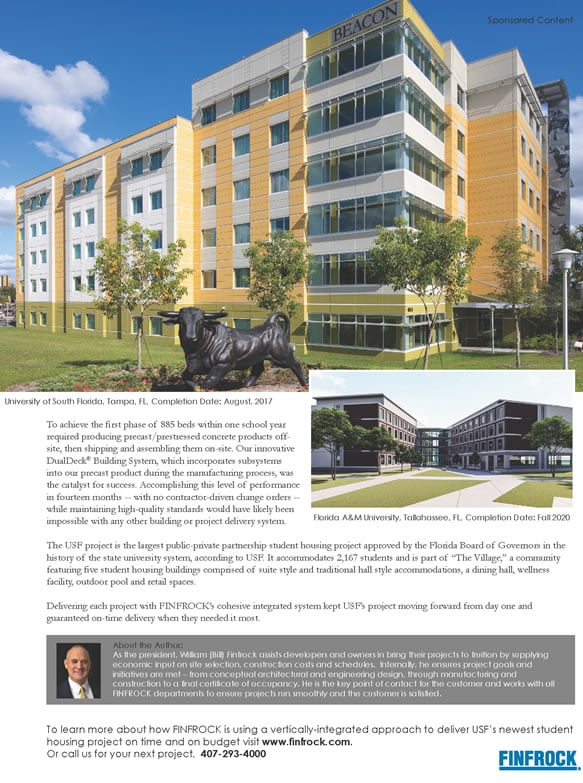
State universities are also investing in nursing simulators. This May, for example, Florida State University opened a 5,000-sq.-ft. nursing simulation lab equipped with manikins, artificial intelligence tools and hospital-grade equipment. The University of South Florida’s reconstructed College of Nursing, set to open next fall, will feature a new simulation center. Thanks to $4.4 million in investments from Tampa General Hospital, it will include 12 clinical examination rooms, six debriefing classrooms and six control rooms. In August, the school launched the world’s first universitybased undergraduate concentration in health care simulation operations.