





THE ENTREPRENEURS
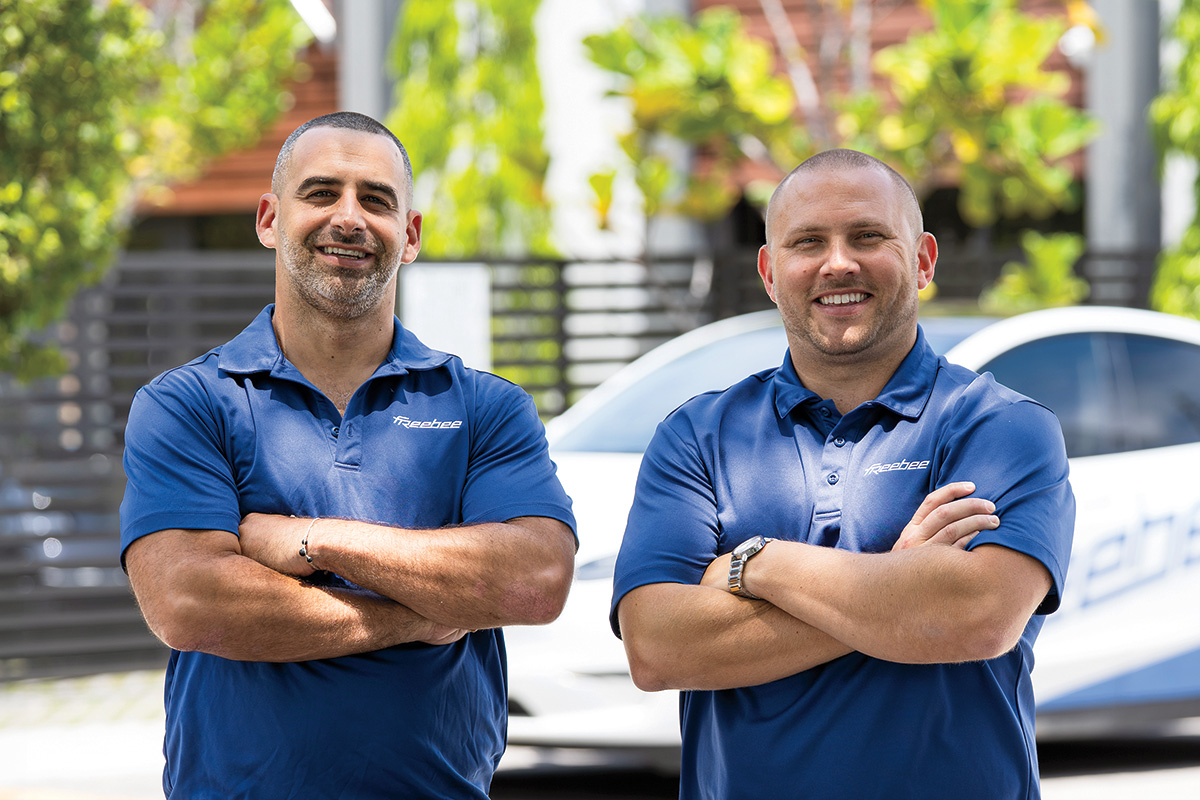
JASON SPIEGEL, 39
Co-founder and CEO
KRIS KIMBALL, 40
Co-founder and COO
Freebee, Miami
Long before "microtransit" became a transportation buzzword, two college friends were just trying to figure out what to do with their lives. After meeting as University of Miami freshmen over a shared love of the Philadelphia Eagles, Jason Spiegel and Kris Kimball became roommates and later graduated into the Great Recession of 2008-09. After trying high-pressure phone sales, Kimball worked in Miami Beach hospitality while Spiegel explored real estate. "We said 'Wow, this is not fun,'" Spiegel recalls. "We've got to do something that's going to get our juices flowing every single day."
At the same time, they noticed that getting around Miami Beach was terrible. "In 2010 and 2011, taxi cabs were still the preferred method of transportation. You'd call the number and wait 45 minutes to an hour for a ride," Kimball says. That led them to launch Freebee in 2012 with six electric vehicles that featured oversized speakers, neon lighting and eye-catching advertising wraps. "Everybody was like, 'What was that spaceship rolling by?'"
"I feel like we're still at ground level," says Jason Spiegel. "It's really about providing this service to as many communities as we can and improving their quality of life."
A Better Business Model
At first, Freebee was really an advertising business built around free rides. Brands paid to advertise on the vehicles. Customers often found Freebee through Twitter or simply flagged down vehicles, and Freebee quickly became part of the Miami Beach scene — but ad revenue was unpredictable and seasonal.
The turning point came when Key Biscayne leaders approached Freebee with a problem: The community was struggling with traffic congestion and parking shortages. Residents needed a better way to move around town without relying on personal vehicles — and Key Biscayne was willing to foot the bill.
Freebee launched there in 2017. Residents embraced the service, ridership climbed and parking pressures eased — and Freebee's contract with Key Biscayne provided the financial stability its previous business model lacked. "We were able to prove out the success over the first few months, and we said this is the path forward," says Spiegel.
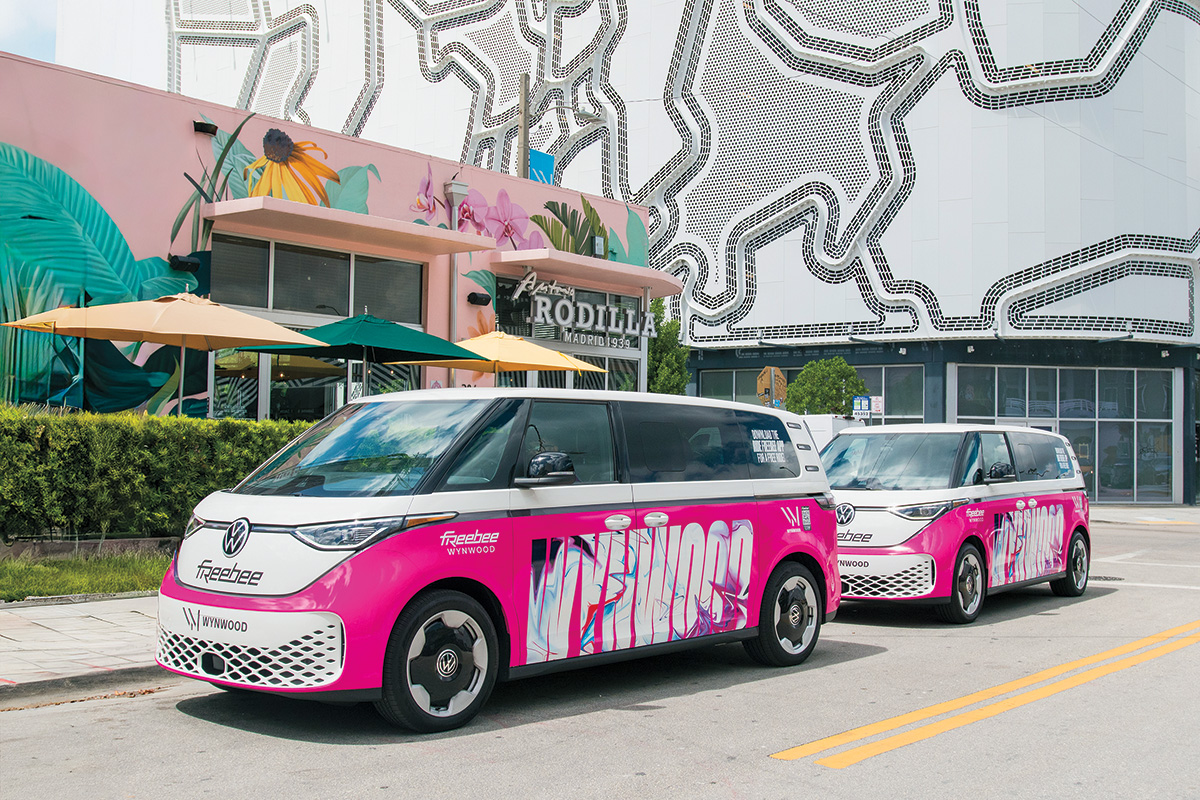
Soon, cities across South Florida were signing on. They included: Coral Gables, Pinecrest, Aventura, Miami Gardens, Miami's Coconut Grove and Wynwood neighborhoods, Plantation, Sunrise and Delray Beach, among others. Like Key Biscayne, the cities were facing rising operating costs, declining bus ridership and demand for more flexible transportation options.
Unlike fixed bus routes, Freebee lets riders request transportation on demand via its app. It's up to the city or agency whether there will be a nominal cost for riders; in many areas, it's free. Says Spiegel: "People want convenience. They want to get picked up where they're at and driven directly to where they need to go."
Freebee also made an early decision to make its drivers employees, not contractors. Though expensive at the time, the move allowed Freebee to standardize training, customer service and safety procedures. The company's fleet evolved with larger electric vehicles better suited for full-scale public transportation, such as Teslas and Volkswagen ID Buzz minivans.
Expanding Footprint
As Freebee expanded beyond South Florida to places such as St. Pete Beach, Islamorada, Fort Pierce, Bradenton and Kissimmee, the company leaned more heavily into technology, including AI-powered fleet cameras and real-time monitoring.
Freebee achieved one of its biggest milestones to date last fall in Seminole County. Faced with rising costs and traditional fixed-route buses, the large county north of Orlando decided to replace much of its transit with Freebee rather than tweaking the old system.
Today, the 42-vehicle operation, called SCOUT, spans about 190 square miles over five zones, making it one of the largest microtransit systems in the country. It accommodates more than 30,000 riders each month, and Freebee found that more than 75% of its new riders in Seminole had either never used public transit before or lacked access to it. Seven more vehicles are on order. "It just keeps building," Spiegel says.
Freebee also has expanded into three areas of North Carolina and operated a successful pilot program in Virginia Beach. "We won't be satisfied until we see this working across the country," Kimball says.