





THE ENTREPRENEUR
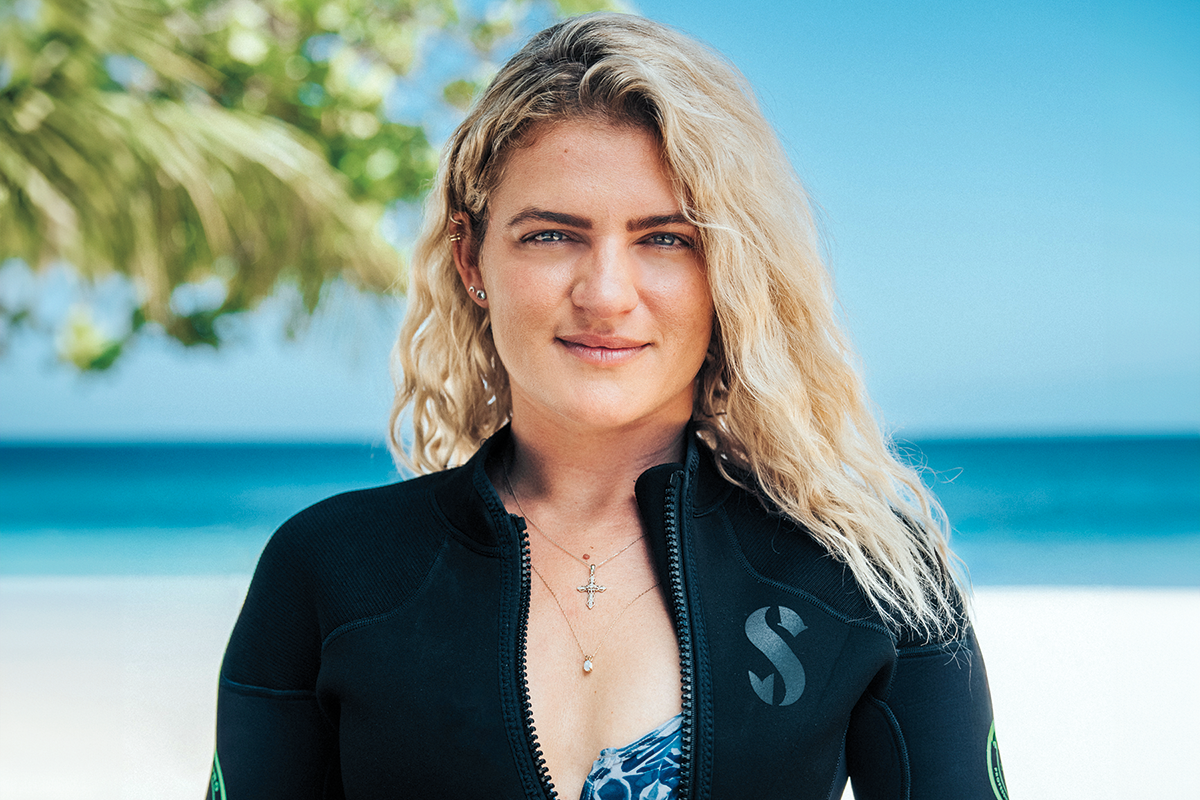
SHELBY THOMAS, 30
Founder and CEO
Ocean Rescue Alliance International, Hollywood
THE BACKSTORY
Shelby Thomas grew up near Daytona Beach and lived for the ocean. “I grew up surfing, diving, in the water fishing,” she says. “That really kick-started it — my interest in the marine environment.”
At the University of Florida, Thomas pursued microbiology and marine science, and her early work focused on pharmaceutical compounds derived from coral. But outside the lab, she says, “I started seeing firsthand the degradation of our reef track here in Florida.”
Years of scuba diving gave her a frontrow view of the losses. Once-vibrant coral ecosystems were thinning, breaking and paling. While studying for her master’s degree in marine ecology, Thomas’ interest in coral restoration grew and carried into her Ph.D. program at UF focused on conservation genetics. There she worked on applying modern technology to better understand and manage marine ecosystems. “And then that turned into seeing the need for scaling restoration from a more industrial perspective,” Thomas says.
The idea that sparked what would later become her coral restoration nonprofit didn’t arrive fully formed, but emerged from unexpected collisions, as entrepreneurial ideas often do. Thomas had connected with an artist and an engineer to work on an early project called 1000 Mermaids, which blended art and conservation. Sculptures placed underwater weren’t just aesthetic — they created habitat for marine life while drawing people in and telling stories. In many ways, this was her first lesson in thinking beyond traditional models. “This really evolved through having an open mind and working with collaborators,” Thomas says.
By 2018, the Florida surf kid was well on her way to becoming a pioneering marine conservation entrepreneur. She realized that while research was vital, the pace of restoration needed to move at industrial scale to combat the rate of habitat loss. In 2019, Thomas founded Ocean Rescue Alliance International (ORAI), a nonprofit focused on scaling marine restoration through innovation, infrastructure and community engagement, including eco-tourism. The 1000 Mermaids Project is now part of ORAI.
GROWING A NONPROFIT
At its core, ORAI is on a mission to restore ocean health by enhancing coral reef ecosystems. Using engineered structures ORAI designs — some artistic as well as functional — the organization creates habitats that support marine life, protect coastlines and invite people into the ocean in meaningful ways, Thomas says.
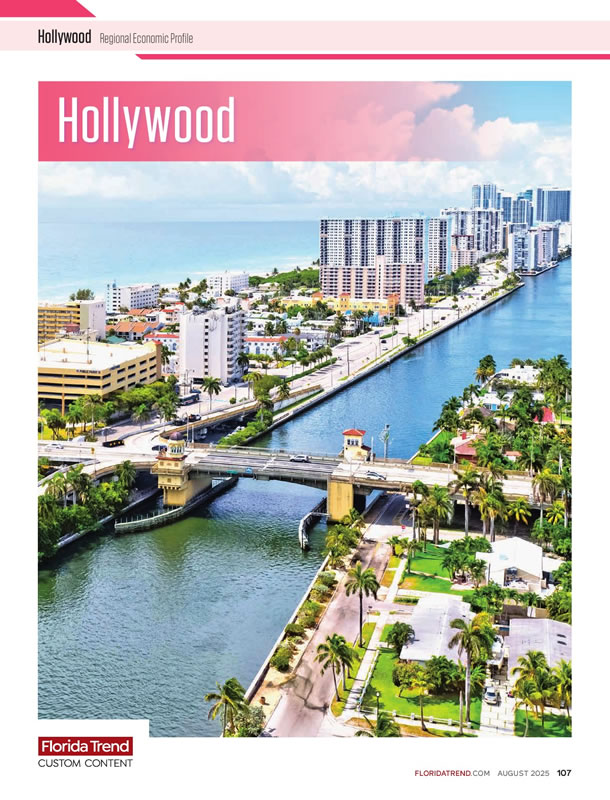
For example, in Hollywood in Southeast Florida, ORAI deployed a project called Guardians of the Reef. It’s a snorkelfriendly underwater installation featuring 16 sculptures of Poseidon, mermaids and marine guardians. Visitors can swim through the site and take selfies while experiencing marine life up close. Yet beneath the surface, those structures create marine habitat that’s been lost and help to scale coral restoration. They can also function as breakwaters, reducing coastal erosion and protecting shorelines during storms.
In short, ORAI uses art as a tool for both restoration and for funding the work, Thomas says. “We’ll work with cities, counties or developers and create sites that help support ecotourism by submerging underwater sculptures that finance restoration work.”
Since its founding, ORAI has deployed 10 reef sites and more than 500 structures in the ocean, including 65 artistic sculptures. The organization, now a team of five, has also completed multiple blue tech research initiatives and certified more than 85 children in scuba diving, expanding access to the ocean for those who might never have experienced it otherwise. Along the way, Thomas became a co-inventor and co-patent holder of Coral Lok, a threaded device that enables coral fragments to be screwed directly into artificial reef structures.
Each milestone came with its own challenges, including permitting processes that can take more than a year, complex engineering requirements and the constant need for funding, Thomas says. That included reimagining the nonprofit model itself. Rather than relying solely on grants and donations, ORAI integrates contracts, partnerships and service-based revenue streams. Cities, counties and corporations can sponsor reef projects or even adopt individual modules. “We really create business models for nature,” she says.
WHAT’S NEXT?
ORAI’s work stretches across Florida and beyond, with projects in the Caribbean and Australia and plans for expansion. Closer to home, the organization is expanding its Reef Discovery Center in Fort Lauderdale. Part of the facility will be a coral museum and education center slated to open this summer. Coming along after that will be a coral restoration lab called WeRestore, which will include tank space that students, researchers and practitioners of restoration aquaculture can rent out. When fully open, the facility is envisioned to be a combined museum, research lab, training center and co-working hub.
Looking ahead, Thomas aims to develop a for-profit arm called Coastal Resilience Solutions so ORAI can increase efficiency and production by engineering and manufacturing its own reef structures. She’s also pitching a breakwater and habitat restoration project for Tampa Bay that could integrate seagrass, oyster and mangrove restoration with an artistic tribute to the region’s “Champa Bay” sports legacy of 2020-21, when area sports teams (the Tampa Bay Buccaneers and the Tampa Bay Lightning) celebrated three championship titles in under a year.
Internationally, ORAI is working with Mayan elders in Mexico to design reefs that tell the story of their culture. “We can use art as a deep, contextual way to connect people to the ocean and also to the history of the region,” Thomas says.