












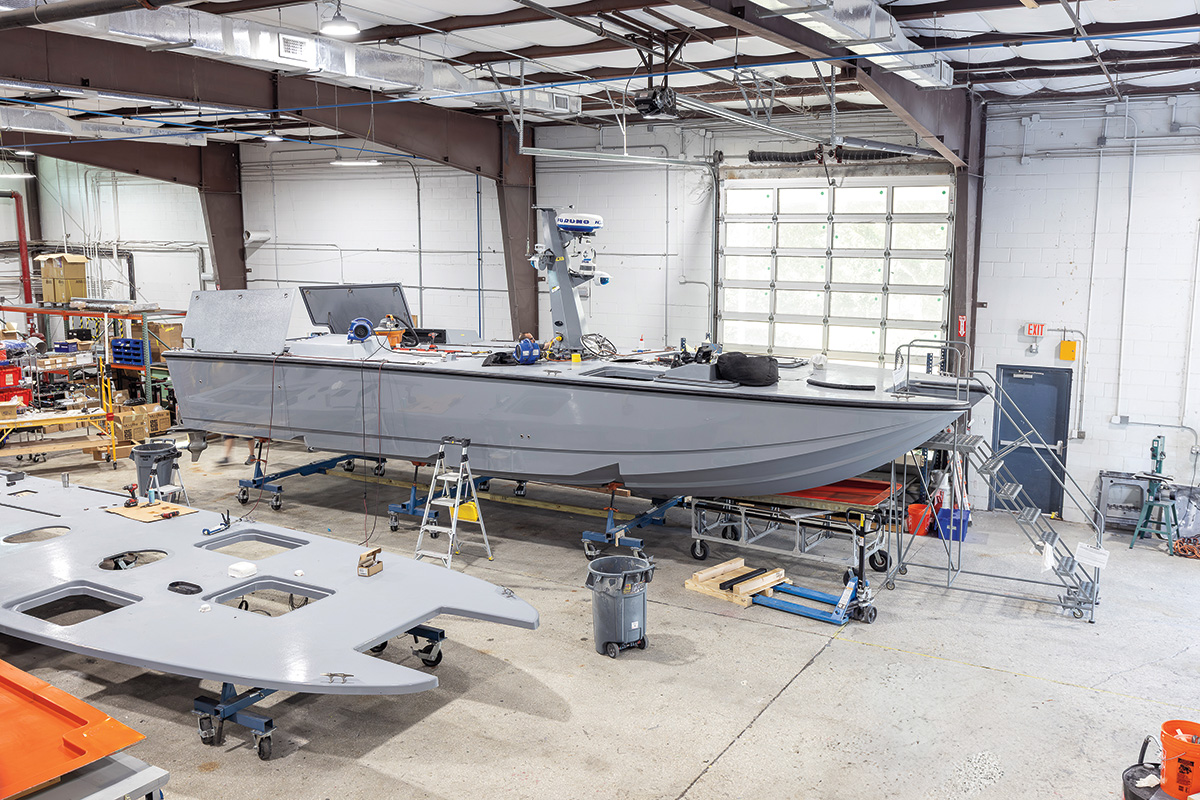
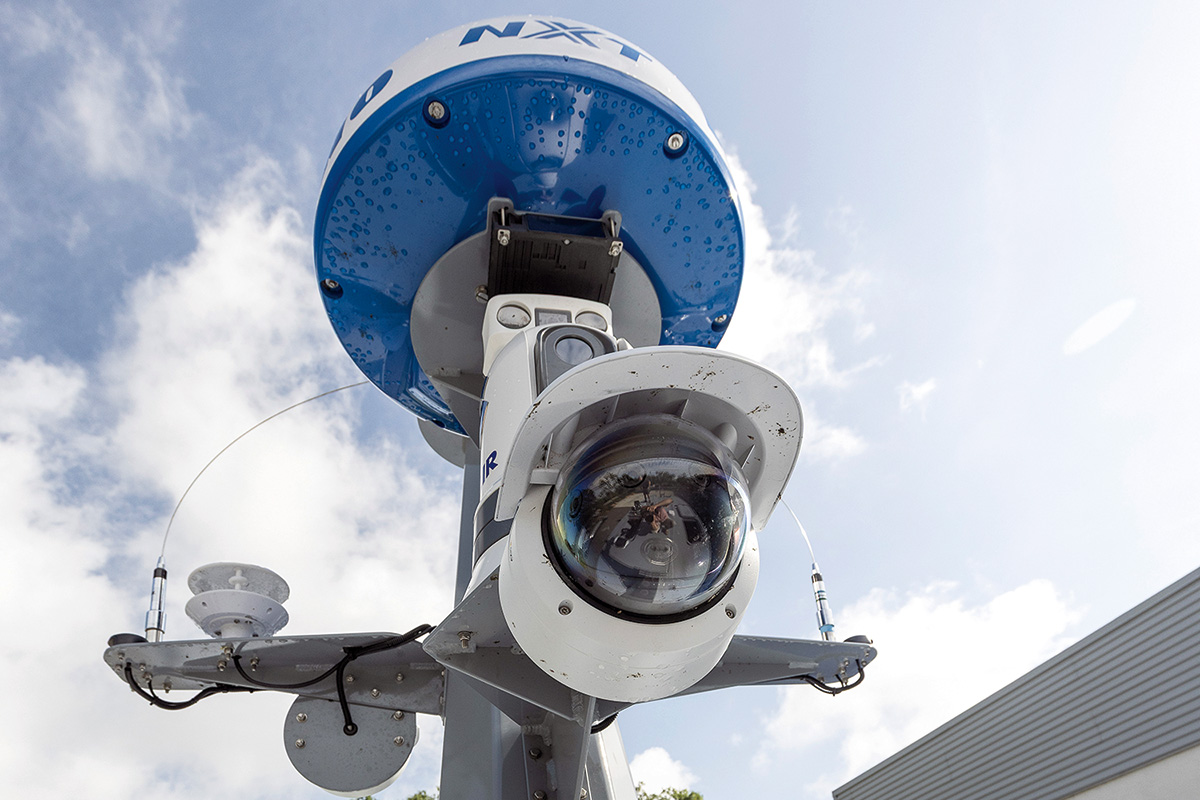
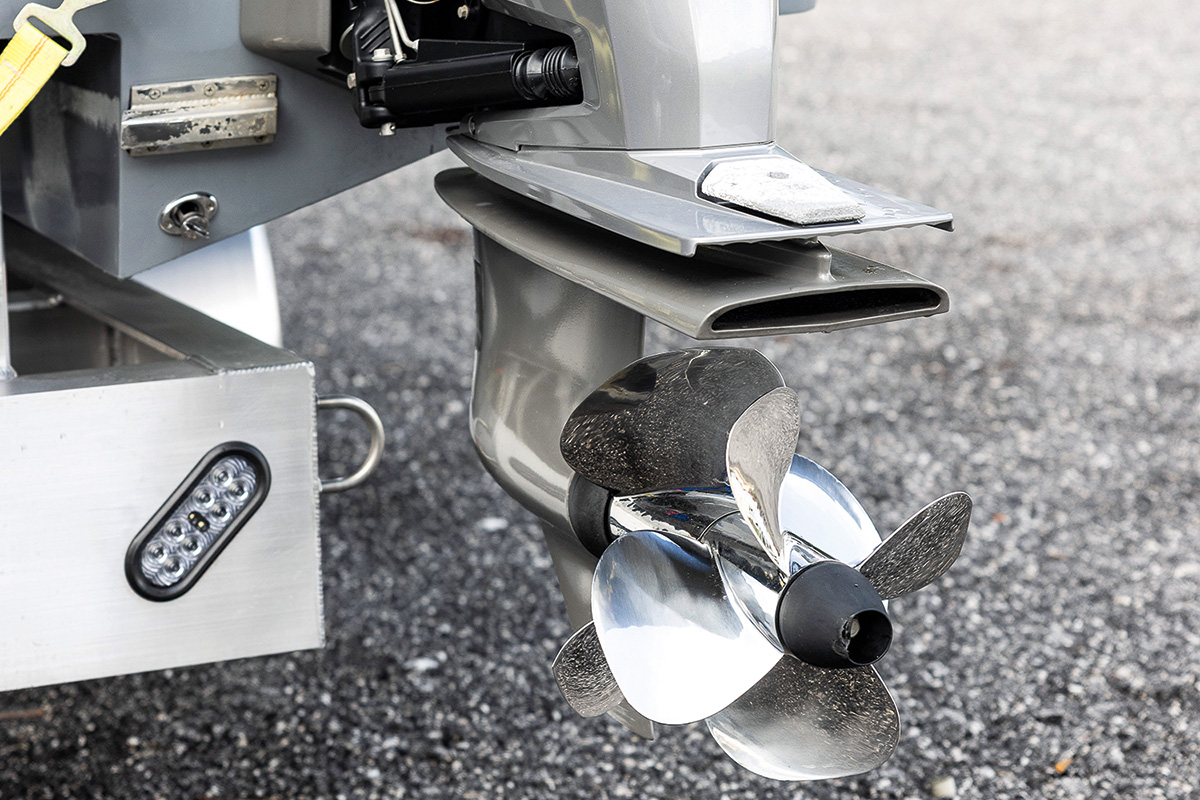
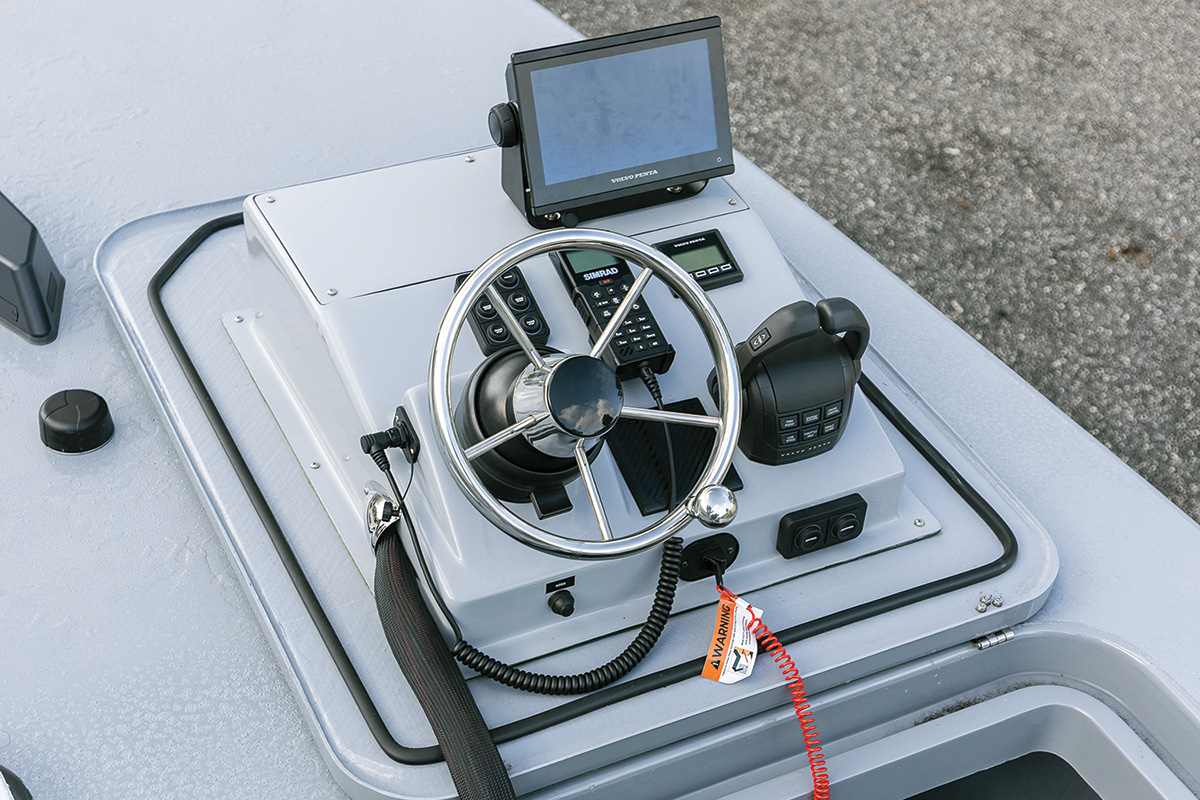

The time looks ripe for Florida-based military drone makers such as Maritime Tactical Systems in Melbourne.
The Russia-Ukraine War has focused U.S. leaders on autonomous tech. In the Strait of Hormuz, the U.S. Navy deployed uncrewed surface vessels to clear mines. In the Pacific, U.S. Admiral Samuel Paparo wants to turn the Taiwan Strait into an "unmanned hellscape" if China attempts invasion. In Washington, the Pentagon has asked for $54.6 billion to accelerate investment in drones of all types.
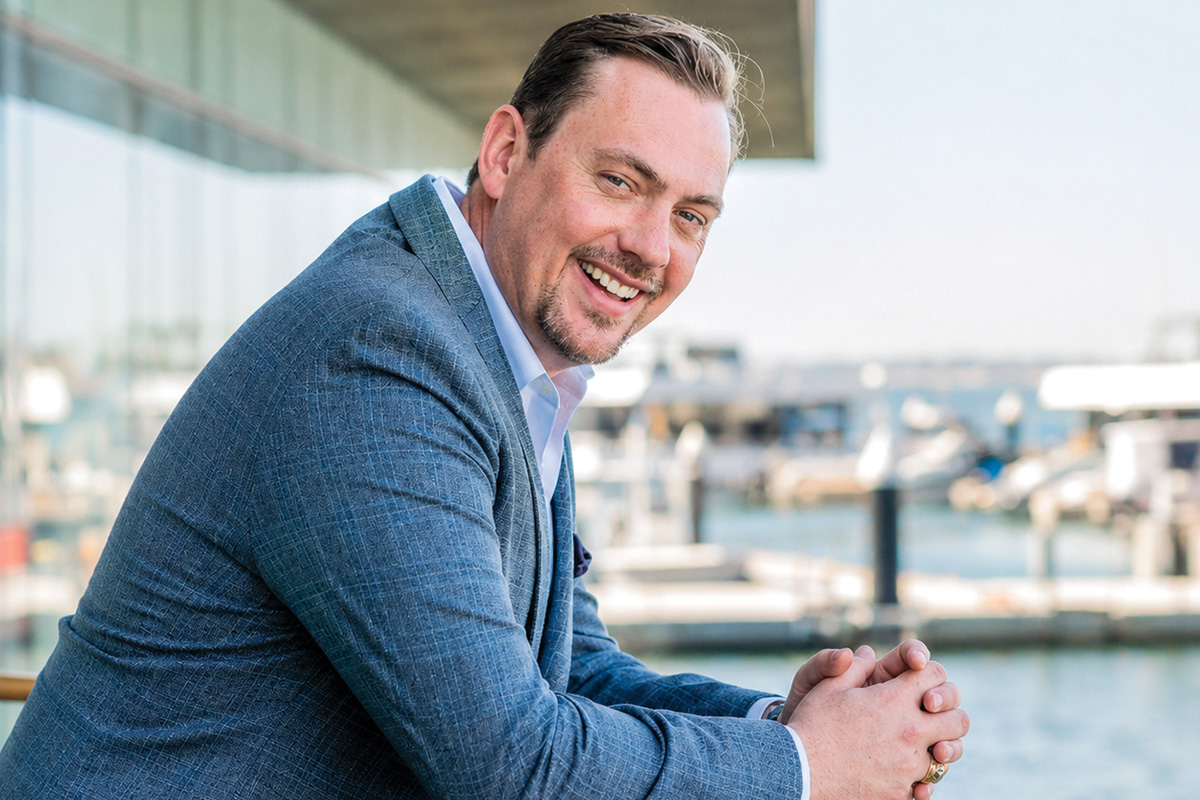
"It's inevitable," says Seamus Flatley, Maritime Tactical's chief growth officer. "It's natural this stuff is going to progress to a maritime environment. Companies like [ours] and our competition will continue to invest in our technology and capabilities and be positioned to respond to the Navy's needs and requirements."
But as the opportunity is palpable for drone makers such as Melbourne's Maritime Tactical, so is frustration.
Fulfilling military needs is an important part of Florida's economy. Defense accounts for a quarter of a million Florida jobs, according to the Florida Chamber of Commerce. The state is home to 20 military bases and is the only state with three different four-star commands. Last year, Palm Beach billionaire Steve Ross, the Florida Council of 100 corporate group and tech conference eMerge Americas founded an accelerator for startups in defense and dual-use technology in Miami (and fintech in West Palm Beach).
Miami's interest in growing defense businesses in part prompted the Association for Uncrewed Vehicle Systems International, a Virginia-based drone trade group, to schedule its annual gathering in Miami Beach in 2027, says association CEO Michael Robbins. Autonomous tech companies in Florida employ significant numbers, Robbins says. The state has strong local chapters, he adds, and "Florida has done a good job of signaling to investors it's open for business."
FROM SHOP TO SEA
Bruce and Tom Hanson, brothers with an aerospace and defense background, founded Maritime Tactical — it goes by Martac — in 2012. Initially, it prototyped small, eight-foot, uncrewed surface vessels (USVs) for the defense market. Florida was an atypical choice for USV manufacturing. San Diego is the hub for USV tech and Washington for procurement.
That said, Florida waters and good weather have proved beneficial for more than a century for the military and its contractors to develop, test and train. Martac engineers can take a prototype from shop to sea. Jim Harvey, Martac's chief technology officer who is based in San Diego but a frequent visitor to Melbourne, says the company also benefits from the "inherent, organic" knowledge of boating carried by "all the Floridians that work for us."
That's important because Martac sees its edge as approaching USVs from a maritime mindset rather than seeking to translate autonomous car or aerial vehicle tech to water. Waves and currents are tougher to navigate than roads. "It's very complicated, but I think that we're threading the needle really well," Harvey says.
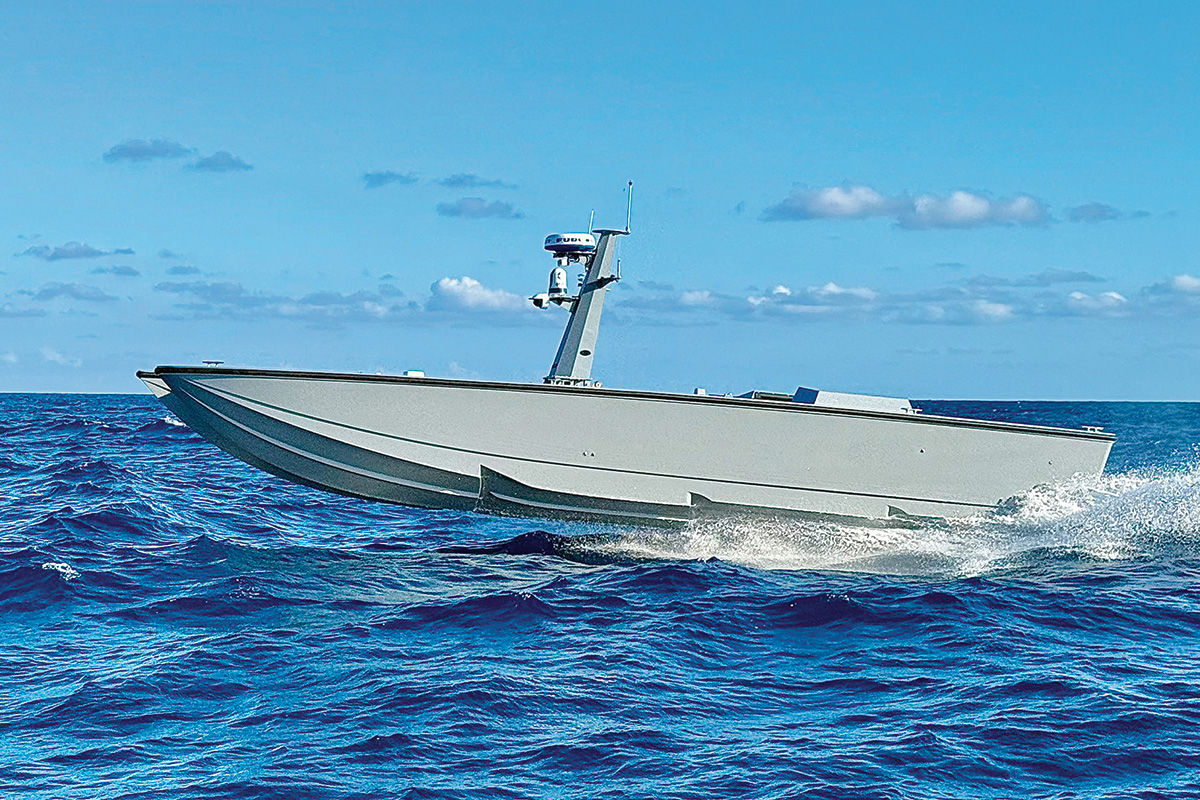
Over time, Martac has made longer boats — 18-, 24- and 38-footers — and is working on one called the Leviathan that is 82 feet long. Somewhat unusually, Martac offers boats and its autonomous tech brain. (A number of players specialize in one and partner for the other.) Martac tech also allows independent operation of a single boat or management of a fleet.
C3, a boat builder in Stuart in Martin County, accounts for most of Martac's hulls. Boats are finalized with Martac tech in Melbourne. Flatley won't disclose the price of Martac boats but acknowledges the smaller USVs run in the six figures and the larger ones cost more than $1 million. The company employs 100 people in Melbourne.
NAVY INDECISION
The Navy has put the boats through their paces. In 2023, in a Navy exercise in the Middle East, a Martac T38 Devil Ray armed with a missile system took on a simulated enemy and "successfully scored direct hits each time," according to a Navy brief, thus becoming the first American USV to use lethal munitions in the Middle East to destroy a physical target.
Martac "put their money where their mouth is" by spending to keep support staff in the Middle East, assuring the Navy would make use of the boat, says Jack Dougherty, a U.S. Navy veteran and CEO of Abu Dhabi-based Janus Marine & Defense, a maritime autonomy firm that represents USV manufacturers.
It recently launched a comparison website covering nearly 200 USV platforms. "They have a quality product," Dougherty says, but, "there has to be a buyer for the vessel. You've got 100 Henry Fords, maybe more, in garages. That is not sustainable." Martac's portfolio includes boats with "marsupial capability" — unique for surface vessels.
Its T38 and T24 can autonomously deploy and recover its stealthy, all-electric T12. The company flagship T38 can transport a 4,000-pound payload — meaning weapons, surveillance gear or other equipment. "Tell me what you want integrated onto the boat, and I will do that. We don't want to deliver a boat," Harvey says. "We want to deliver a solution to the customer."
The coveted customer is the U.S. Navy. To the vexation of USV makers, despite all the buzz about the vessels, the Navy took its time spelling out what it wanted in large and medium USVs. As of this spring, it still hadn't issued requirements for small USVs — Martac's wheelhouse — leaving companies waiting. Says Flatley, "A lot of people inside the Pentagon know that Martac has a great product, but no one's coming and saying, 'I'm buying. Let's go, guys, 50 boats in this time frame.' You're not seeing actions behind those words yet."
Navy indecision explains why Indo-Pacific commander Paparo, two years after his "unmanned hellscape" pitch, has no meaningful USV force. In March, Defense Secretary Pete Hegseth fired Navy Secretary John Phelan for moving too slowly to modernize the Navy.
"It's very hard to scale manufacturing when you have an inconsistent demand signal," says Robbins, the drone association CEO, in an interview before Phelan's firing. Even then, the procurement process was being reformed, and Robbins saw demand coming. "The competitive landscape is wide open. It's any single company's competition to win or lose."
"A lot of people inside the Pentagon know that Martac has a great product," says Martac Chief Growth Officer Seamus Flatley, but actual orders have been slow to come.
Witness the annual eMerge Americas tech conference in Miami Beach in April, where drone companies and soldiers, including a team that won a drone competition, were out in force. The national security portion of the conference tripled from last year, says Tyler Johnson, eMerge's national security director. For the first time, eMerge had a stage dedicated to national security. Pre-conference, eMerge held a demo, which sold out two months in advance, for drone tech for air, water and underwater. The event drew 350 people. More than 25 companies participated, Johnson says. Attendees included the director of the Defense Advanced Research Projects Agency (DARPA); an undersecretary of defense; state, local and federal agencies; law enforcement; and several military commands along with intelligence organizations. Speakers at eMerge had sobering thoughts for the legion of drone and AI companies.
"We have to be realistic with these courageous founders and explain to them that the government has to pick winners," said David Spirk, senior counselor at Palantir Technologies. "This isn't communism, this isn't socialism. You're not all going to succeed."
AT THE READY
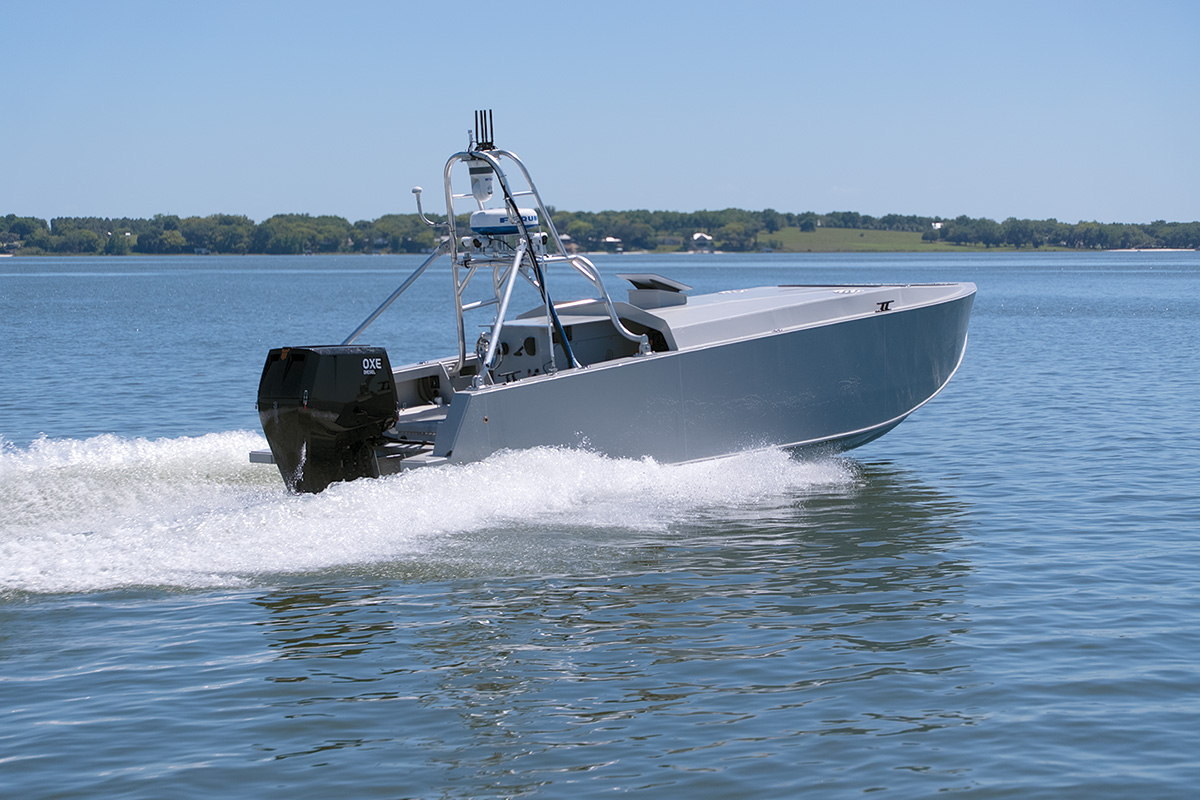
Tideman Marine, a nascent Ocala boat maker, wants to succeed with its USV offerings. Tideman is owned by Massachusetts-based United Plastic Fabricating, which employs approximately 100 people in Ocala, turning high-density polypropylene (HDPE) into water and foam tanks for fire trucks and other uses. In 2023, the company brought in an experienced USV hand, Eric Caplan, to build a business making HDPE boats and other marine products under the Tideman name. The thinking was that HDPE can be lower-cost, lower-maintenance and a more-durable option compared to fiberglass and aluminum for boats. Tideman has small contracts to supply boats to state agencies and law enforcement as well as the Coast Guard but has also set its sights on the Navy, Marines and Customs and Border Patrol.
on its nine-meter vehicle for expeditionary naval over-thehorizon missions (VENOM). Burlington, Mass.-based Scientific Systems Co. Inc. (SSCI) and Boston-based Sea Machines Robotics provide the VENOM's brain while Tideman provides the hull and diesel engine. The VENOM tops out at more than 35 knots with a range of 500 to 800 nautical miles. SSCI, which leads the project, said it was ready to rapidly scale production for the Defense Department.
Instead, the Navy gave a $392-million contract to Austin, Texas-based Saronic Technologies. Founded just four years ago, it's raised $1.75 billion in venture capital, promising to revolutionize naval warfare with USVs and disrupt procurement dominated by the Big Five defense contractors, which include Melbourne-based L3Harris. Saronic's resources — and those of other venture-backed concerns — allow them to develop shipyards to produce boats in volume even though new.
Saronic and other investor-backed startups clearly rankle players who have bootstrapped their way, such as Martac. "We've been around over a decade," Flatley says. "These guys have stepped into the business only in the last 24 to 36 months."
Martac's challenge, without those venture capital resources, is assuring the government it can transition to volume manufacturing. Harvey says the company can produce at scale by contracting with Florida's numerous boat makers to construct its hulls. Last year, founder and CEO Bruce Hanson shifted to vice chairman and the company hired as CEO board member Tony Smeraglinolo, an executive experienced at scaling up a business.
Martac has made headway. An undisclosed U.S. military customer bought 10 boats last year. The Philippines navy acquired seven. The company has a deal with Taiwan interests to develop USV tech. Martac is on pace to turn out 36 boats a year and post between $75 million and $80 million in revenue, both records, Flatley says. Harvey said he expects an "avalanche" of U.S. government orders given the interactions he's had with the military. "I would say that we are in a very good position now to be able to turn those switches on if — when — the opportunity arrives," Harvey said in an April interview, "and it's about to arrive. We've had too many requests for our boats in the past month and a half for this not to blow up into something."