




When LaKisha Holmes was teaching, she wanted one thing clear to her students: "I am your teacher, not your friend." When you send an email, be sure it has the proper tone, and "do not email your teacher in all caps. That is screaming."
Now that she is Daytona State College's associate vice president for arts and sciences, Holmes wants all her faculty to take advantage of such teachable moments. She and her colleagues try to embed soft skill principles throughout the curriculum, from certification programs to associate and bachelor's degrees in nursing.
"Each and every day, as we teach our classes, we are instilling the ethics of the workplace: Reporting on time. Being accountable," says Sherryl Weems, associate vice president of the Mary Karl College of Workforce and Continuing Education.
It's subtle, she says. There's no announcement that students might be taught about professionalism or customer service. It's just part of the instruction.
For nursing and allied health fields, it boils down to "Can we live with you for eight to 12 hours a day?" says Colin Chesley, associate vice president in the College of Health and Public Services. "Can you engage in teamwork, good communication, kindness, respect, empathy, accepting responsibility? ... It comes down to that student being humble and teachable and being willing to accept that feedback."
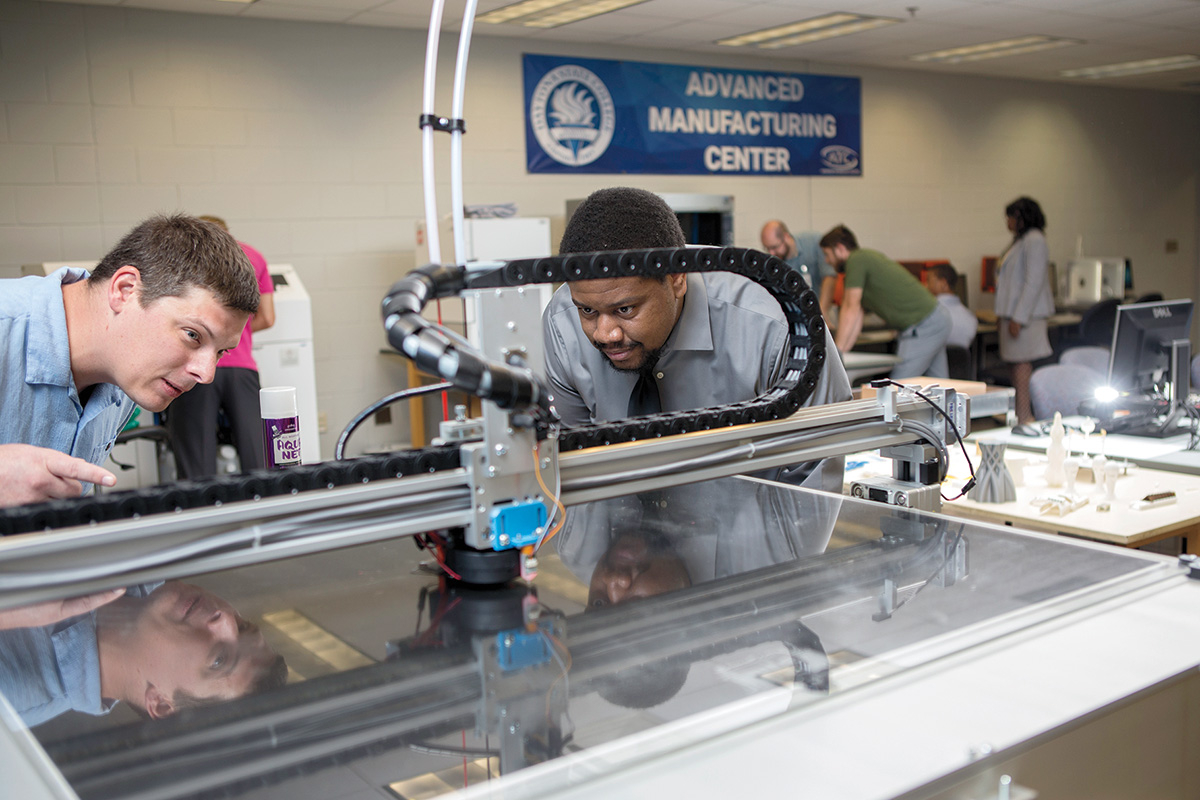
The state has been pushing colleges to set up apprenticeship programs with local business and industry, says Michael Daniels, associate vice president for the College of Business, Engineering, and Technology. Daytona State has Florida's first Federation for Advanced Manufacturing Education (FAME) chapter, which puts students to work three days a week and in the classroom two days. They get paid as they learn and usually leave with no debt.
Students wear their work uniforms on class days, reinforcing the need to look and act professionally, Daniels says. And faculty work closely with the workplace supervisors so they know what a student might need to work on.
"When they start, they're a very different student professional than when they exit the program after two years," Daniels says. He compares it to going into the military. "When you come out, people notice the difference. Military service can instill structure in a person. With that, they're highly sought after. A lot of our students have seen some pretty cool successes out of it."