




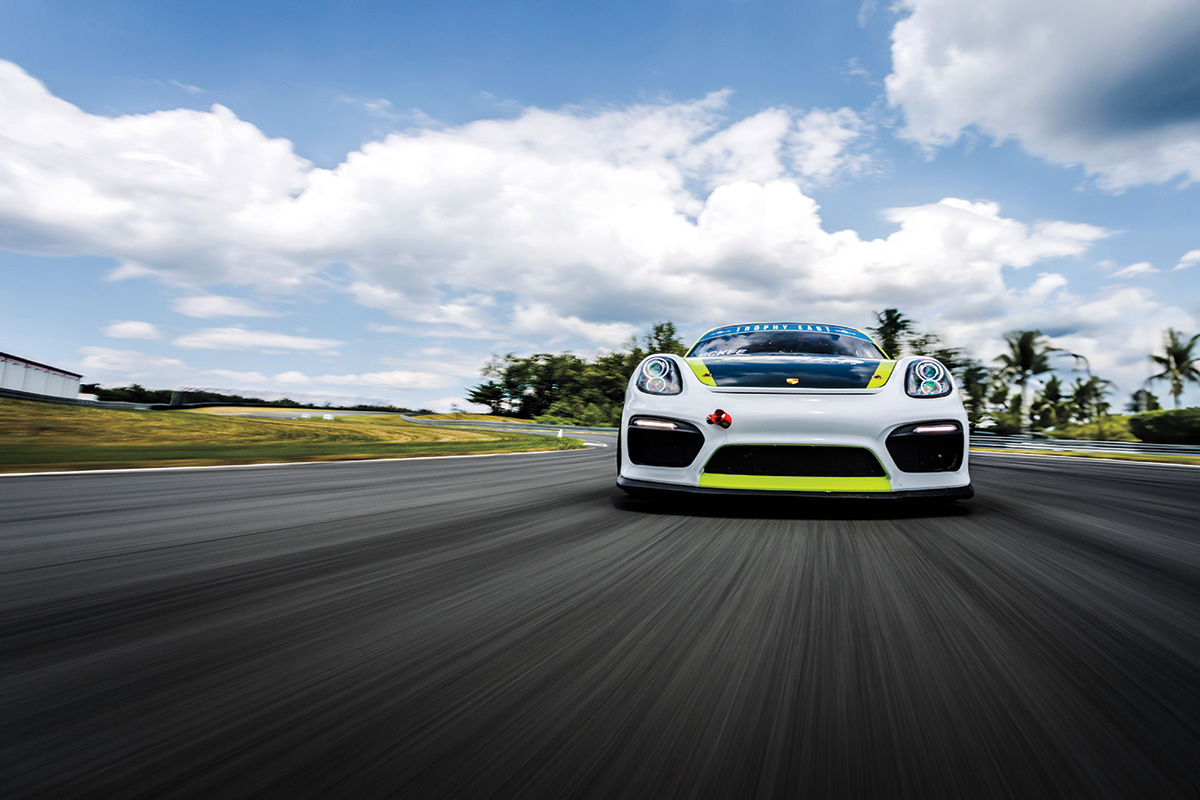
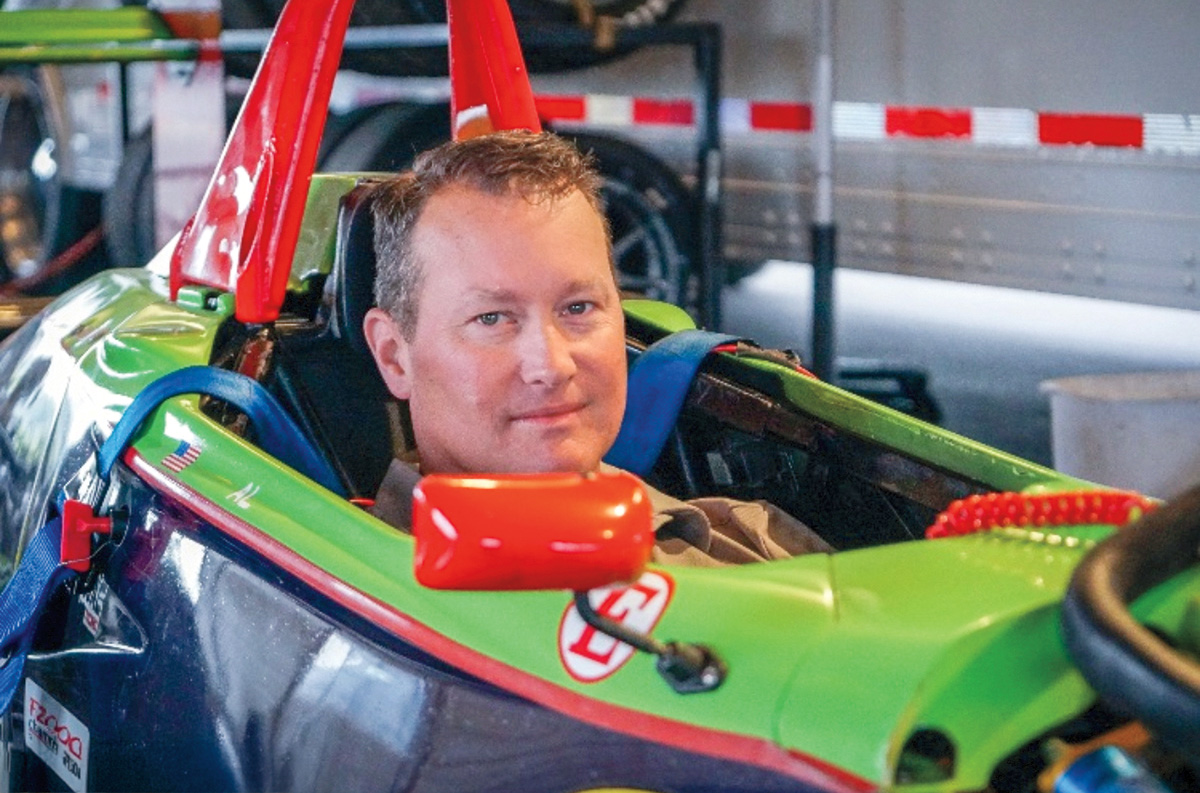
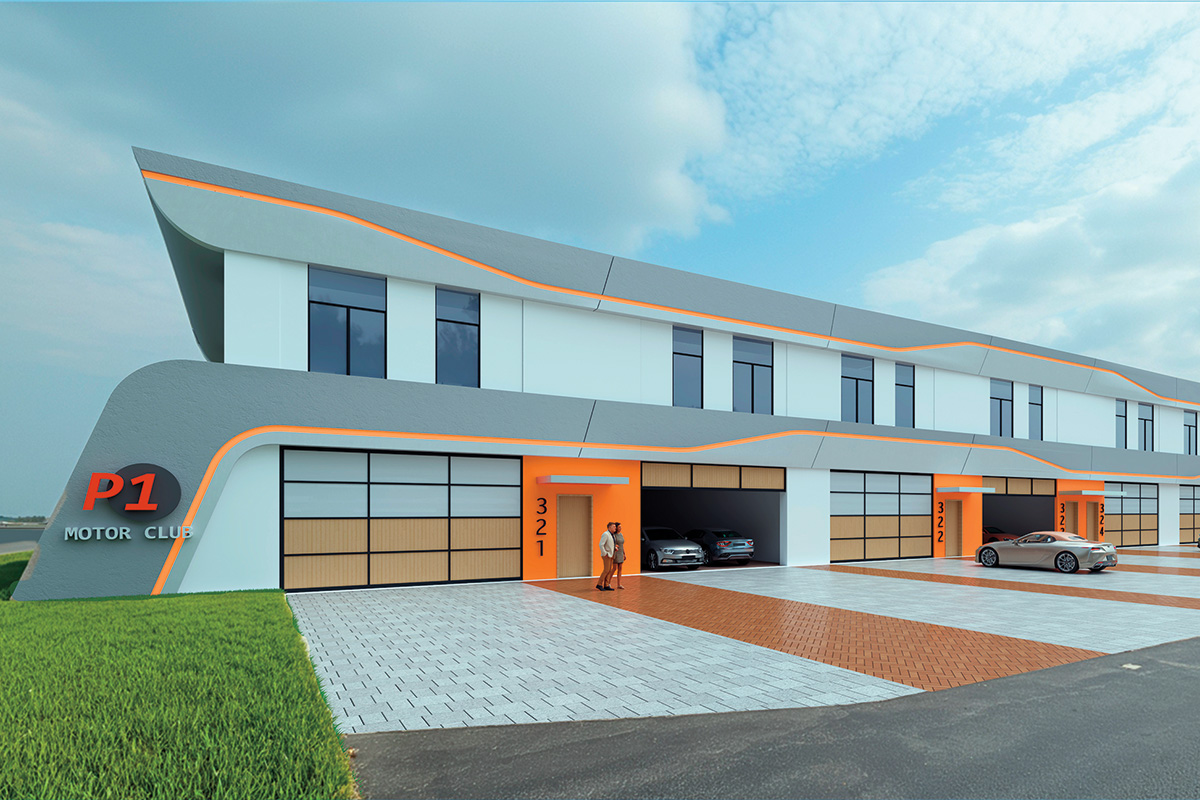
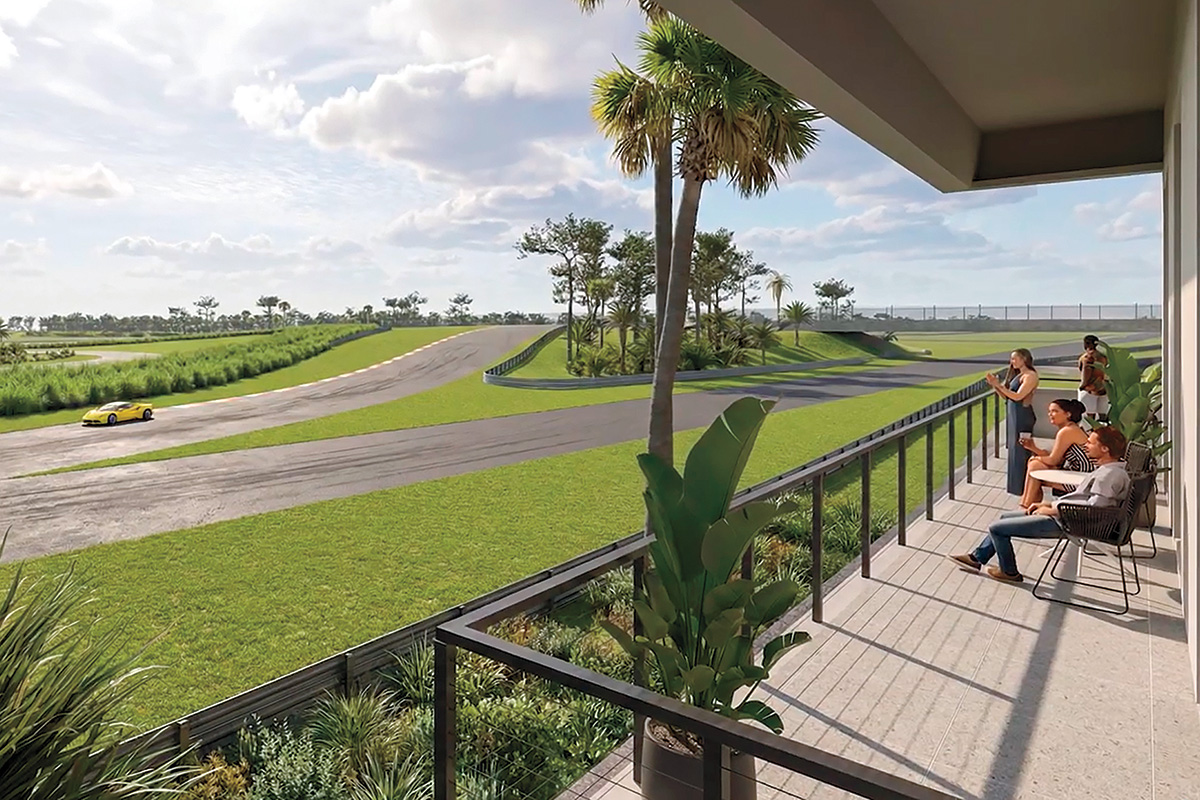

In rural St. Lucie County in February, a slew of dump trucks, excavators and bulldozers crawl over the flat expanse, busily shifting tons of earth. They're crafting a $200-million development, the P1 Motor Club, centered on racetracks and garage townhouses. Think of it as a 650-acre country club for motorsports. "It's a massive project," says Al Guibord, a P1 founding partner.
It's the latest development in Florida building on the relatively new business model of motorsports clubs.
Eight have opened or are proposed from Walton County in the Panhandle to Nassau County on the northeast Florida-Georgia border down to Miami. "It is really an entire industry that is now being developed around this concept," says Christian Epp, director for the Americas for German track design firm Tilke Engineers and Architects. Each development has its own spin, but the common denominator is catering to well-heeled gearheads and wannabes. Initiation fees at P1 approach $190,000. Garages start at $1 million.
Florida has a rich history in motorsports. Sebring International Raceway, built on a World War II air base, lays claim to being America's oldest road racing circuit. NASCAR was founded in 1947 in Daytona Beach, which hosts the Daytona 500.
Now, add to that heritage projects like P1, which began construction last year. Guibord says they've signed 240 of a forecasted 500 to 600 members. The first phase of garage-townhouse condos is sold out even though it will be at least a year before open-wheel racers scream down its members-only, 4.5-mile Formula 1-style track.
CLUB ECONOMICS, AMENITIES
The market for motorsports developments appears robust, says Brandon Schempp, a first vice president at commercial real estate firm CBRE's golf and resort group. "Whether it's a marina or whether it's a golf course or a ski resort," Schempp says, "private club models are and can be incredibly profitable, and that revenue is incredibly sticky." His firm has done valuations of motorsports clubs. "Demand is high, the supply is incredibly low. (Members) get to do the things that they love in a beautiful place. They get to race cars, and, after that, they get to have a Michelin-star meal and play pickleball and hit the sauna."
For P1's track features, Guibord and other partners drew on their tastes in tracks supplemented with the design skills of England-based Apex Circuit Design and Germany's Tilke. Tilke is involved in several Florida developments and globally has worked on design for 23 clubs in operation or in construction and 27 more in planning in 32 countries, devising track plans, garages and amenities. Epp says talks have been had about adding a wave pool for surfing to an undisclosed Florida track project.
For most developers, each project is a one-and-done. An exception are Tampa husband-and-wife Ari and Molly Straus, partners with Guibord in P1. The Straus couple co-owns Monticello Motor Club in New York. Guibord, for his part, founded companies in software and other fields but also races and has a race promotion organization, Formula Race Promotions.
Another exception: Brad Oleshansky, the majority owner of The Motor Enclave in Tampa, a 200-acre, $55-million development opened two years ago with a 1.72-mile racetrack, 100 acres of off-road trails, on-site vehicle maintenance, a resort pool and event space. Oleshansky previously developed the M1 Concourse, which opened in 2016 in Pontiac, Mich. Oleshansky's differentiator is the sheer number of garage condos he builds — 250 in Pontiac, 300 in Tampa. Garage sales underwrite the cost of the total development.
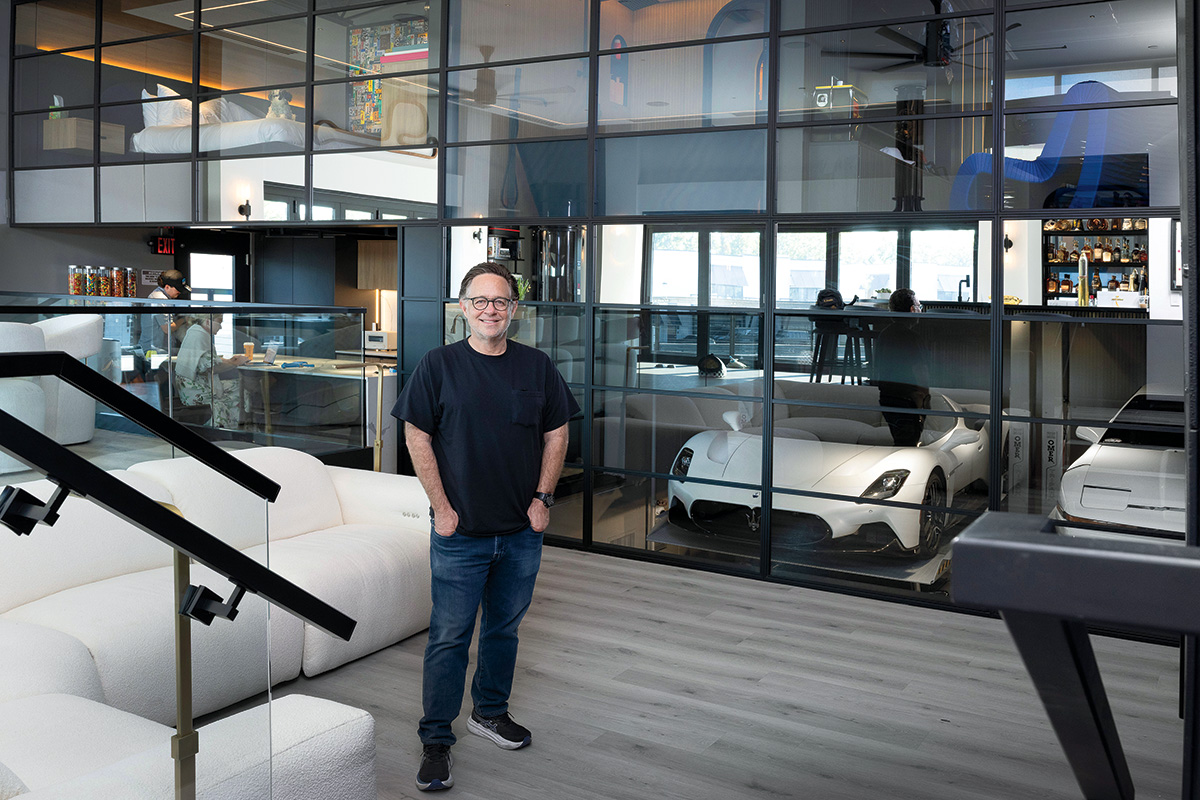
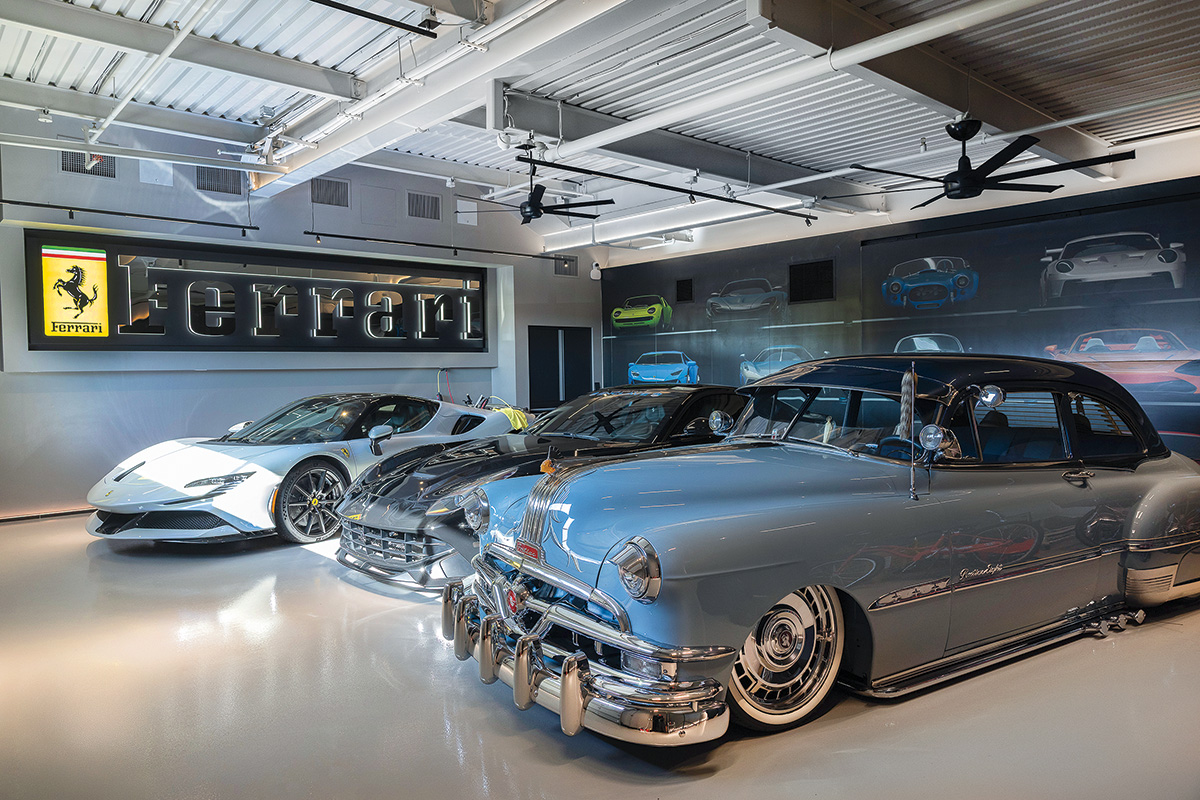
Public records show Motor Enclave garage condos sold from the $200,000s to $3.5 million for the largest units at 7,500 square feet. Oleshansky says the majority of buyers are entrepreneurs and professionals in their mid-50s. After a lifetime of work, they want to have fun, be part of a community of interests, own their own retreat and buy the car of their dreams — whether street-legal Porsches and Mustangs or McLarens, Paganis, antique collectibles or vehicles used in films. The owners outfit the garages with neon signs, jukeboxes, cigar lounges and bourbon bars — even a yoga studio.
Buyer Chris Nicholson, former owner of a software company, fits the car aficionado mold. "I love to race, love to drive, love cars all around," the 53-year-old says. He says that after hearing of The Motor Enclave, which at the time was under development, he flew from Utah into Tampa on a Thursday, toured the dirt on a Friday, purchased a 5,000-sq.-ft. garage condo and then went house hunting locally with his wife.
Public records say he paid $1.8 million just for the garage condo shell. Today, it displays his 13 vehicles on the ground floor. An elevator can carry a vehicle up to the second floor living space as display art. The third floor holds sleeping quarters. He's on the club's social committee and enjoys the community life — road rallies and group rides to parts of Florida. His three grown children all drive. "It's a good family experience," he says.
Oleshansky says the Motor Enclave's finances don't depend on passionate drivers. The track is ancillary. Success is owed to its 42,000 square feet of event space rented out for corporate, charitable or community events. "We're a private event facility sitting on top of a country club," Oleshansky says. For events, club pros take people for a thrill ride on the track or visitors take a car out on an autocross course dodging around cones. "Our stuff is very safe and controlled. They might feel like they're on the edge of their life, but they're not," Oleshansky says. He wouldn't discuss profit but says The Motor Enclave did $80 million in revenue last year.
THE ROAD AHEAD
Oleshansky wants to build another track development at an undisclosed site in Orlando. This summer, he plans to break ground on a five-acre, 59-unit garage in Sarasota — no track — with completion scheduled in 2027. Inbal August, an associate broker and a director of luxury sales with Douglas Elliman in Sarasota, looks forward to being able to connect home-buying car collectors with the project because even luxury homes have few garage spaces. In the ultra-luxe condo home market, she says, car collectors always want to know, "How many spaces do I get?"
Developers face an autocross of their own in negotiating around wetlands, neighbor objections and other issues to obtain governmental approval. Some tracks are allowed living quarters above garages but only for limited stays, while zoning in another jurisdiction might allow permanent residences. Given the permitting, financing and operational challenges, Oleshansky is skeptical about how many motorsports developments envisioned in Florida and elsewhere will rise. Wealthy enthusiasts who want to build a track often overspend or choose a poor location, he says. "If you run it as a hobby, it's not going to work. I run it as a business," Oleshansky says. "You hear about all these projects, and most of them will never happen."
All the earth moving in St. Lucie indicates P1 is happening. Guibord said the founders wanted a year-round track after their first project in New York. St. Lucie was welcoming. P1 is primarily a real estate play, but other revenue sources include member dues, events and rental to outside groups — think of a Porsche drivers' club — that will use a three-mile, semi-private "Treasure Coast Circuit" that opens this year. The developers fast-tracked the third leg of the project, a 400,000-sq.-ft. commerce center in the project's northwest corner, after race teams, performance car dealers and importers committed to more than half the space.
Plans call for P1 ultimately to also have a one-mile karting circuit, off-roading, a drift track, clubhouse, the members-only P1 track and amenities for families. "What's great is we have something for everyone," Guibord says.