










South Florida real estate firm Two Roads Development put forward plans a few years back for three luxury condo towers totaling 705 units in Miami's Edgewater neighborhood on Biscayne Bay. Prices in one tower would start at $1.7 million.
The project would sit on a 3.5-acre waterfront site occupied by Biscayne 21, a 60-year-old condo judged ripe for a teardown.
Under the tried-and-true Southeast Florida condo redevelopment playbook, Two Roads borrowed $150 million and bought a supermajority of units — 183 of the 192.
Aging condo buildings have been under pressure, especially since the collapse of the Champlain Towers South condo tower in 2021 that killed 98 people. Buyers shied from units in older buildings, while state law established new rules for safety and reserves to cover maintenance and repairs. Many HOAs hit owners with hefty assessments. Stuck between high assessments and limited resale interest, the solution for some condo owners is selling to developers anxious for waterfront sites for luxury development.
The playbook, however, didn't anticipate Biscayne 21. As would become important later, Biscayne 21's half-centuryold condo rules required a unanimous vote of unit owners to change voting rights and to terminate the association to sell the building. Unanimity was a common feature in the early days of condos in Florida, but no longer. The Florida statutory default for nearly the last 20 years has been 80%. Some older condos have governing language that automatically incorporates changes in state condo law like the move to 80%. Biscayne 21's declaration did not.
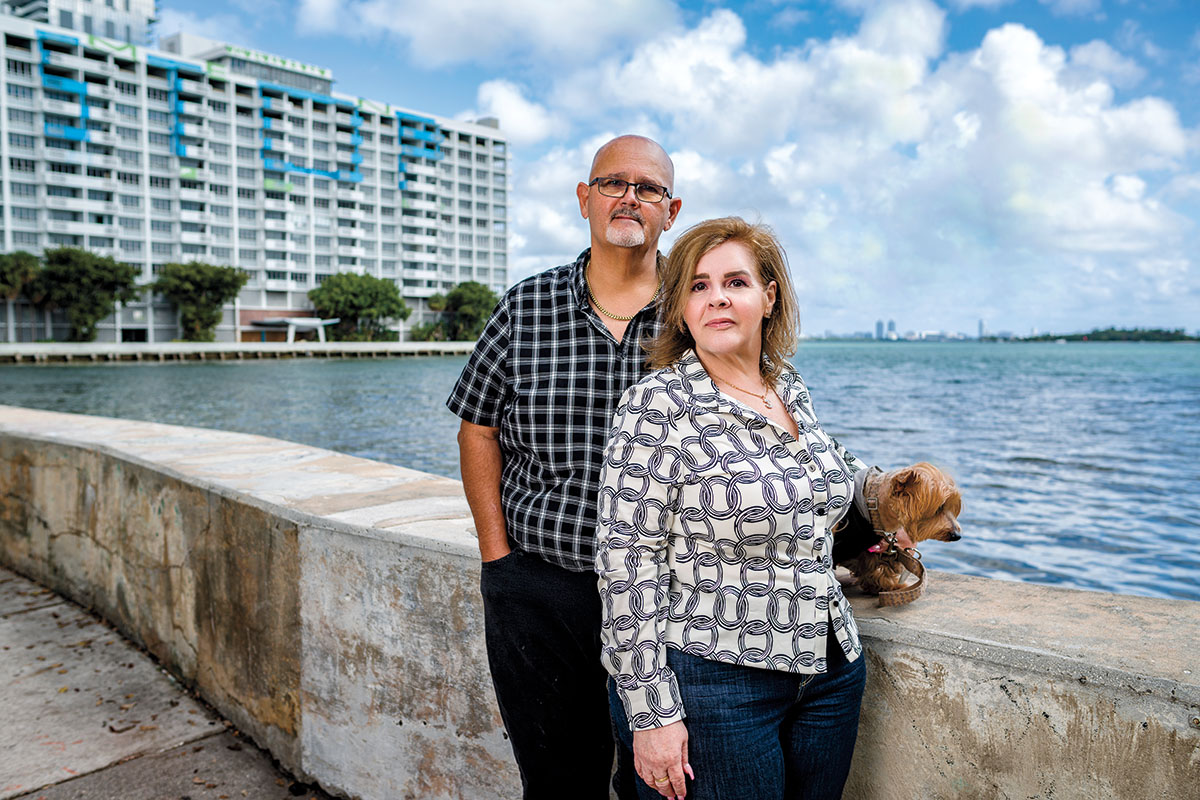
A few holdouts refused to sell, among them Jacqueline and Lazaro Fraga, who moved into the building in 1986 as renters and newlyweds — she wore her wedding dress to the apartment on their wedding day. The next year, they bought a ninth-floor, 850-sq.-ft. unit for $26,000. She and her husband moved out when she became pregnant with twins, but they kept it as a rental property with the aim of returning there when downsizing in their later years. In 2017, investors began pitching her to sell. Many unit owners were paid $697,000 and at least one got more than $1 million, she says.
Two Roads, believing legal precedent was on its side, had its supermajority vote to change the condo rules to lower the approval threshold. The termination passed. In August 2023, building air conditioning and elevators ceased operating, making Biscayne 21 uninhabitable. Two Roads gutted the building and units. "This is emotional for me. I loved that building. I loved my balcony," says Jacqueline Fraga. "It's not only about us. It's about Florida. Other condos, other people and what's being done to them."
The Fragas and eight other holdouts sued, and, in 2024, the Third District Court of Appeal upheld their position: Changing the threshold from 100% to 80% took away each owner's veto power — a change in voting rights that required a unanimous vote.
The decision shook the real estate industry. Among others, real estate developers and investors Related Group, Fortune International Equity, Dezer Development and 13th Floor Manager asked the court to reconsider. Each says it owns a majority of units in condo buildings throughout Florida that have similar declarations and voting rights and thresholds as Biscayne 21.
Greenberg Traurig Shareholder David B. Weinstein, who wrote the brief for Related and the others, says the ruling undermines the ability of condo owners to deal with the challenges in aging buildings. "Affected owners will lose the right to maximize the value of their investments, and local governments will lose the increased tax bases and other important benefits provided by new developments replacing aging ones," he says. The Florida Chamber of Commerce, in a court filing, said the stakes "in this case could scarcely be higher for Florida's businesses and the contracts that sustain them."
Glen Waldman, an attorney for the holdouts, says the Third DCA opinion is significant but, because it applies only to the subset of condos with the same provisions as Biscayne 21, "it's not the death knell" for redevelopment.
It does require developers to examine a condo's rules closely and gauge the prospect of holdouts empowered by the Third DCA decision. The appellate court in July declined to reconsider its opinion.
In October, the state Supreme Court declined to hear an appeal. The holdouts want $100 million to compensate them for their ordeal and filed to bring in lenders and others tied to the developer's project. Two Roads, meanwhile, declined an interview but filed to have the condo association terminated on economic grounds that allow a termination when a building has been substantially damaged or destroyed and cannot be rebuilt in a reasonable time period.
"Biscayne 21 Condominium is dead," its suit begins, from a lack of maintenance, asbestos and an end of its useful life. "The only question that remains," the suit says, "is whether its legal existence will end in a manner that maximizes value for all parties involved and ensures that the site can live on — or whether the individual unit owners will be permitted to hold a $61-million repair bill over the heads of all relevant stakeholders while the building crumbles into the bay."