



At Rollins College's Roy E. Crummer Graduate School of Business, Keenan Yoho, professor of operations management, approaches MBA education with a deliberately contrarian mindset. "A central question I ask myself," he says, "is what can I do well that does not scale?"
For Yoho, Rollins' small size is a strategic advantage — one that allows for rich, hands-on learning experiences designed for cohorts of 30 students or fewer. That philosophy is embedded in the MBA curriculum, beginning with design thinking, which Rollins was among the first MBA programs in the U.S. to make a core requirement. Yoho describes it as a disciplined process of "problem framing, customer discovery, solution discovery, prototyping — 'building to think' — and rapid iteration." He blends design thinking with quality function deployment and design-for-six-sigma methodologies to give students "a repeatable way to design new products, services and experiences they can use immediately."
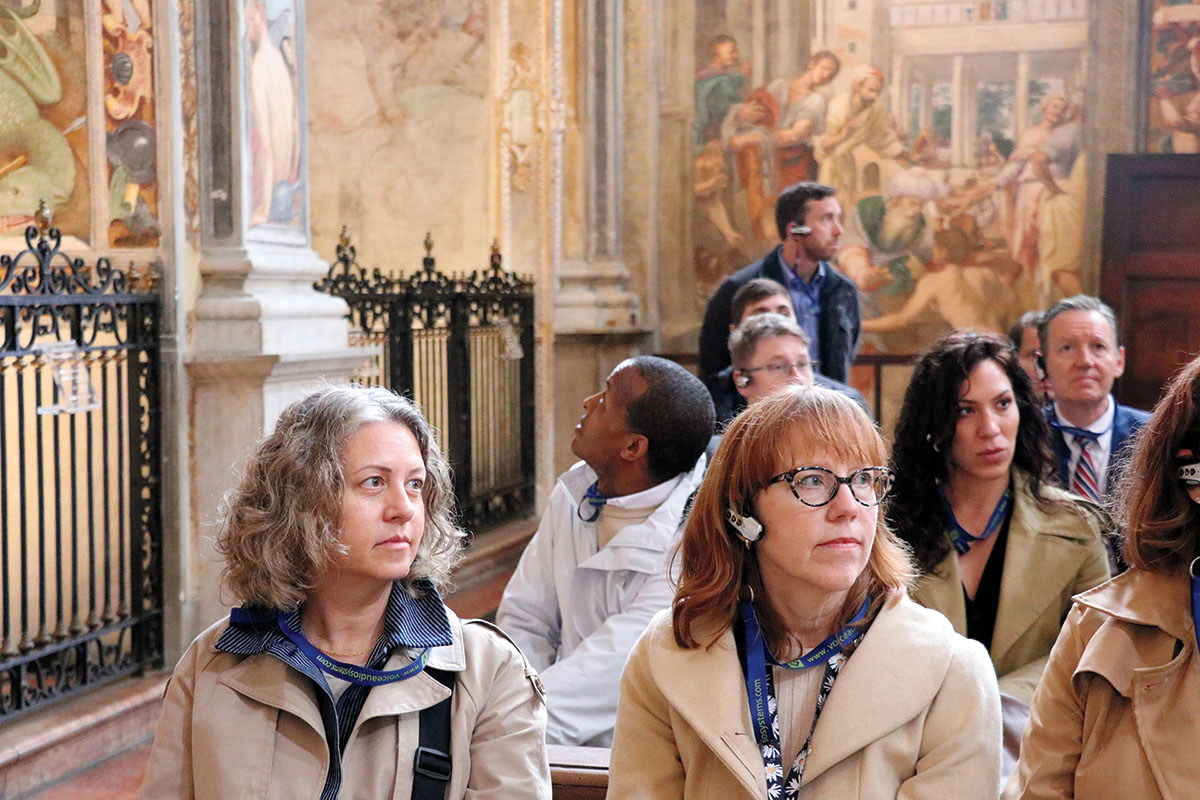
Experiential learning extends beyond the classroom. Executive MBA students participate in site visits to organizations such as Amazon, Beep, HP, Dallara and Giusti. These are not casual tours, Yoho emphasizes. "I design purposeful contrast," he says — placing students inside vastly different operating models to explore trade-offs between speed and precision, centralization and autonomy, or time-as-an-asset versus velocity at scale.
Global immersion, particularly in Italy, further reshapes how students think about innovation and longevity. Milan, Yoho notes, is "a highly cultivated and curated city where design, industry and brand-building coexist over centuries."
Why does an MBA still matter in 2026? Because leadership, Yoho points out, is not automated. "We haven't arrived at a place where a leader's responsibility to choose, commit and align people around a direction disappears," he says. "That's exactly the capability we're developing at Crummer."