






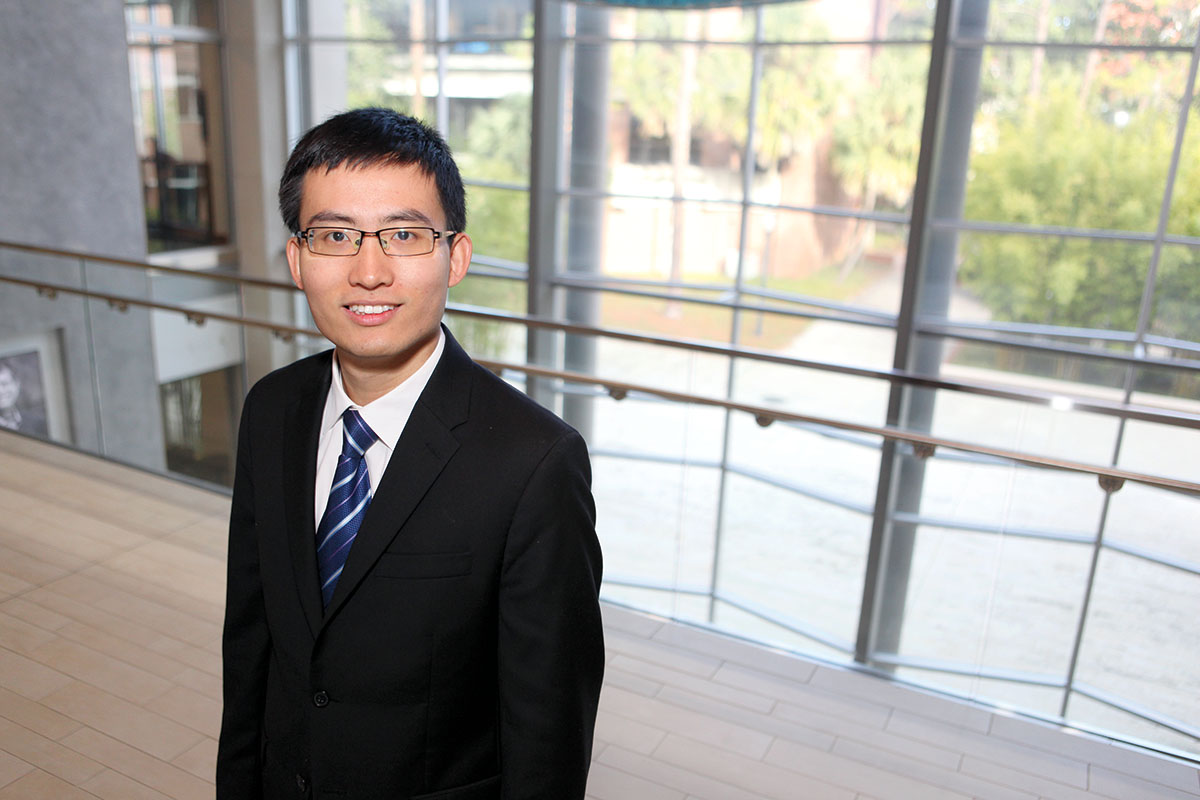
At the University of Florida's Warrington College of Business, Professor Liangfei Qiu's research sits at the intersection of AI, fintech, social platforms and telecommunications — but, as he puts it, it all comes back to one core question: "How does technology change the way people behave?"
Methodologically, Qiu combines large-scale platform data with econometrics, machine learning and experimental design to identify causal effects, not just correlations. "I like to start from an economic or behavioral model and then test it using real platform data, usually at a very large scale," he says. One of his most surprising findings is that technologies designed to increase participation can actually narrow it. Studying Quora, his team found that while generative AI answers encouraged more users to contribute, "the platform ends up with fewer diverse ideas." Similar dynamics appear across fintech and social platforms, where visibility tools and social comparison can unintentionally reduce performance.
That insight carries over to the debate around AI and jobs. While fears of widespread displacement persist, Qiu's work suggests a more nuanced reality. "What we're seeing in the data looks more like a reallocation of human effort rather than simple displacement," he says. Routine, repetitive tasks are most exposed, while judgment-intensive and creative work tends to be augmented. The bigger risk, he argues, is not job loss but "that human expertise becomes underdeveloped if organizations rely too heavily on automation."
In the classroom, Qiu builds these ideas directly into MBA coursework. Students analyze real platform data, run experiments and are encouraged to use AI tools while being graded on interpretation and judgment rather than output alone. "The goal isn't to teach them to compete with AI," he says. "It's to teach them how to supervise it, question it and design around it."
For MBA students worried about resilience, Qiu's advice is blunt: "Don't compete against AI. Compete on top of AI." Employers, he notes, are looking for graduates who can blend technical fluency with business judgment — skills that, when paired thoughtfully, are far harder to automate.