





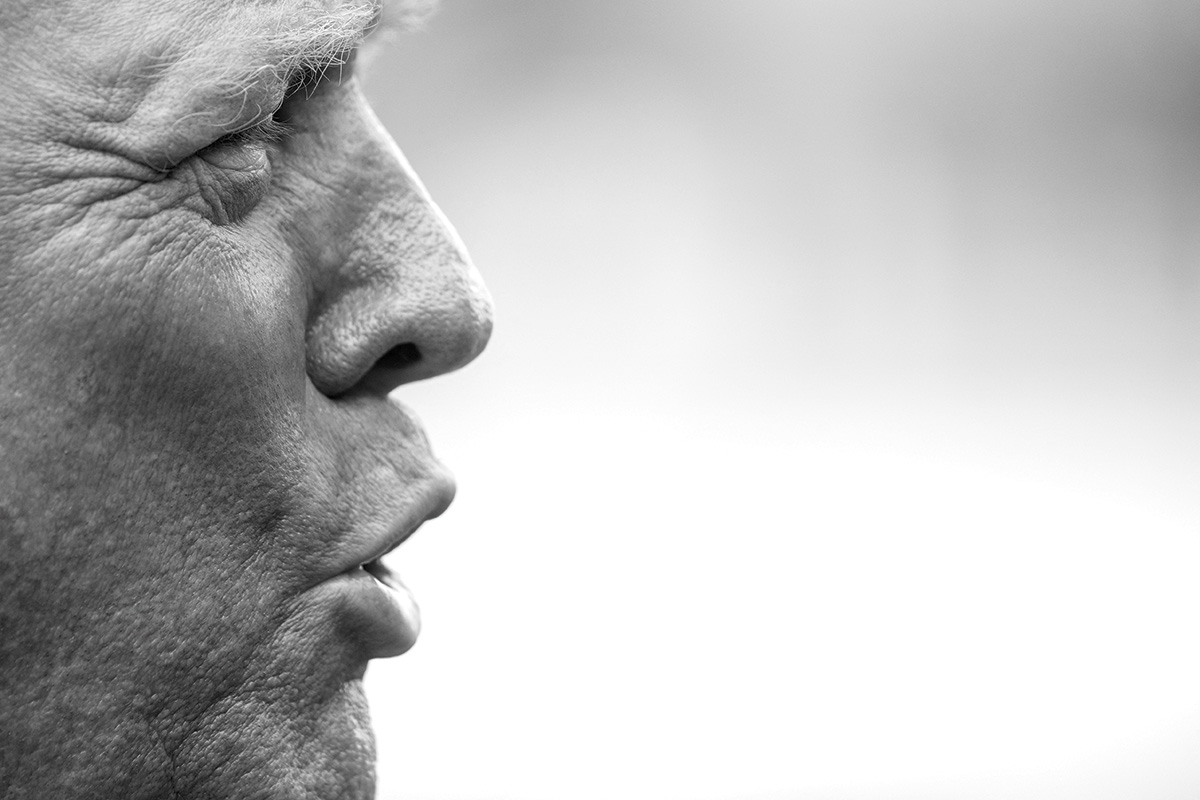
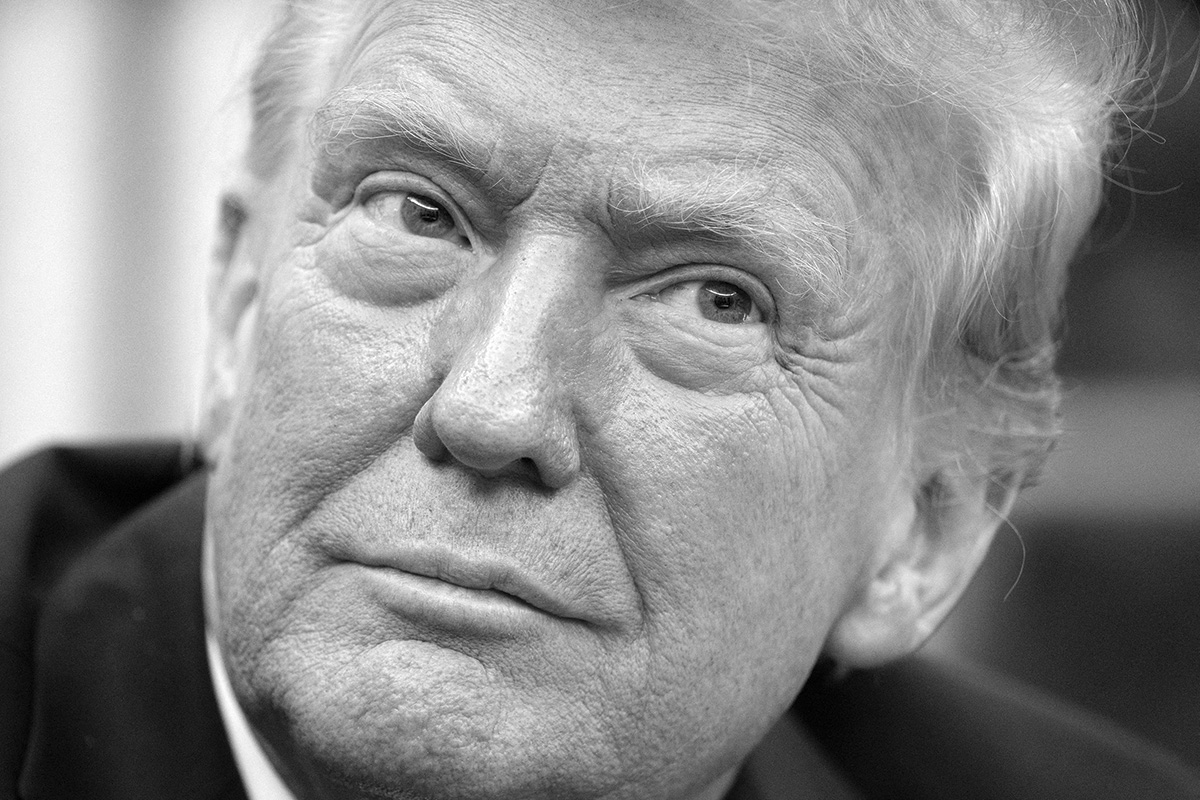
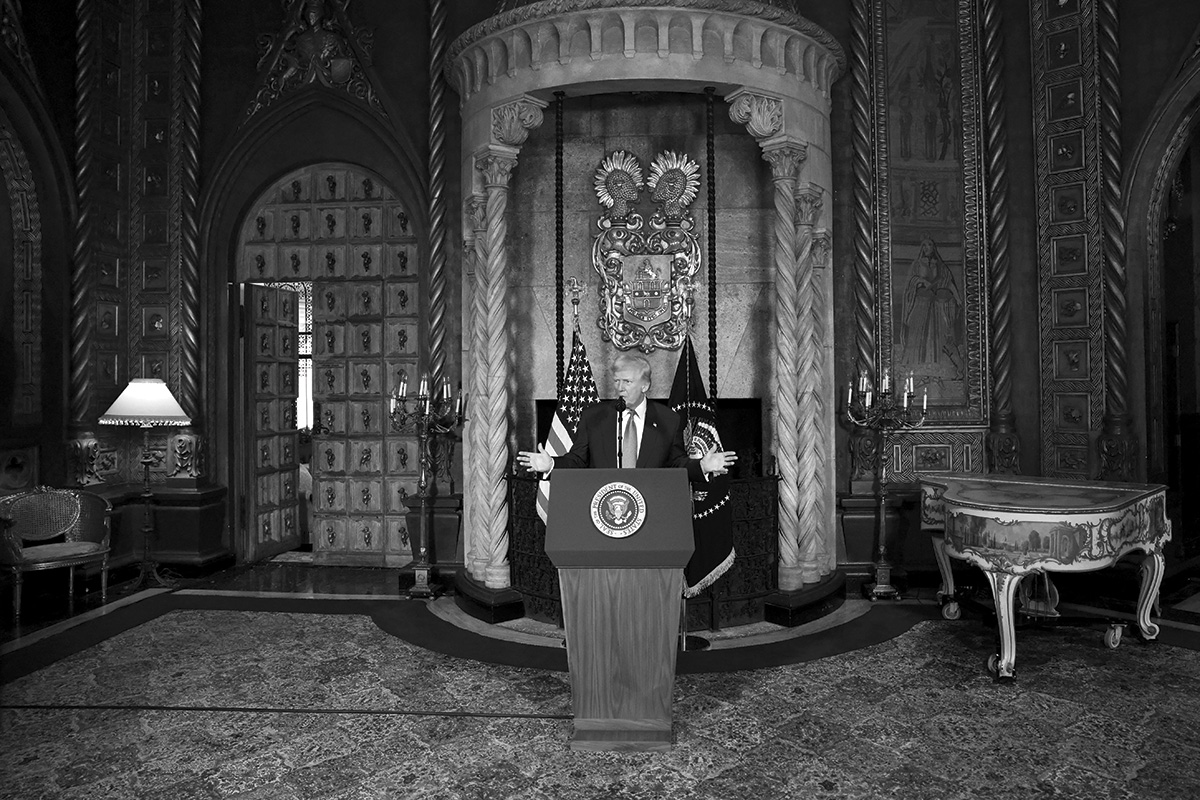
Any president impacts Florida. Donald Trump isn’t just any president.
The nation’s chief executive influences Florida to an uncommon degree — the economy, workforce, trade, education, research, defense, public health, local parks, population growth, industries from restaurants to tomato growing, lodging to construction and real estate. “Obviously, he’s made an impact at every level. It’s not just the business community, it’s every facet,” says Susan MacManus, University of South Florida political science professor emerita.
Trump has transformed a state historically known for presidential candidates coming to milk the wealthy into a state second only to Washington, D.C., as the epicenter of policy, people and politics. His Mar-a-Lago in Palm Beach is not the winter getaway of Harry Truman’s Key West or Richard Nixon’s Key Biscayne but a second White House. The Floridian-by-choice and his adopted state are so entwined that even Nikki Fried, the state Democratic Party chair, agrees his impact on Florida is broad (universally to the state’s detriment, in her view).
Trump stances have generated a share of umbrage and concern, but interviews with business owners and company leaders in Florida yield a nuanced view. They support some Trump policies and wait to see the final form of others. Case in point: Trump voter Philip “P.J.” Anson Jr., CEO of Jensen Beach-based STS Aviation Group, a global aviation services company. Trump tariff talk has “really thrown a wrench in everything,” Anson says, but adds, “At the end of the day, when it settles out, I’m sure it will all be fine.”
Likewise, three Florida industries — agriculture, construction and hospitality — said to be threatened by Trump policies find much to like in the Trump era. Florida’s construction industry, for one, loves the Trump emphasis on workforce education, apprenticeships and the importance of filling what the Associated Builders and Contractors group projects is a national shortage of 439,000 skilled workers. “We celebrate that wholeheartedly,” says ABC of Florida chief lobbyist Carol Bowen. “There is a general level of excitement.”
Trump remarks and actions have led to a drop in Canadian snowbirds coming to Florida. But Florida’s restaurant and lodging industry welcomes Trump’s successful push to eliminate taxes on tips and overtime, among other actions. “Are we doing better in a more business-friendly environment? The answer is yes, absolutely,” says Carol Dover, president of the Florida Restaurant and Lodging Association. “We are finding the administration is very business friendly and very supportive of tourism and hospitality. We are grateful for that.”
Sums up Brewster Bevis, president and CEO of business group Associated Industries of Florida, “By working in close partnership with pro-business states like Florida, this administration is fostering a regulatory climate that prioritizes growth, innovation and opportunity over unnecessary red tape.”
Dusty Holley approves of Trump’s treatment of the federal estate tax exemption, but the executive vice president of the Florida Cattlemen’s Association was concerned about Trump’s proposal to increase Argentine beef to lower prices in the U.S. Holley says Trump’s comments on U.S. beef prices don’t reflect higher input costs industry operators have to pay and that comparable goods also have increased in price. “This goes to all elected officials, regardless of party. We always like them to step back and look at the entirety of the situation before they make comments that may or may not impact the market.”
POLICY RIPPLES
Changes in tax law in last year’s “One Big Beautiful Bill,” especially on estate taxes, will help make farming and ranching sustainable businesses from generation to generation, says Dusty Holley, executive vice president of the Florida Cattlemen’s Association. “There certainly have been some positives from the Trump administration for our industry. The estate tax can be ruinous on family farms and ranches,” he says. Last year’s bill made permanent a measure from Trump’s first term that doubled the lifetime estate and gift tax exclusion, which would have sunset at year-end 2025. The new bill expanded it to $15 million for individuals and $30 million for married couples. Along with beneficial tax rates and making permanent other tax measures that help everyday wage-earners and seniors, the law also made permanent the 20% pass-through deduction for qualified business income and provided other advantages for small businesses and research and development.
Florida’s fruit and vegetable growers, meanwhile, are in their first full growing season under the second Trump administration and waiting to see how events play out for them. (The season was winding down by the time last year that the Trump term was ramping up.) They are encouraged that the Trump administration in July canceled an agreement with Mexico that governed Mexican tomato imports. The agreement, they say, left Florida growers at an unfair price disadvantage against subsidized Mexican producers whose product often was priced below the floor mandated in the agreement. “We’re glad the administration terminated it,” says Mike Joyner, president of the Florida Fruit & Vegetable Association. “There are times they are bringing in product for less than the box we put it in.”
Growers also like that the Trump administration sounded out the industry about non-tariff barriers they encounter in trying to do business in the European Union. Whether retaliatory tariffs would impact the Florida industry was unknown when Joyner was interviewed in October.
Other Trump actions raise challenges for particular businesses, industries and the economy in general. The solar industry and electric vehicle dealers have had to reckon with a loss of government incentives. Port Canaveral spent $819,401 to cover the tariff on a new port crane and ship passenger boarding bridge. Jacksonville business owner Bryon Croft has seen the tariff issue cut both ways. His family-owned HC Brands employs 90 much of the year and as many as 130 in the holiday season making customized tags, logos, stickers, rubber stamps — even cutting boards laser-printed with customer designs. HC’s average order is $50. In August, the Trump administration eliminated a “de minimus” rule that since 2016 allowed packages valued at $800 or less to be imported tariff-free.
That potentially raises prices for consumers but makes Croft’s products more competitive on price. A “big one for us,” Croft says. But tariffs have increased costs for materials he imports to customize in Jacksonville for buyers. As of September, he sometimes split absorbing the tariff with suppliers and also has put a “slight” price increase on some products. He says in his personal shopping he prefers to spend a bit extra to support American workers and their families rather than underwrite the Chinese economy. “I’m a Republican. I voted for Trump. I don’t love everything he’s doing, especially with the drama,” Croft says, “but I do support bringing more manufacturing and more jobs back to the United States. That was what our country was built on.”
Tariffs have had an impact, says Dan Grosswald, Southeast Florida division president for home builder Mattamy Homes, in an interview about the Treasure Coast region economic outlook (see “Residential Real Estate,” page 62). But, he says, suppliers maintained pre-tariff pricing through the end of 2025. “Some things have gone up, while other things have not gone up or gone down. Costs are actually slightly lower than they were a year ago, not a lot, but slightly lower. It’s nothing terribly impactful up to now,” Grosswald says.
IMMIGRATION FLUX
Agriculture, construction and lodging rely on foreign-born workers, but Florida businesses are accustomed to having to ensure their workers are authorized to work here. The fruit and vegetable growers’ association says Florida annually brings in 50,000 foreign seasonal workers with H-2A temporary agricultural worker visas. Like other industries, the association says it’s busy communicating to members about having job sites and workers prepared to show the proper paperwork — or have it available on their phones — in the event they encounter immigration officers.
Though many of the attention-grabbing raids seen in national news have happened outside of Florida, the state has had some actions. In a widely reported incident in November, U.S. Immigration and Customs Enforcement (ICE) agents pulled over a bus near Immokalee and detained dozens of field workers traveling to pick tomatoes at a farm in Ave Maria. Fruit & Vegetable Association Labor Relations Director Jamie Fussell says in general there have been few raids in Florida and Trump’s immigration stance hasn’t seemed to impact foreign worker interest in coming to America legally for harvests. What’s more, the Trump administration has put forward a rule that could make labor costs under the program more stable; wage volatility has played havoc with growers who lock in sales of their produce and then see their labor costs jump 10% to 15%. “A grower is looking for certainty,” Fussell says. “I will give a nod to the administration. They seem to be aware agriculture needs access to a legal workforce.”
Economist Sean Snaith says Trump’s “mass deportation” efforts caused neither a rapid nor large reduction in the state’s labor pool — but the president’s policies have created uncertainty, and “In general, uncertainty is not a friend to the economy.”
The construction industry notes that Florida for years has required contractors on government projects to use the federal E-verify worker eligibility system. Since 2023, the state has required any business with more than 25 workers to use it.
In May, ICE and other agencies descended on the construction site in Tallahassee where the Perla luxury student housing project was being built. At the time, ICE said it arrested more than 100 people here illegally. “It wasn’t what it appeared to be,” says Burk Hedrick, president of Hedrick Brothers Development, part of West Palm Beach-based Hedrick Brothers Construction, the general contractor on Perla. Law enforcement, Hedrick says, was after six subcontractor employees wanted on criminal charges unrelated to their construction jobs. The 175 workers on site were formed into one line for citizens and a line for non-citizens and the 100 non-citizens were detained. Nearly all were released once they showed proof of legal residency.
“We were thankful enough to have most of our workforce back later that week, and we were back to full manpower the following week,” Hedrick says. Hedrick credits his crew members with keeping the concrete pouring — once a pour starts, it has to be completed or done over. “We lost very little time from that entire experience,” he says. The project is scheduled to be completed on time in July. Hedrick says the company complies with E-verify and requires its trade partners to do the same.
The contractors association’s Bowen says fears among workers led to absences that “froze in place” other job sites in the area. “It’s the rumor mill and the fear that causes disruption on the work sites,” she says. “People are staying home out of fear even though there’s nothing to be afraid of.” Bowen says the long-term workforce answer for her industry is to increase the number of young people in the skilled trades.
Dover, of the restaurant and lodging industry association, says worker authorization could be expanded to meet business’ needs. Operators have had to close some days or curtail hours because there aren’t enough workers to cover shifts, Dover says. The H-2B non-agriculture, non-immigrant temporary workers visa has an annual national cap set by Congress at 66,000. Florida alone could use that many, she says.
Sean Snaith, a University of Central Florida economist, says restricting asylum migrants and the self-deportation of others could reduce the number of workers in Florida. Trump’s “mass deportation” would take a long time to pull off, he says. “You’re not talking about a rapid and large reduction in the pool of labor,” Snaith says.
Faced with uncertainty, some immigrants self-deport, impacting workplaces but also making housing more affordable. The Wall Street Journal in October reported that rents in Doral — nicknamed Doralzuela because 40% of residents are Venezuelan immigrants or of Venezuelan descent — had fallen to their lowest level in three years as vacancies increased due to factors including self-deportation.
Overall, Snaith says, Trump’s created uncertainty and, “In general, uncertainty is not a friend to the economy.” He spoke in an interview in October just after Trump announced 100% tariffs on imports from China. Within the month, Trump met with Chinese leader Xi Jinping and reduced tariffs in return for China agreeing to crack down on trade in chemicals used to make fentanyl. Uncertainty, Snaith says, “creates a fog. Nobody wants to sprint into a fog without knowing what’s under it. Once we get to the other side and the trade details get hammered out, the fog will start to lift. It’s hard to look out and strategize when the rules keep changing.”
But, he adds, “I think we’ll move forward in a position of strength in Florida.”
Symbiotic Shifts
Republican Gov. Ron DeSantis in February launched a state DOGE, imitating the federal Department of Government Efficiency initiated by Trump and Elon Musk. Sometimes, Florida follows the Trump lead.
Other times, Florida inspires Trump to act. Trump, at DeSantis’ behest, allowed the state to take over slow-moving federal Everglades re-engineering projects. Foremost among the projects is the 10,500-acre Everglades Agricultural Area Reservoir. Florida forecasts that state control will shave five years off the timeline.
Sometimes, they influence each other. Immigration detention facilities “Alligator Alcatraz” and “Deportation Depot” came out of the state, but it’s hard to envision their creation under a Kamala Harris administration.
The Trump-Florida GOP symbiosis shows in voter registration. Trump in 2024 certainly was helped by the state GOP enjoying a 1.15 million voter registration edge over Democrats. (It’s up to 1.4 million as of Sept. 30.) Trump inspires voter registration, but credit also goes to a string of Republican governors going back to Jeb Bush and to the Legislature, GOP operations and philosophy, plus population shifts traceable to DeSantis’ decision to defy critics and open the state in the pandemic. The COVID-19 start year of 2020 was the last time Democrats outnumbered Republicans in Florida, though the GOP had been closing the gap for years. “Everything changed with COVID,” says University of South Florida political science professor emerita Susan MacManus, “and Florida changed dramatically.” Florida’s early reopening drew parents wanting their kids in school and young people wanting jobs. Political views changed.
“Florida’s become a beacon of Republicanism for those around the country seeking a state that’s pro-freedom and pro-Republicanism,” says Capital City Consulting lobbyist Nick Iarossi. “That’s changed the landscape here for decades to come. It’s going to remain Republican for the foreseeable future.” Iarossi sees Florida under Trump as having a “magnetic pull of power,” drawing people from around the nation.
State GOP party chair Evan Power believes Trump will lead the GOP to a 1.5-million voter advantage and add Palm Beach and Duval counties to Miami-Dade and Hillsborough as Democratic counties flipped to the GOP in presidential elections.
Sunshine Showroom?
Most presidents of the last 100 years have chosen to be buried at their libraries. No word on whether President Trump wants Florida to host his remains, but odds are good the state will host his library and museum.
Trump’s family incorporated a library foundation last year in Florida at the address of his golf course office in Jupiter. The state Legislature last year eased Trump’s way by passing a bill pre-empting local government interference in siting plans for presidential libraries. Miami Dade College trustees in December voted to turn over a site on its downtown campus to Trump for a library.
Earlier published reports, citing unidentified sources, said Florida Atlantic University in south Palm Beach County and Florida International University in Sweetwater in Miami-Dade also are offering land to Trump. But reports also say sites unaffiliated with higher education are under consideration. Some say his family wants a hotel adjacent to the library.
There’s another choice ahead for Trump. Former presidents and their fans have the job of raising money to build library and museum facilities and fund their operation. The libraries themselves, since Herbert Hoover, are overseen by the National Archives and Records Administration, which says it presents history “without regard for political considerations.” Barack Obama broke with the norm. He’s not building a library, as such. Records from his presidency — records belong to the people, not the president — are being digitized. The originals will be in National Archives custody elsewhere. Instead of a physical library, his foundation is building in Chicago a privately-operated, non-federal “Presidential Center.” It will display some original records and artifacts loaned by the Archives, but the Archives administration itself won’t have a library or staff there. One advantage: It makes it easier for the former president to tell his story his way.
That sounds like something Trump would countenance.
Like Ronald Reagan’s library, Trump’s will have an Air Force One it can display.
Lobbying Bonanza
Trump in his 2024 comeback made a mint for Florida political operations firms. His Florida-centric government is now a boon for the Florida lobbying industry. As a Politico headline put it, “In Trump’s DC, K Street clamors for Florida-linked lobbyists.”
Lobbying law firm Brownstein Hyatt Farber Schreck, which already had allied with Fort Lauderdale-based Rubin, Turnbull & Associates, in January opened a Tampa office. “It makes absolute sense to expand our physical presence in Florida given the state’s importance on the national political scene,” says Rich Benenson, Brownstein managing partner. In September, his firm hired Florida State University-educated Trent Morse, deputy director of the Trump White House’s Presidential Personnel Office and an alum of the Florida governor’s office. Rubin Turnbull, meanwhile, opened a Washington office and hired Caroline Wiles, daughter of Trump chief of staff Susie Wiles. Another Wiles daughter, Katie, works with lobbying firm Continental Strategy. Tallahassee’s Southern Group opened a federal lobbying arm under the TSG Advocates name. Capital City Consulting’s Nick Iarossi expanded into D.C. as managing director of lobbying firm BGR Group.
Standing out is uber lobbyist Brian Ballard’s firm Ballard Partners, where Susie Wiles and U.S. Attorney General Pam Bondi once worked. Ballard, in just the first few months of 2025, signed more than 100 new clients. In the first quarter, according to Open Secrets, Ballard firm revenue hit $13.9 million, up from $4.3 million in 2024’s first quarter. In the second quarter, Ballard had the nation’s top firm by revenue with $20 million. Ballard opened a D.C. office in Trump’s first term. This year, he signed an 11-year lease in Washington and says he’s building a bipartisan practice for the long haul.
Trump’s return to power has fueled a lobbying boom in Florida by firms wanting a physical presence here, given the Sunshine State’s importance on the national political scene. Likewise, some Florida firms are planting new flags in Washington, D.C.
Florida Kingmaker
Burned by some of his first-term choices of Republican establishment strangers, Trump for this term used one of the presidency’s most potent powers — the power of appointment — to go all-in on fellow Floridians he trusts from his campaigns and from the Biden interregnum.
“A state like Florida probably has more connections to the executive branch than it ever has before,” notes Dusty Holley, executive vice president of the Florida Cattlemen’s Association.
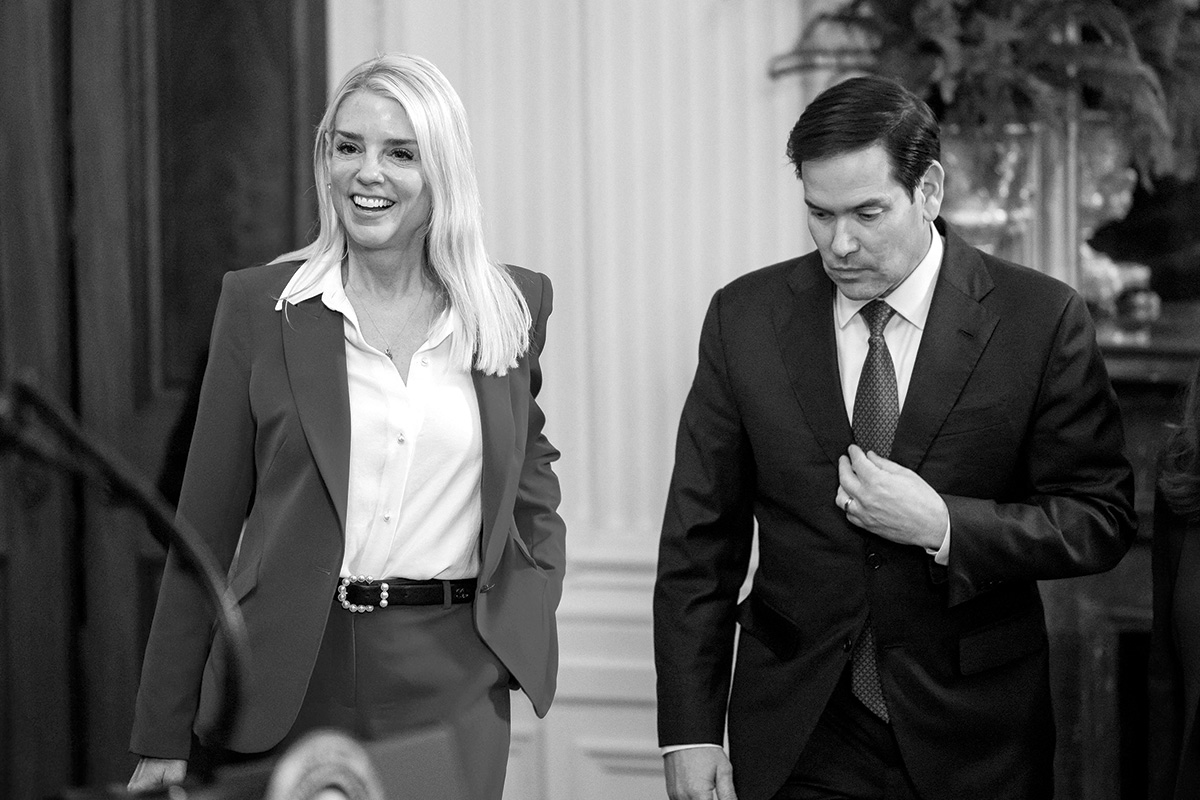
Two of the preeminent Cabinet posts — Secretary of State and Attorney General — are held by Floridians Marco Rubio and Pam Bondi. Florida lobbyist and political operative Susie Wiles, Trump’s co-campaign manager, is the nation’s first woman White House chief of staff.
FLORIDA TREND counts at least 50 Floridians nominated or appointed to high-level posts, turning Washington’s corridors of power into Tallahassee old-home week. “You don’t have to scratch deep to find a Floridian in any agency of the government,” says Trump fundraiser and Tallahassee-based lobbyist Brian Ballard.
FLORIDA TREND counts 27 of the 50 as nominees for ambassador-level posts. The Miami Herald in July reported that a third of Trump’s ambassador-level appointments are Floridians, a higher percentage than from any state since Texas in the presidency of George W. Bush.
The mass of presidential appointments should redound to state or Florida corporate interests in years to come as appointees parlay their knowledge and connections.
The updraft opens leadership spots here to the GOP bench. Just one example: A half-dozen people took on new leadership posts in Tallahassee by the time all the dominos fell, filling Marco Rubio’s U.S. Senate seat when he was appointed Secretary of State.
The movement underscores Trump as Florida kingmaker. His endorsement of then U.S. Rep. Ron DeSantis in 2018 was a key to DeSantis’ rise. This year, Trump has endorsed southwest Florida Congressman Byron Donalds to succeed DeSantis. The endorsement is “rocket fuel for Byron’s candidacy” says lobbyist Nick Iarossi, head of Tallahassee-based Capital City Consulting.
Trump this year endorsed state Sen. Joe Gruters (R-Sarasota), former chair of the Florida GOP, for chairman of the Republican National Committee. Trump called him a “MAGA Warrior … with us from the beginning.” With that endorsement, Gruters drew no opposition. The state GOP now has one of its own in charge nationally to ensure the local GOP gets the resources it wants.