




2 Commercial Airports
4 Colleges / Universities
Unique features, rankings and statistics
The three-county Southwest Region lays claim to a well-deserved reputation as a harmonious blend of fast-growing coastal urban areas and vast protected inland habitats that harbor a stunning variety of wildlife and vegetation.
The population epicenter of the region is Lee County. Its largest city is Fort Myers.
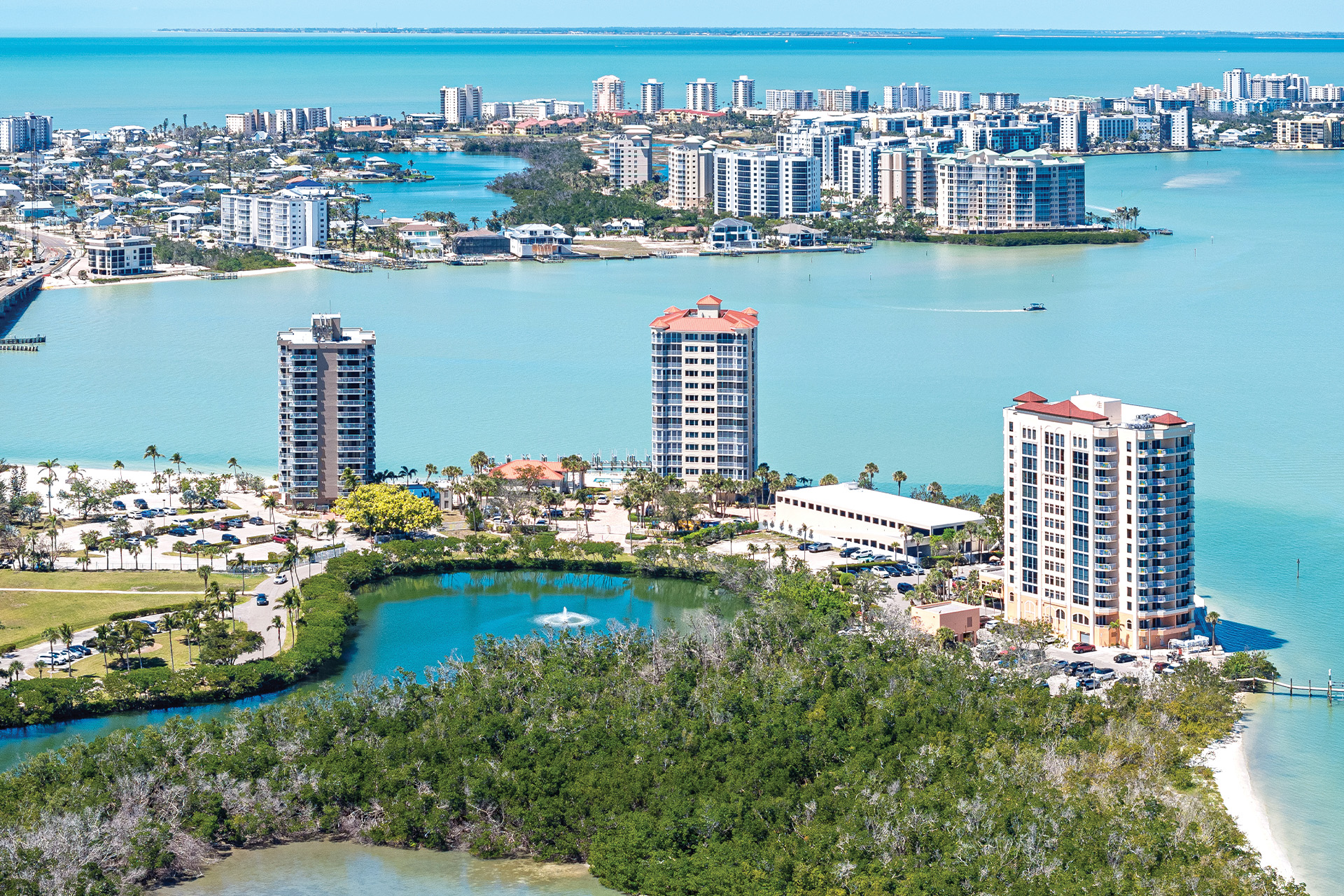
A popular vacation destination, Lee County is known for its white-sand beaches and exceptional shelling.
Features include Cape Coral's 400 miles of man-made canals — more than any other city in the world.
Collier County is home to Naples, one of Florida's most affluent coastal cities.
Moving east from the dense urban areas along the coast, more than 80% of Collier's 1,997 square miles — the largest county in Florida — is protected parkland, where the endangered Florida panther roams freely in what is considered a critically important habitat for the survival of the species.
Another feature of Collier County is Corkscrew Swamp Sanctuary, home to the largest remaining virgin bald cypress forest in the world. The sanctuary also is a vital wetland and a major migration stop for birds.
With 830 miles of shoreline, Charlotte County is a prime destination for boating, fishing and kayaking. It is known as the self-proclaimed Tarpon Fishing Capital of the World.
The 42,000-acre Charlotte Harbor Preserve State Park protects one of Florida's most productive aquatic ecosystems.
The 27-acre Peace River Botanical and Sculpture Gardens in Punta Gorda displays monumental sculptures among diverse botanical collections.
The historic downtown district of Punta Gorda also features 24 large-scale murals vividly depicting the area's history.
Economic Growth
The economy of the three-county Southwest region can best be described as robust and rapidly diversifying, while remaining largely driven by tourism, construction and real estate.
All three counties — Charlotte, Collier and Lee — are experiencing relatively strong job growth, especially in the professional services and construction sectors.
However, as with nearly all the state's 67 counties, the main challenge is workforce housing affordability.
The strength of the job market in the region is best demonstrated by Naples, which had the fastest year-over-year private-sector job growth rate among all Florda's metro areas, according to the Florida Department of Commerce. At the beginning of 2025, Collier County employment grew by 2.2% over 2024 numbers.
Key economic drivers in Collier County include a diversified mix of traditional and emerging sectors: real estate and construction; tourism and hospitality; health care and professional services and finance and technology.
Like Collier, Lee County's economy is best described as resilient, dynamic and growing, experiencing evenly paced, strategic recovery following the widespread damage caused by Hurricane Ian in 2022.
The county’s population is approaching 1 million, according to the latest U.S. Census Bureau estimates.
Among the standout economic successes in Lee County during the past year was the significant rebound in tourism, which grew by 18%, generated some $3.1 billion in visitor spending and supported more than 42,000 jobs.
What's more, the number of hotel rooms and vacation rentals in Lee County increased by more than 11% over the past several quarters.
Also fueling job growth is the current trend among large companies buying up land along the I-75 corridor for distribution centers, warehouses and office complexes.
Among the largest recent mega-sales was the $155.1 million purchase by a Chicago firm of a 72-acre site in the Tri-County Industrial Park, which will become home to a 2.2 million-square-foot Costco distribution center.
More recently Amazon paid $66 million for land near the I-75 corridor, where it will build a new distribution center.
Overall industrial growth in the county is estimated to reach about eight million square feet by the end of 2025.
Another major economic driver is Lee Health’s $1.5 billion plan to build and upgrade its facilities by 2028. The investment is expected to create more than 6,500 new jobs.
Real estate growth in Lee County continues at a strong pace despite home values increasing by 21% in 2025.
The growth is fueled by a surge in population. Fort Myers was named the fastest-growing American city by U.S. News & World Report in 2025 and Cape Coral was ranked second among the best U.S. cities for first-time homebuyers.
In 2025, Charlotte County saw significant growth in manufacturing and tourism, major commercial projects and substantial infrastructure funding.
The county has redoubled efforts to sustainably grow and diversify its economic base.
With numerous companies — including Vestas Air Coil, Balentine Cabinets, Fountain Pools, Proglider Boats, Kozma Welding and Fabrication and Environmental Underground — expanding their operations, the county is nurturing its reputation as a burgeoning manufacturing hub.
Tourism in Charlotte County reached record levels in 2025, driven in large part by the recent expansion of Punta Gorda Airport, which posted the fastest passenger growth of any commercial airport in Florida at 22.5%.
What's more, the county's push into sports tourism has paid off handsomely, generating an estimated $40 million in economic impact in 2025.
Top industries
The major industries across the region include health care, hospitality, tourism, real estate, retail, finance and construction.
Collier County also emphasizes specialized manufacturing, especially in medical devices and renewable energy components.
Charlotte County is seeing growth in advanced manufacturing, clean energy and logistics.
In Lee County, a significant employer is Lee Health, which has a workforce of more than 17,000.
With rapidly growing populations in all three counties, construction, retail and food services are major sectors within the counties' respective economies.
These sectors are closely tied to and support tourism, a foundational industry in the region and a focus area of specialized marketing for the counties' long-term economic development strategies.
The three-county region is also seeing a steady growth in specialized and niche manufacturing, particularly for small, high-value parts.
Access to Capital
Businesses in Lee, Charlotte and Collier counties generally have good access to investment capital through local, state and federal initiatives, along with a business-friendly environment.
Lee County's FIRST initiative program (Financial Incentives for Recruiting Strategic Targets) offers performance-based financial incentives to attract high-value business projects and encourage broad-based prosperity. The county has allocated $25 million for these incentives and also received about $1.1 billion in disaster recovery grants following Hurricane Ian.
The Collier Community Foundation provides access to grants for local nonprofit organizations and community programs. As of June 2025, it managed more than $357 million in assets and distributed more than $392 million in grants.
Culture, Personality and Seasonality
The Southwest Florida counties of Collier, Lee, and Charlotte are defined by a strong seasonal cycle, dominated in part by the influx of snowbirds during the winter months.
Their cultural and social personalities are shaped by its seasonality, with distinct differences in atmosphere, pace and demographics between the peak winter season and the slower-paced, hotter summers.
While each county has its own personality and identity, they share core elements of Southwest Florida's culture.
Collier County is characterized by affluence and luxury, with a large population of retirees and high-net-worth individuals, particularly in Naples and Marco Island.
The lifestyle is leisurely and upscale, with a strong focus on resort living, fine dining and boutique shopping.
Lee County is viewed as having a more diverse, youthful and energetic personality, ranging from the urbanized lifestyles of Fort Myers and Cape Coral to the quieter, beach-focused communities of Sanibel and Captiva.
The culture in Lee County and Fort Myers is more varied than Collier's, catering to a wider demographic of families, young professionals and retirees.
Charlotte County is known for its relaxed, small-town atmosphere and strong sense of community, especially in Port Charlotte and Punta Gorda.
The county attracts new residents with more affordable and tranquil coastal living compared to its southern neighbors. It also has a growing reputation as a relocation hotspot.
All three counties experience seasonal fluctuations affecting nearly every aspect of life, from traffic and lodging and food prices to retail spending.