





3 Spaceport Territories
3 Seaports
4 Commercial Airports
8 Colleges / Universities
Unique features, rankings and statistics
If there is one unique aspect of Northwest Florida that sets it apart from the rest of the state it can be found in the many chapters of its storied 466-year-old history.
There is Pensacola, colonized by the Spanish in 1559, making it the first European settlement in what would become the U.S.
Re-established in 1668, Pensacola is the site of several subsequent conflicts between the Spanish, British and French forces in the 18th century.
Pensacola's Plaza Ferdinand is where future U.S. president Andrew Jackson accepted the deed to West Florida from the Spanish in 1821.
Naval Air Station (NAS) Pensacola, established by an act of Congress in 1914, is the nation's oldest military flight training installation and has been operational as a naval ship yard since 1826.
Escambia County, established in 1821, is the first and oldest county in Florida.
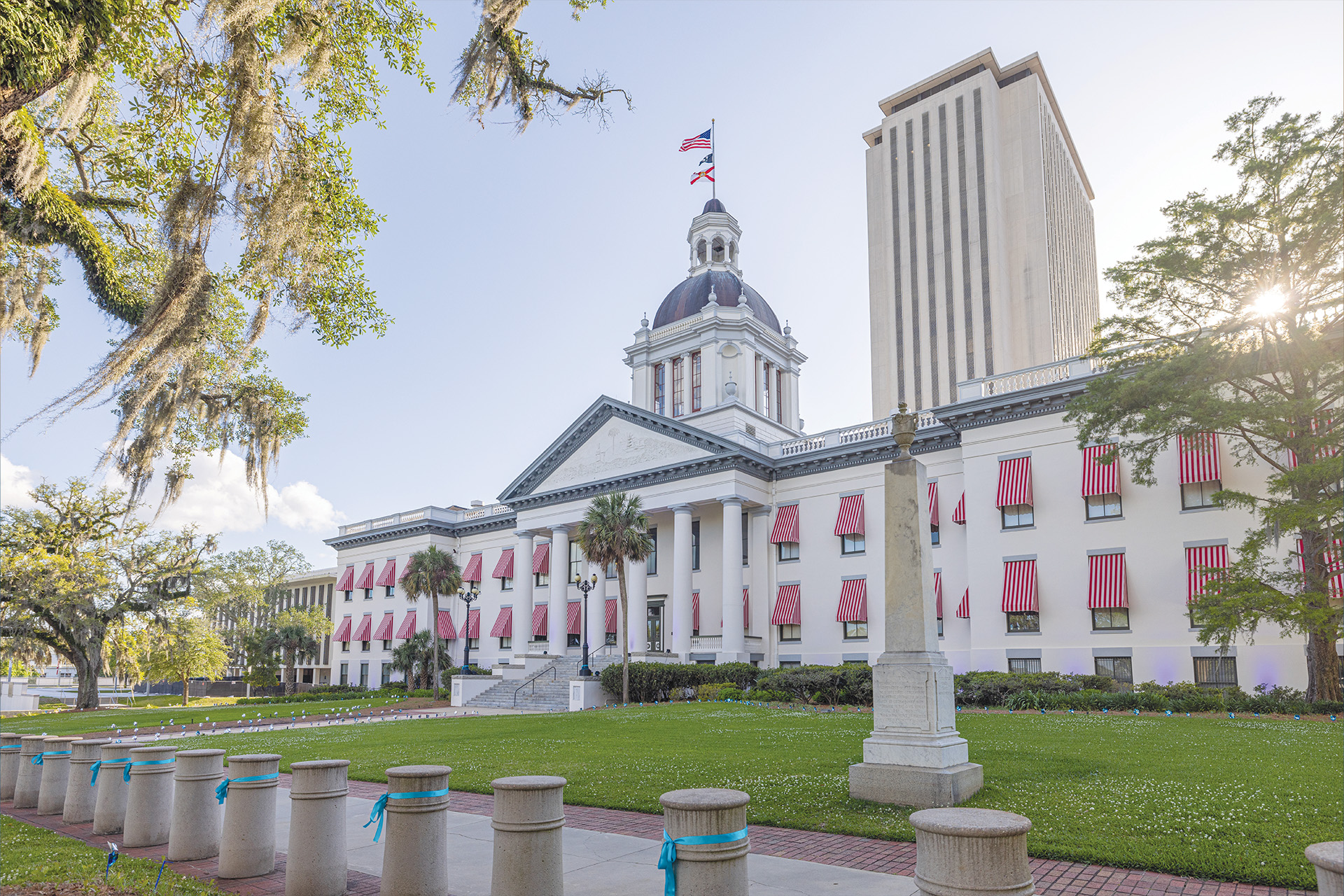
Tallahassee is home to the state capitol which was established in 1824 as a compromise location between Florida's two largest cities at the time, St. Augustine and Pensacola. Historically, Tallahassee had been the capitol city of the Apalachee Native people for more than 1,000 years.
In the 20th century, Northwest Florida's five military installations played a major role in World War II.
Eglin Field in Okaloosa County was the training site for the famous Doolittle Raiders, who carried out the first U.S. Army Air Forces-led bombing mission over Japan in April 1942.
Beyond its six centuries of history, Northwest Florida has many other distinctive environmental features that stand out, including the 160-mile-long Gulf Islands National Seashore, the nation's largest protected seashore, the Pensacola Scenic Bay Bluffs, a rare geological feature in Florida, composed of red clay. Historical accounts note that Spanish explorers in 1559 anchored by the bluffs, and the clay was later used to make bricks for the Civil War-era Fort Pickens where the famous Native American Chief Geronimo was imprisoned from 1886 to 1888.
Walton County is home to 15 of Florida's rare coastal dune lakes, found in only a handful of places worldwide, including Madagascar and Oregon. These lakes are shallow, coastal bodies of water that are intermittently connected to the Gulf of Mexico, creating a brackish ecosystem.
Other features in the region include one of the world's largest artificial reefs off Okaloosa County. The reef was created in 2006 by the deliberate sinking of the USS Oriskany, a decommissioned aircraft carrier that has become a popular diving destination and part of the Florida Panhandle Shipwreck Trail.
Since 1946, Pensacola has been the home base for the world-famous Blue Angels Flight Demonstration Team.
The National Naval Aviation Museum, also based in Pensacola, is both the world's largest naval aviation museum and one of the largest aviation museums in the world. It houses more than 150 restored aircraft from the Navy, Marine Corps, and Coast Guard, and contains more than 350,000 square feet of exhibit space.
Economic growth
It is no exaggeration to say that Northwest Florida's economic growth over the past decade has been one of historic proportions.
Diversification, bold public-private sector leadership, a wave of young entrepreneurs, far-reaching and finely tuned marketing strategies, and abundant sources of venture and investment capital have combined to propel the region's economy to unprecedented heights.
Never has the Northwest region — from Pensacola to Tallahassee and beyond — achieved such success in attracting major international aerospace companies; advanced and heavy industry manufacturers; IT and cybersecurity startups and world-leading renewable energy assembly plants.
The most recent example of the region's success is Williams International's announcement it will build a $1 billion gas turbine jet engine manufacturing facility at the 10,500-acre Shoal River Industrial Park in Crestview. Shoal River is the state's largest site-certified industrial park.
Okaloosa won the intense, two-year-long national competition for Williams largely due to the region's skilled workforce, including transitioning military personnel; a well-established aerospace infrastructure; and proximity to Fortune 500 defense contractors Boeing and Lockheed Martin.
Nine- and ten-figure dollar projects that were once largely out of reach for Northwest Florida have now become almost commonplace.
The Panama City-based Eastern Shipbuilding Group, one of the largest among some 800 manufacturers in the Northwest region, has a pipeline of U.S. Department of Defense and civilian ships valued at over a billion dollars.
Tyndall Air Force Base is in the final stages of a $6 billion reconstruction.
Tallahassee, whose economy is anchored by public-sector, health care and academic jobs, took a major step in diversifying its economy with the recent construction and opening of Amazon's $200 million, 630,000-square-foot robotics fulfillment center, which created more than 2,300 jobs.
Northwest Florida also has something no other region in the state does: Triumph Gulf Coast, a nonprofit organization created by the Florida Legislature to disburse $1.5 billion in funds secured to help the coastal counties of Northwest Florida recover from economic damages caused by the Deepwater Horizon oil spill.
The impact Triumph grants have had — more than $754 million so far — on the Northwest Florida economy has been enormous.
In 2025, for example, Triumph distributed more than $230 million for economic and workforce development projects that will create hundreds of new jobs.
Northwest Florida's economic renaissance also is driven by the role the region's trade schools, colleges and universities play in anticipating and meeting the workforce needs of this latest wave of businesses and industries moving to the 13-county region.
The region is also seeing a major boom in homebuilding and commercial construction, led in part by Bay County's St. Joe Company's residential and commercial developments on its 100,000-acre Bay County land holdings.
Yes, Northwest Florida is having its time in the sun, diversifying and growing its economy while guarding against complacency and self-congratulations.
Top industries
Northwest Florida's economy is primarily driven by strong industry clusters in aerospace and defense, advanced manufacturing, information technology and construction.
The region's long-standing military presence serves as a major anchor for these sectors, which are further supported by tourism and professional services.
Home to six major military bases and approximately 56,000 active duty personnel, Northwest Florida has become a national and international destination for aerospace and defense contractors.
About 5,200 highly trained military personnel leave active duty each year, and most transition seamlessly into Northwest Florida’s civilian workforce, joining aerospace companies such as VT MAE at Pensacola International Airport.
The region also is experiencing significant growth in the advanced manufacturing sector, which includes heavy industry, as well as marine, aerospace and energy-related manufacturing.
Key manufacturing companies in the region include GE Vernova, Ascend Performance Materials, Berg Pipe and Eastern Shipbuilding.
Fueled by a tech-friendly climate and a strong highly trained workforce, the region is also home to a growing number of thriving technology companies such as software developers Beast Code and Bit-Wizards, both headquartered in Fort Walton Beach.
The professional services cluster is another key part of the economy, encompassing a variety of notable financial services businesses that include Navy Federal Credit Union, home to a $1 billion campus near Pensacola that employs 10,000 workers and is a significant economic presence in the Pensacola area.
With its access to three maritime ports, four airports and interstate highways, rail lines, Northwest Florida is successfully pitching itself as a prime location for logistics and distribution centers, landing the likes of Amazon's 630,000-square-foot fulfillment center in Tallahassee that employs some 1,000 people.
Access to Capital
Northwest Florida's venture and investment capital landscape can be summed up in three words: Triumph Gulf Coast.
Created by the Florida Legislature in 2013, the non-profit organization manages and distributes the state's settlement funds from the 2010 Deepwater Horizon oil spill that total $1.5 billion.
Triumph's primary mission is to promote long-term economic recovery and diversification in the eight Florida Panhandle counties most severely affected by the oil spill.
Its goal is to fund projects that create high-wage jobs, improve infrastructure, and enhance educational and workforce development programs.
Distributions, which began in 2017, have totaled more than $750 million. The funds, which so far have created thousands of new jobs, will cease sometime around 2035.
Culture, Personality and Seasonality
Northwest Florida is best described as a blend of Southern culture and laid-back but active, aquatic-based coastal lifestyle.
Its personality is shaped by a long history, a diverse population, and a strong military and tourism presence.
One of the most conservative regions of Florida, the Panhandle also showcases another aspect of its culture in its many historic small inland towns with charming districts populated by distinct antebellum and Greek-revival homes.
With numerous major military bases in the region, including historic installations in Pensacola and Fort Walton Beach, the culture is significantly influenced by military personnel and their families.
What's more, the Gulf Coast's Emerald Coast attracts millions of domestic and international visitors each year, supporting a diverse array of world-class dining, shopping and scores of year-round festivals.
A strong connection to the natural environment is also a hallmark of Northwest Florida's coastal lifestyle, centered on fishing, sailing, motor boating and water sports on the many rivers, bayous, bays and Gulf beaches.
There is also the Gulf Islands National Seashore that covers and protects more than 100 miles of Northwest Florida beaches.
The region's largely semi-tropical climate brings warm, colorful and often wet springs, followed by hot, humid and sunny summers, highlighted by peak tourist season during the first two weeks of July.
Fall is defined by pleasant, drier weather with cool nights, hosting many local festivals from October through December and into the late winter months.