





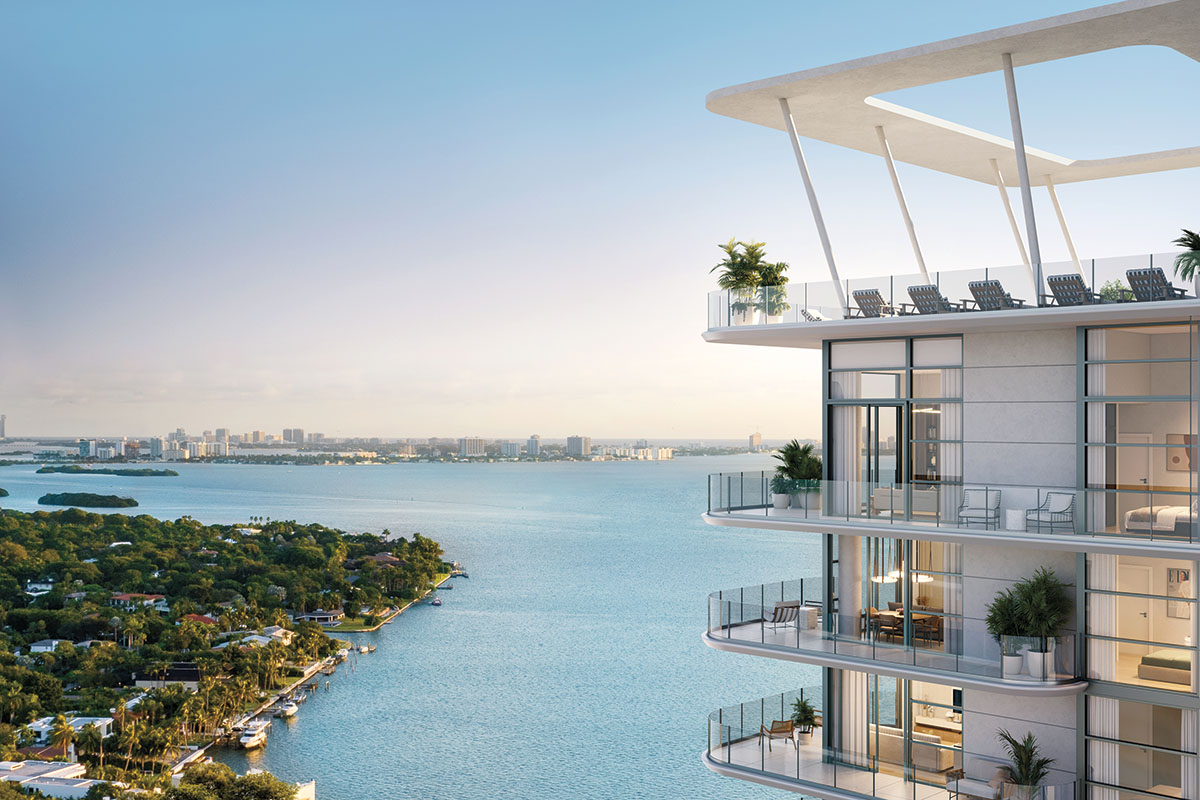
There's a 60-story branded, oceanfront condominium in Sunny Isles where you can put your car in an elevator and park it outside an upper-floor residence. Soccer star Lionel Messi owns a unit in Porsche Design Tower Miami on the 47th floor. Fort Lauderdale soon will be home to Riva Residenze, touted as the world's first yacht-themed branded condominium featuring 36 units in a 20-story tower starting at $3.5 million. It includes access to six yacht slips.
As South Florida's wealth influx continues, developers believe branded condominiums sometimes can draw more buyers and higher returns. There's only one place in the world with more branded condominiums, British brokerage house Savills reported last year, and that's Dubai.
South Florida has 48 completed branded projects with another 55 in the pipeline, Savills reported. New York is third, with 32 completed and five more planned. Properties bear the names of Italian design companies, sportscars and five-star hotel brands. Those names carry a degree of sexiness, but developers say there's more to the trend than that.
When a business with a globally recognized brand lends its name to a condominium project, says Vertical Developments CEO Fernando de Nuñez y Lugones, buyers feel confident that significant due diligence has been done on its design, finances and on the builders to ensure that its name is protected.
While the designs and amenities are nice, these vetting practices create a "trust premium," says Jorge Guerra, Jr., broker with Real Estate Sales Force (RESF) and president-elect of Florida Realtors. "Buyers are coming over here looking for something that they know, that they trust and that pays major dividends. When you walk into an area where you don't know the landscape or the builders, that tie-in makes a big difference for them."
Nuñez y Lugones' company is part of the Riva Residenze project and is about to start building its fourth branded condominium — Elle Residences — a more modest one- and two-bedroom project on the north end of Miami's Edgewater neighborhood selling units for between $600,000 and $1.5 million.
It is steps away from the city's design district, making Elle's fashion image a good match. Nuñez y Lugones promises "a very cool, French Riviera design with a lot of feminine touch." Elle units will serve as second homes for affluent people from outside the area, he says, and they're good investments because branded condominiums require condo associations to maintain more rigorous inspection and maintenance programs.
Location and competition dictate when a branded project makes sense, says BH Group founder Isaac Toledano. His company has built condominiums with the W hotel and Ritz-Carlton brands. He's building a $1-billion project on Miami's exclusive Fisher Island — considered the nation's most expensive ZIP code and accessible only by boat or helicopter.
He expects the Residences at Six Fisher Island to draw $4,000 per square foot. It's the last piece of developable land on the island, which has no branded condominiums. "We decided not to go with a brand," Toledano explains, "because Fisher Island on its own is a brand."
Nuñez y Lugones describes Vertical Developments as "a medium-sized company" and says it might take a break from branded projects because of increasing construction costs driven by tariffs and other factors. With international brands, much of the material must be imported.
Those cost increases for items like Italian marble likely won't deter larger, deeper-pocketed builders, he says. "Miami is the most sophisticated and complex development market in the world because we have the big boys from New York, we have very capable local developers, we have Latin American developers and European developers."
Toledano, Nuñez y Lugones and Guerra all pointed to the wealth moving into South Florida — like international buyers and bigwigs relocating from California, New York and other states. Demand for branded condominiums is unlikely to wane.
They bring "a certain level of service and maintenance that they expect from that brand, which is completely different from a standard condominium," Guerra says. "And in glitzy South Florida, status also 'plays a major role. If you're in that building, if you're in that penthouse — it's what people strive for. This is South Florida. They want to be seen, what you're driving, what you're wearing and where you live. That doesn't go away."
— By Michael Fechter