




Conservationists and residents fear that building a cruise ship port adjacent to the Sunshine Skyway Bridge would devastate the Terra Ceia Aquatic Preserve.
To get a sense of just how unpopular the idea was of building a privately owned cruise ship port adjacent to an aquatic preserve on Tampa Bay, Gov. Ron DeSantis — whose administration explored the idea of building hotels and golf courses inside state parks — criticized it as unnecessary.
The port project "obviously would have a major, major change in the lifestyle and the environment of the folks that live in this area," he said in March, just before signing SB 302, a legislative provision aimed at bolstering coastal protections. The bill included an amendment that he said would "not allow the dredging that would be necessary to convert this (area) to a commercial cruise ship terminal."
DeSantis pointed out that Port Tampa Bay, which sits about 24 nautical miles from Seattle-based global port operator SSA Marine's proposed site, has a thriving cruise port that is setting passenger records.
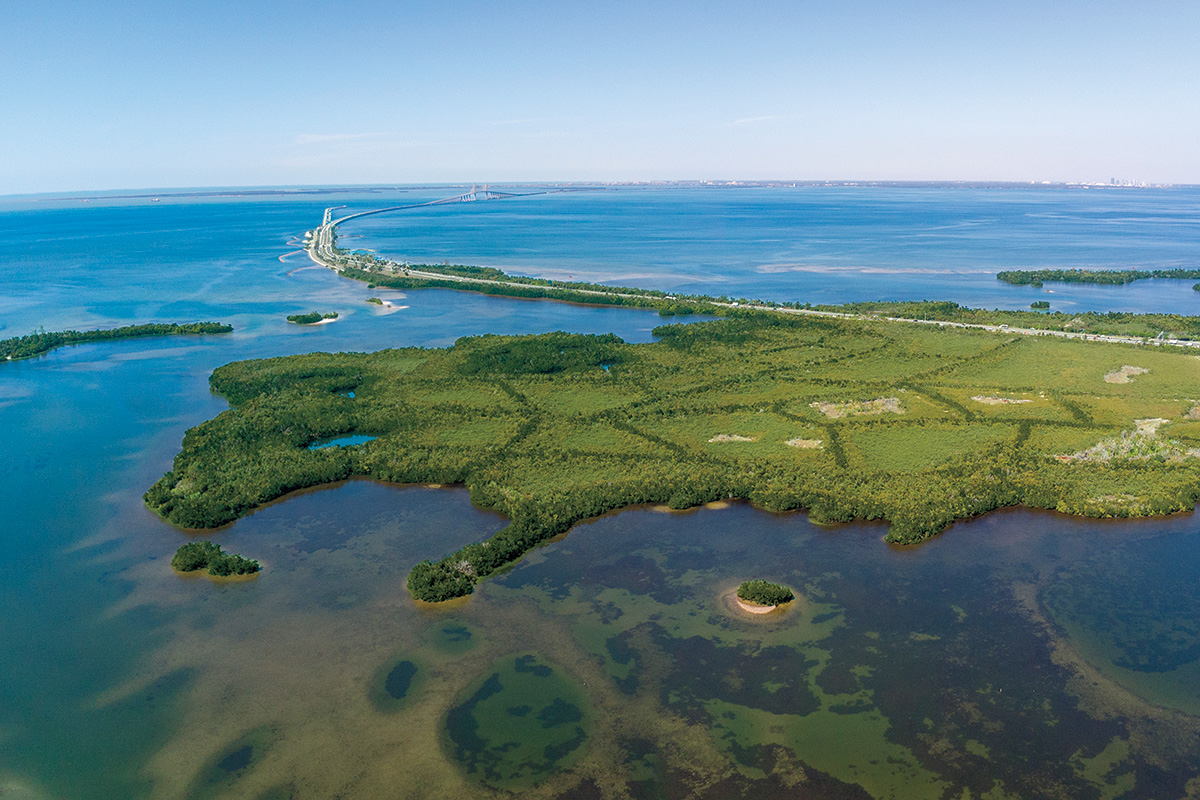
But newer cruise ships continue to grow taller and no longer can pass beneath the Bob Graham Sunshine Skyway Bridge, which has a vertical clearance of about 180 feet, to get to Tampa. SSA Marine's proposed location, known as the Knott-Cowen tract, sits a few miles south of the bridge, opening the door to ships taller than 220 feet.
Conservationists and residents fear building and operating a cruise port on 328 acres along Interstate 275 could devastate the Terra Ceia Aquatic Preserve and much of the bay ecosystem. A 2023 Tampa Bay Regional Planning Council and Tampa Bay Estuary Program study estimated the bay generates $32 billion in annual economic impact, with tourism and recreation representing nearly $5 billion.
SSA Marine had no immediate public response to the governor's comments or the changes in Florida law. That's consistent with the information vacuum that the company has created since announcing the cruise port plan in a Jan. 16 Bradenton Herald guest column. The port, wrote SSA Marine cruise division president Stefano Borzone, would enhance "West Central Florida's position in an evolving cruise industry, while respecting the surrounding environment, creating long-term economic opportunities for the local community and supporting regional tourism."
Since then, no new information has emerged — no public meetings or renderings, no preliminary data on water quality in Tampa Bay or traffic impacts. A website, knottcowencruise.com, largely repeats the same messages as Borzone's original column. That silence gave opponents time to coalesce and strategize.
Nonetheless, SSA has said it "is putting community engagements and partnerships first," and "(nothing) will be decided about this project without first listening to, and incorporating from, the surrounding community, governmental officials and environmental organizations." It estimates it would take three to five years to build the port if all the permits were secured. That process could take several years as well.
Domino Effects
If the port project proceeds, its footprint would envelope 122.6 acres of mangroves, 112.7 acres of seagrass and 16.8 acres of freshwater wetlands regulated under the federal Clean Water Act, the Tampa Bay Estuary Program estimates.
Dredging that area to connect the proposed port to the existing shipping channel could wipe out existing habitats that provide refuge to juvenile tarpon, redfish, snook, trout and more, opponents fear. Silt from construction and cruise traffic would block sunlight from reaching seagrasses, triggering a domino effect on the food chain that sustains dozens of fish species.
"There's no way that you can control the sediment from that, so you'll have sediment all over the place" from dredging and ship engines churning, says Steve Murawski, endowed chair of biological oceanography at the USF College of Marine Science.
Murawski knows the area well, serving as principal investigator of the Tampa Bay Surveillance project, sampling fish and water for contaminants throughout the bay. The area extending from the Skyway Bridge to Rattlesnake Key is home to "the least contaminated fish of any of the places in the bay that we've sampled," he says, because it's mostly undeveloped. "There's just not a lot of people."
SSA Marine's pledge to protect Rattlesnake Key, an environmentally sensitive 710-acre series of mangroves and submerged lands, rings hollow to him because "given what we know about water movement patterns, what we know about storm surges — it's all connected."
Vested Rights
While it generated headlines, the bill DeSantis signed may not have changed much. Florida law and administrative code already included hurdles to dredging in or near Florida's aquatic preserves, which are defined as "submerged lands of exceptional beauty that are to be maintained in their natural or existing conditions." Terra Ceia was added to the list in 1986.
Chapter 258.36 of the Florida Statutes says aquatic preserves are to "be set aside forever ... for the benefit of future generations." And Florida Administrative Code requires that the cumulative effect of activities "which may impact the preserves" be considered, including "the extent to which the loss of beneficial hydrologic and biologic functions would adversely impact the quality or utility of the preserve."
Because building and operating a cruise port will affect water and other conditions inside the Terra Ceia Aquatic Preserve, SSA would have to show that the project is "clearly in the public interest," says Tom Glancy, an environmental consultant who spent a decade in the Florida Department of Environmental Protection's state lands and environmental resource permitting section.
"There's no way they're not going to impact state-owned lands that are within the aquatic preserve," he says.
SSA Marine may have had such limitations in mind in January when it asked to meet with county officials. In considering the proposal, "it is important to note that the property is benefitted by vested rights created by the State of Florida in 1955 and ratified hereafter," Stantec Principal Katie LaBarr wrote to Manatee County Development Services. That includes the right "to dredge fill material from submerged lands including those adjacent to the property, create a bulkhead for development and fill the land proposed to be developed as a cruise port."
The vested rights resulted from the original Skyway bridge construction, says Honey Rand, a spokesperson for the Slip Knott ownership group which is trying to sell the land to SSA Marine. The state failed to obtain an easement over the Knott-Cowen tract. To resolve the dispute, then-Gov. LeRoy Collins hand drew boundaries on a map where the property owner would enjoy dredge and fill rights.
Determining which prevails, the 1955 document or subsequent state statutes and administrative codes, likely would be up to a court to decide, Rand says. But "(i)f a decision was made that they can't use their vested entitlements, that is a taking" that could force the state to buy the land.
The state already had opportunities to buy it in 2022 and 2024 before the cruise port idea ever surfaced, Manatee County state Sen. Jim Boyd wrote in a Tampa Bay Times guest column. He had $23 million in state money to "forever prevent development" but "negotiations fell apart." A taking could cost much more.
Standing Watch
Before the new legislation reinforced dredging restrictions, a coalition formed between environmental activists and land use attorneys to fight the port proposal.
Suncoast Waterkeeper founder and president Justin Bloom and Terra Ceia resident and attorney Kathryn Sole, whose house is closest to the proposed cruise port site, solicited help from land use attorneys Jackson Bowman and George Gramling. Though the two normally represent developers, Sole, also an attorney, calls them "the top of the top" in Florida land use law.
Bloom and Sole researched what approvals developers would need before proceeding, including from Manatee County commissioners, the Southwest Florida Water Management District, Florida's Department of Environmental Protection and the U.S. Army Corps of Engineers. "All of them point toward some type of administrative or civil proceeding," Bloom says. "We knew that we were going to need strong legal resources to strategize and execute."
"We see this threat to the integrity of this whole aquatic preserve in the form of this completely inappropriate, massive cruise ship terminal," Bloom said before the law passed, "and that's what we're gearing up to fight."
SSA Marine has 13,000 employees and $1.45 billion in 2024 revenue. It became part of Blackstone Infrastructure's $77-billion portfolio in 2021, so it has the resources both to sustain the fight and build a port from scratch. It also has the means to be patient, Bloom says.
He's concerned complacency may set in when people look at the governor's comments and the new law.
SSA could be playing the "long game," he says. DeSantis leaves the governor's mansion in January, and legislators come and go. Even though SSA Marine has yet to file its first formal document, requesting rezoning and comprehensive plan changes from Manatee County, Bloom and his allies say the project isn't dead until the company says it's giving up.
Property owners are entitled to the highest and best use of their property, Bowman says. But in this case, state statutes and administrative codes and regulations pose significant hurdles. If nothing else, the new law reinforces his view.
In addition to the "taking" Rand referenced, the Knott-Cowen property owners might look at the Bert J. Harris, Jr., Private Property Rights Protection Act, a 31-year-old statute that lets private property owners seek compensation when government regulations "inordinately burden, restrict or limit private property rights without amounting to a taking," Bowman says.
While there's not much they can do until SSA acts, Bloom, Bowman and Gramling say they will stand ready to fight if the company chooses to proceed.
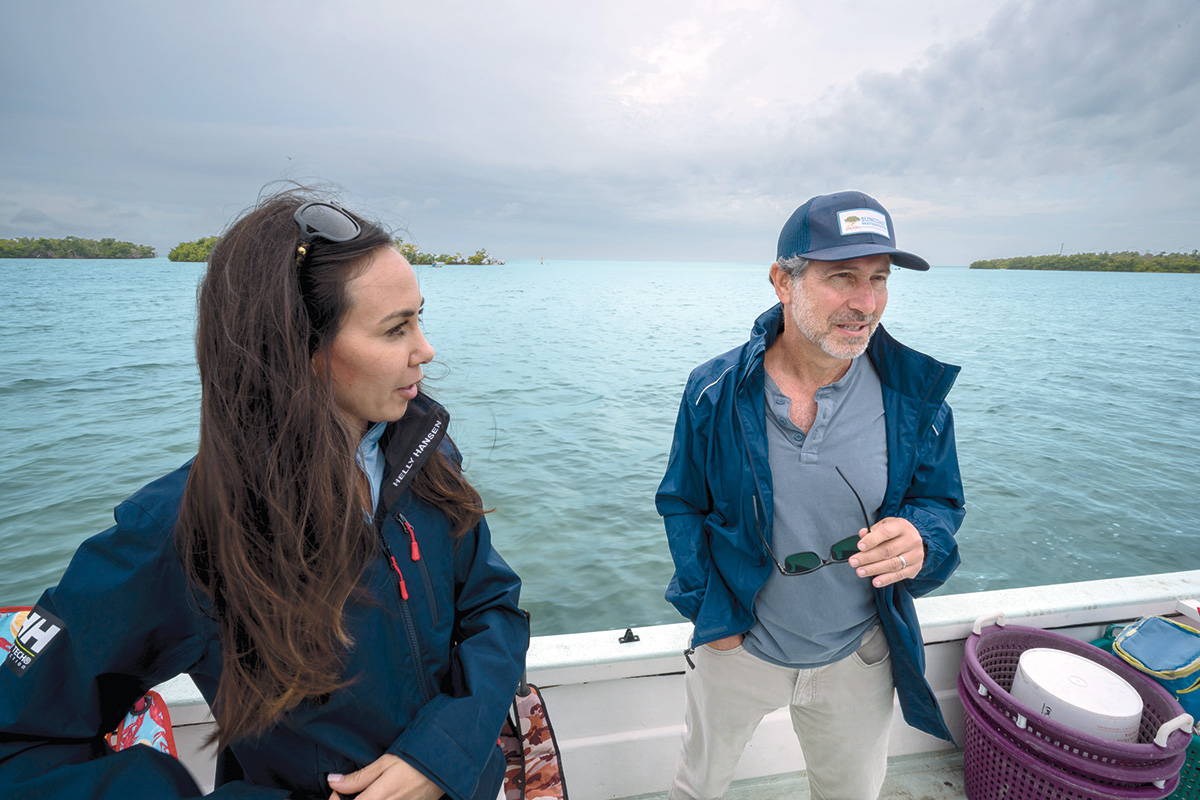
"The landscape is perfect," Gramling said after a recent boat tour of the Knott-Cowen tract. "It's beautiful. It's pristine. You can see the value of this estuary loaded with critters feeding the entire food chain all the way up to the Florida panther and the bald eagle. What I got out of this (is) ... I don't want to see a port. I don't want to see cruise ships."