










Tallahassee Memorial Healthcare’s Heart and Vascular team is closing in on a major milestone in the treatment of heart failure.
Led by Drs. Shane McEntire and Christopher Griggs, the TMH Physician Partners team is nearing its 100th successful Barostim implant procedure.
Barostim is a relatively new FDA-approved breakthrough therapy that uses electrical pulses to help the body regulate blood pressure and heart, kidney and vascular function.
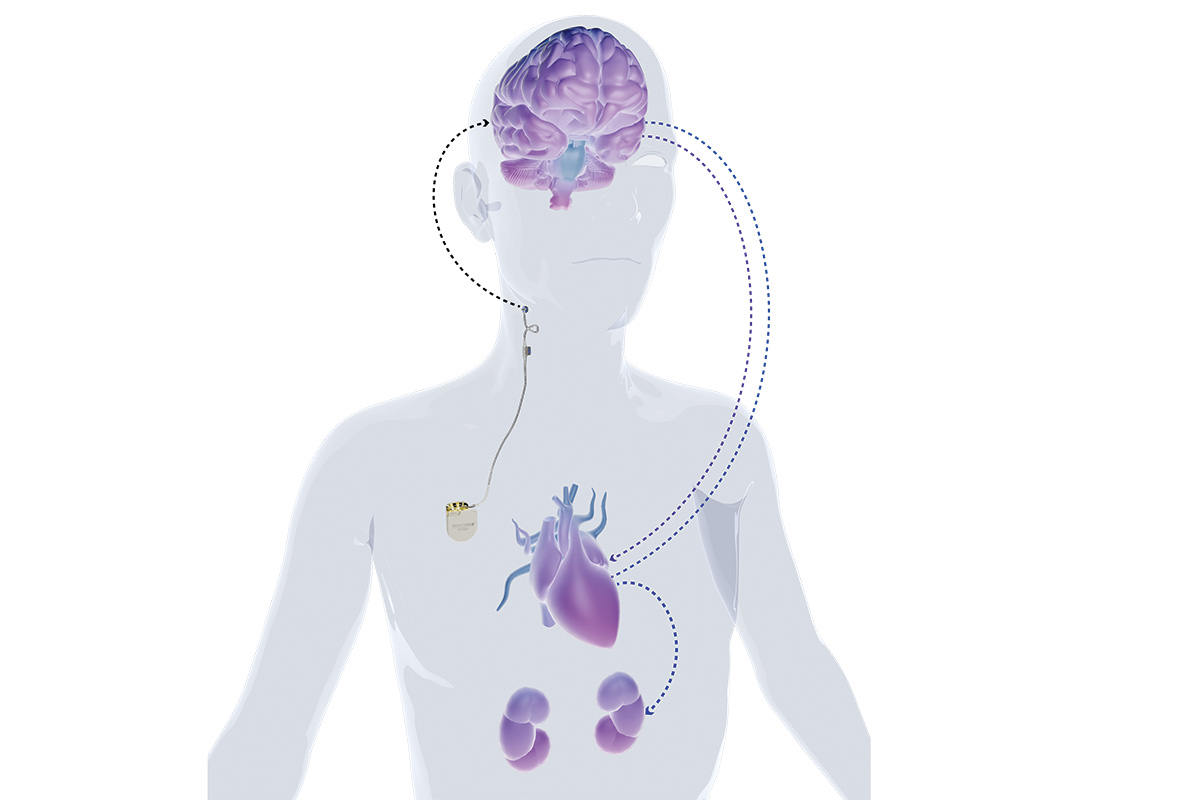
The procedure involves placing a small device below the collarbone that is connected to a thin wire placed on or near the carotid artery which sends signals to the brain to help rebalance the nervous system.
It’s designed for patients with heart failure who still experience symptoms due to little or no relief from medication alone.
While the technology has existed for many years and was previously used for hypertension, its application to heart failure is a recent development.
TMH joins Baptist Health Care in Pensacola as the only two hospitals in Northwest Florida to offer the procedure.
Symptoms: In heart failure, the heart struggles to pump blood effectively. This causes baroreceptors — sensors on the carotid artery — to send fewer signals to the brain, says Griggs. As a result, the brain triggers a stress response to force the heart to work harder, and, over time, worsens the symptoms of heart failure.
How It works: “The device stimulates baroreceptors in the carotid artery, a natural blood pressure sensing mechanism, to help rebalance the autonomic nervous system,” says McEntire. “This can lead to improved heart function, reduced workload on the heart and better symptom management.”
Minimally Invasive: Unlike pacemakers or defibrillators, Barostim does not involve placing hardware inside the heart or blood vessels. The system involves an implantable pulse generator (similar to a pacemaker) placed under the collarbone and a thin lead attached to the external wall of the carotid artery in the neck. “The Barostim device delivers continuous, gentle electrical pulses to these baroreceptors, increasing the signals sent to the brain,” says Griggs. “The brain interprets this increased signaling as normal blood flow, which in turn reduces the brain’s stress response and increases the calming response.”
Patient Benefits: Patients report a significantly better quality of life, with reductions in symptoms like shortness of breath and fatigue. “Clinical trials have shown that patients can walk farther and perform better physically as a result of the procedure,” says McEntire.
The Barostim therapy decreases hospitalizations for heart failure, which is a major concern for patients with this chronic condition.
Numerous studies have shown that patients experience far fewer complications as a result of the procedure. The device functions automatically and continuously, requiring no daily action from the patient.
“What’s more, the minimally invasive therapy is adjustable to meet individual needs and can be turned on or off by a doctor, making it a flexible treatment option,” says Griggs.
Once the procedure is completed and following a safe recovery period, most patients can go home the same day.
Many patients can reduce or discontinue some medications after receiving the Barostim implant.