



Q & A
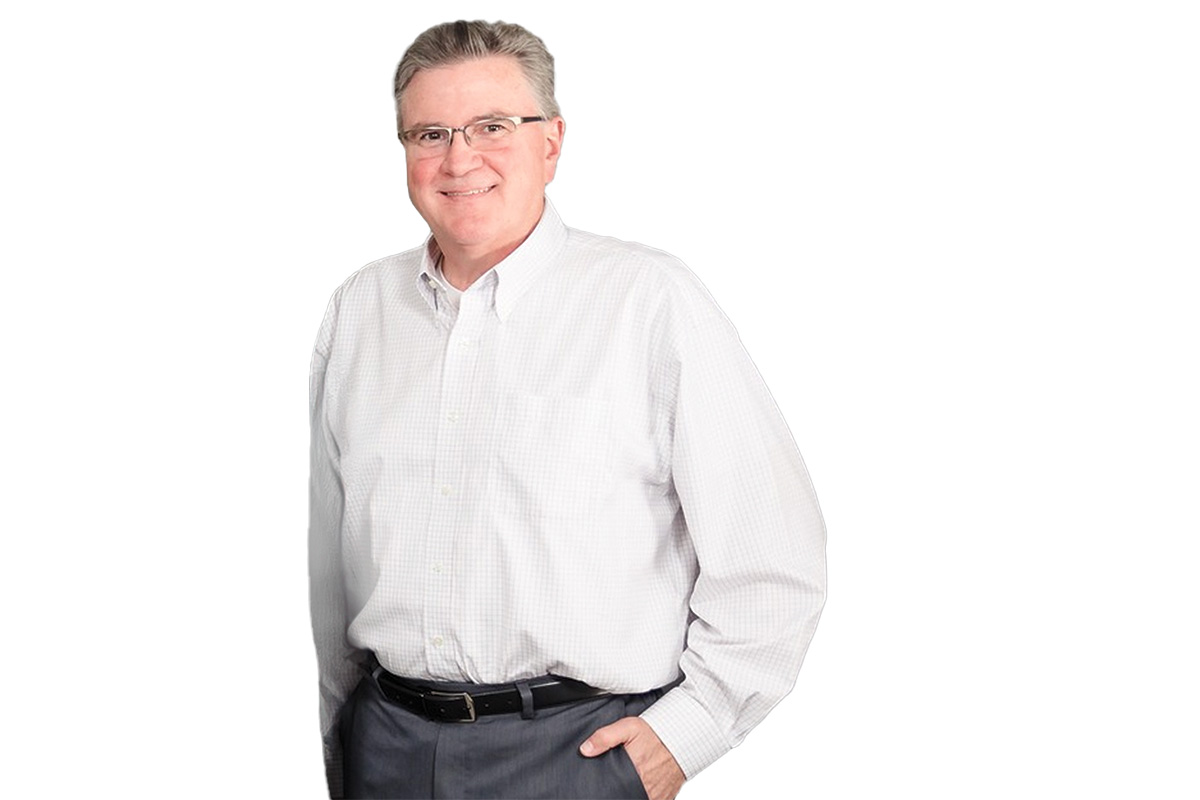
TIM ATTEBERY, CEO,
CARDIOVASCULAR
ASSOCIATES OF AMERICA
Private equity-backed, Celebration-based Cardiovascular Associates of America — CVA/USA — was founded in December 2021 and acquired its first Florida practice in 2022. Of its 450 cardiologists nationally, 190 are in Florida in 13 groups acquired in Southeast Florida, Daytona Beach, Jacksonville, Gainesville, Ocala, The Villages, Orlando and Tampa Bay. Annually, they treat approximately 550,000 patients. Nationally, the company expects to top $1 billion in revenue this year. (That’s north of $2 million per physician.)
The practices operate under their original group practice names such as First Coast Heart and Vascular Center in Jacksonville and My Cardiologist in Miami.
CVA/USA is led by Tim Attebery, who’s been a health care executive since 1986 and in cardiology since 1990. He led cardiology groups, helped start the Society of Cardiovascular CT and was CEO of the American College of Cardiology. In 2020, he was diagnosed with AL amyloidosis and quit “to go fight for my life. And fortunately, between the good Lord and good physicians at Mayo Clinic, I won that fight.” He returned with what he calls a passion to “protect independent cardiologists.”
Says Attebery: “The problem with the American cardiology system is that 75%- plus of cardiologists over the last 20 years have become hospital employees. And that is not good for them. It’s not good for their patients, it’s not good for payers. It’s not good for all of us as taxpayers. My dream was, can I figure out how to build a company that would preserve private practice cardiology?” An interview with Attebery follows.
FLORIDA TREND: How are you structured?
ATTEBERY: Think of us as a network of groups that are under one big umbrella. Each group maintains its brand, its patient relationships, hospital relationships. For a high level of activity, it’s complete autonomy. We’ve got to find good strong groups, bring them in under a transaction and then resource them to grow. We wrap around and support the local group, make them better, make them stronger, create more value for patients and payers, the community.
FT: When did the company move to Florida?
ATTEBERY: The headquarters was here from Day One. I lived here, and so it was partially my brainchild to create this company. I hooked up with Webster Equity Partners, which is based in Waltham, Mass. Webster Equity Partners is CVA/USA’s private equity sponsor along with, about a year and a half later, Deerfield Capital from New York City.
FT: Private equity getting into health care is a big thing.
ATTEBERY: It is a big thing with some very strong concerns by consumer advocates and the government about: What does that mean?
FT: What do you think it means?
ATTEBERY: We’re creating a more efficient, higher-quality, great access cardiovascular care delivery system. We believe the cost of cardiovascular care in the U.S. is too high — and avoidably too high — and the best people to reduce and create a more efficient system are not hospital-employed cardiologists — because they are members of an ecosystem, of a delivery system, that actually, unit-for-unit, costs three to four times more. The current state of cardiovascular care as delivered in this country is not — capitalize, bold, highlight the word ‘not’ — not good for consumers. What we’re doing, CVA/USA, is we are preserving, protecting the independent cardiologists, those who are not employed by hospitals. We can prove — and we’ve published this data, and now every payer we talk to says we’re right — that the hospital-employed cardiologists cost them more — not because they’re bad cardiologists, it’s just because hospital pricing is higher than private practice. So when you come to one of our partner groups and you need a test, you’re going to have that done in the office. And the payer and Medicare pay about one-third to one-fourth versus what they would pay if you went up one floor to a hospital-owned imaging center.
FT: Are hospitals your big competition for acquisitions?
ATTEBERY: No. Groups that are not part of a hospital, they’re not part of a hospital because they don’t want to work for a hospital. (Hospitals) are more competitive when it comes to recruiting new docs. A new cardiologist from a cardiology fellowship in ’25, he or she doesn’t know. They’re just looking at who’s got the best deal.
FT: With 550,000 patients already, do you still have room to grow in Florida?
ATTEBERY: Oh yeah. We’re not in the Panhandle. We’re not in Southwest Florida. We’re not down the U.S. 27 corridor.
FT: Do you think there’s a future for independents beyond you and beyond the hospitals?
ATTEBERY: Every time we talk to a prospective new group, I always leave them with: Heart disease is the No. 1 cause of death in the U.S. among men and women. From the time you’re diagnosed with heart disease until the time you die of heart disease, or something else, that’s usually about 25, 30 years. In the U.S., we are graduating fewer cardiologists each year than the number that’s retiring and the number that is needed. So everybody take an exhale. You’re going to do fine. You’re going to pay your bills. You’re going to end up with a high net worth, kids are all going to go to good, first-class colleges, you’re going to retire well — whether you join us or not. We would like to think that you would do better with us, that you would enjoy being part of us, but if you don’t believe that, we respect that.
FT: The value proposition for them to join you is what?
ATTEBERY: We know how to grow. A lot of cardiology groups are not rich. Let’s look at an independent group of five or 10 docs. They don’t have $5 million sitting in a war chest. When we talk to a group, we always say, if money was no object, what would you like to do? They rattle off three or four things. It could be recruit more docs. Open up another office. Add another imaging service or open up an outpatient cath lab. It’s maybe $10 million worth of wish list. We bring the capital. Not only do we bring the capital, we bring the subject matter expertise, the best approaches to make those investments work.