










In recent years, a new weapon has appeared in the fight against deadly brain tumors. It’s called Gleolan.
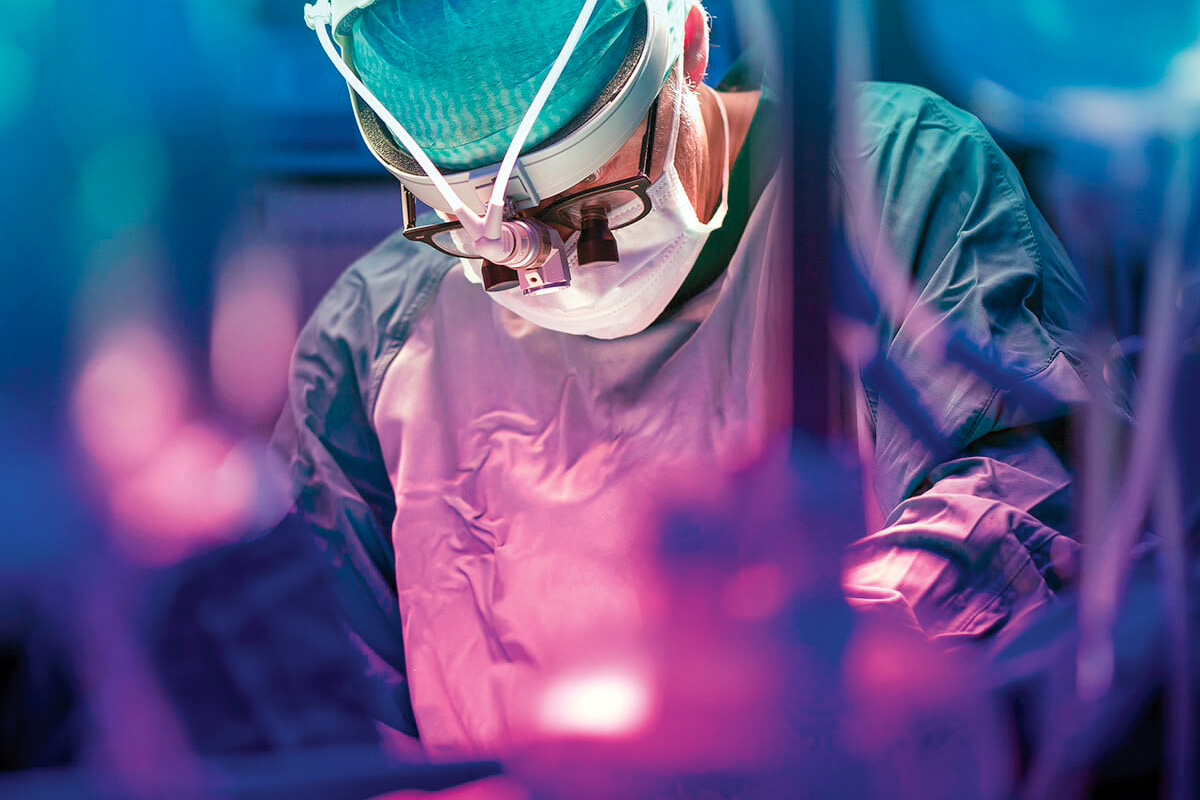
It’s a liquid medication that a patient drinks about three hours before surgery. It functions as a dye that casts a fluorescent pink glow around the patient’s brain tumor, sharply contrasting it from adjacent healthy brain cells. Surgeons use a special fluorescent light to help identify the contours of the tumor, allowing it to be removed completely and with greater accuracy and safety. This gives the patient a better chance at survival.
Gleolan is being used at major hospitals scattered around Florida that do neurosurgery, and now it has come to Ocala. Neurosurgeons at HCA Florida Ocala Hospital and HCA Florida West Marion Hospital in Ocala recently started using it in brain surgeries.
“The new imaging dye increases our ability to remove as much of the tumor as possible because it shows cells that are hypercellular, which suggest tumor, that do not even light up on an MRI with contrast before surgery,” says Dr. Shawn Rai, an Ocala neurosurgeon.
The U.S. Food and Drug Administration has approved Gleolan for use in patients with malignant gliomas, a particularly aggressive form of brain cancer. A glioma is a type of tumor that originates in the glial cells that surround neurons in the brain and help them function. Gliomas can be difficult to treat because they are infiltrating tumors, growing within and through normal brain tissue, and their borders can be difficult to distinguish. A brain surgeon’s goal is to remove as much of the tumor as possible without harming areas of the brain that control critical functions like speech or balance. It gets tricky, to say the least.
“The increased ability to remove more of the tumor for glioblastoma patients significantly increases life expectancy and overall survival in these patients with this aggressive brain cancer,” Rai says.
According to the National Institutes of Health, 85,000 Americans are diagnosed with a brain tumor every year, and 29% of those cases are malignant. Gliomas are responsible for up to 85% of those malignant brain tumors diagnosed in adults.
“We are grateful for the opportunity to use this innovative new medication to help our patients diagnosed with malignant brain tumors,” says Alan Keesee, CEO of HCA Florida Ocala Hospital. In addition to brain tumors, Gleolan is currently being studied for its potential use in isolating and identifying ovarian cancers, according to the National Cancer Institute.