











Lung cancer and breast cancer and prostate cancer get loads of attention and publicity, but you hardly ever hear about pancreatic cancer. However, the fact is that pancreatic cancer is the third most common cause of cancer deaths in the U.S., according to the American Cancer Society.
The pancreas, one of those organs people rarely think about, is a large gland located behind your stomach. It plays a role in digestion and regulating hormones and blood sugar. Pancreatic cancer is deadly — and stealthy. It’s deadly because it sneaks up on people.
“One of the major problems in diagnosing pancreatic cancer is that it is not diagnosed at an early stage,” says Dr. Shyam Varadarajulu, gastroenterologist and president of the Orlando Health Digestive Health Institute.
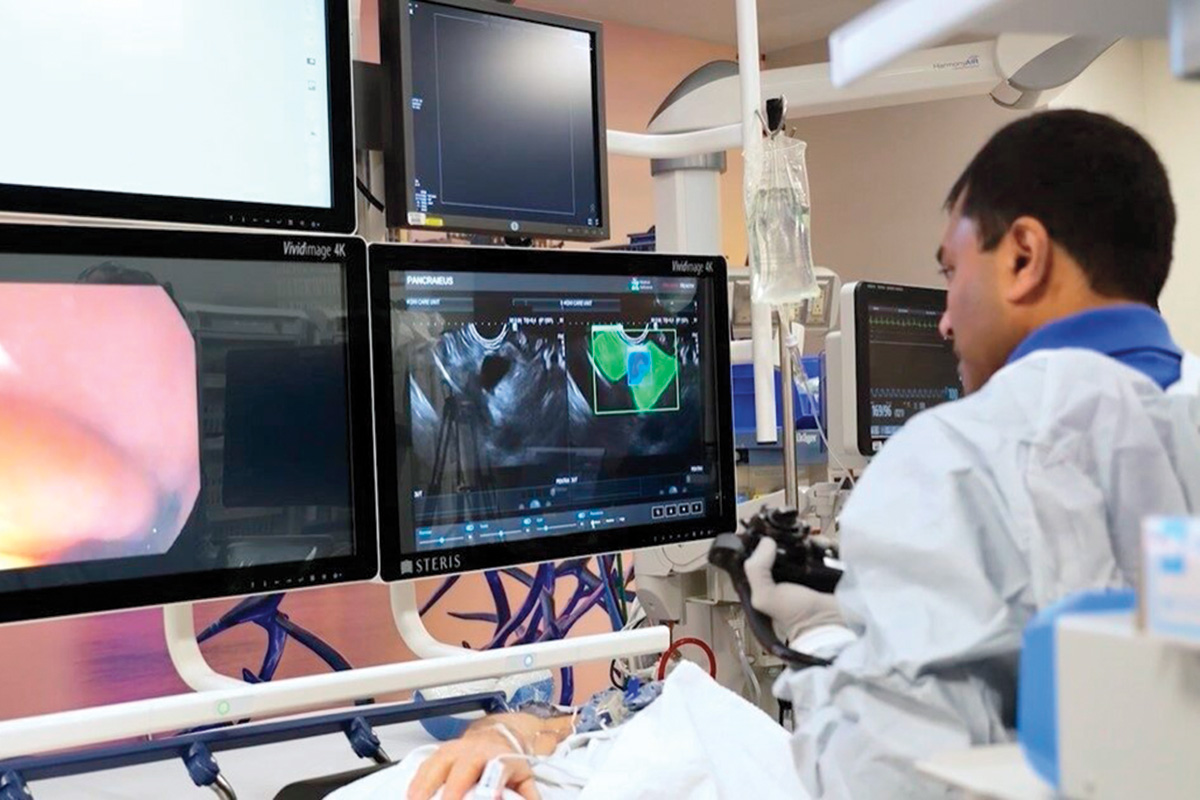
That’s why he’s now pioneering AI technology for the early diagnosis of pancreatic cancer. He’s developing AI endoscopic ultrasound technology to help doctors detect cancer earlier by spotting tiny tumors in the pancreas. He’s currently leading this research through a clinical study in collaboration with experts in Europe.
“Artificial intelligence could help doctors find challenging tumors earlier, which could lead to a life-saving treatment plan for patients,” Varadarajulu says.
Located in downtown Orlando, the Digestive Health Institute recently expanded, bolstering its research capabilities. That includes AI tools that improve diagnosis, treatment and outcomes for diseases such as pancreatic cancer and inflammatory bowel disease (IBD).
The expansion brings two additional interventional endoscopy procedure rooms that will include “shockwave lithotripsy” for treating pancreatic stones — the first time this is being done in Central Florida. This is a procedure that generates high-energy shock waves that are directed at kidney stones and pancreatic stones, breaking them into smaller fragments that can be passed through the urinary and digestive tracts.
The expanded Digestive Health Institute also includes a cutting-edge Motility Center, Medical Pancreatology Clinic and the recruitment of two additional transplant hepatologists to Central Florida. (Hepatologists specialize in diseases of the liver.) The Motility Center includes a motility clinic and state-of-the-art motility lab, which provide comprehensive care for patients with both upper and lower gastrointestinal motility disorders. A motility disorder means your esophagus or intestines aren’t moving food or waste through your body the way they should.
The Digestive Health Institute also recently opened branch offices in the Tampa Bay area.
When it comes to pancreatic cancer, Leila Braswell of Orlando knows the impact of early detection all too well. Varadarajulu used AI to locate a mass on her pancreas last year. That mass turned out to be pancreatic cancer. Now, one year after detection and chemotherapy, Braswell is cancer-free.
Pancreatic cancer often causes symptoms that aren’t specific to pancreatic cancer, which can make it challenging to diagnose early. Some common signs include abdominal pain, nausea, loss of appetite, indigestion, weight loss, fever and fatigue.
“Listen to your body. Start looking,” Braswell says. “It’s what saved my life.”