










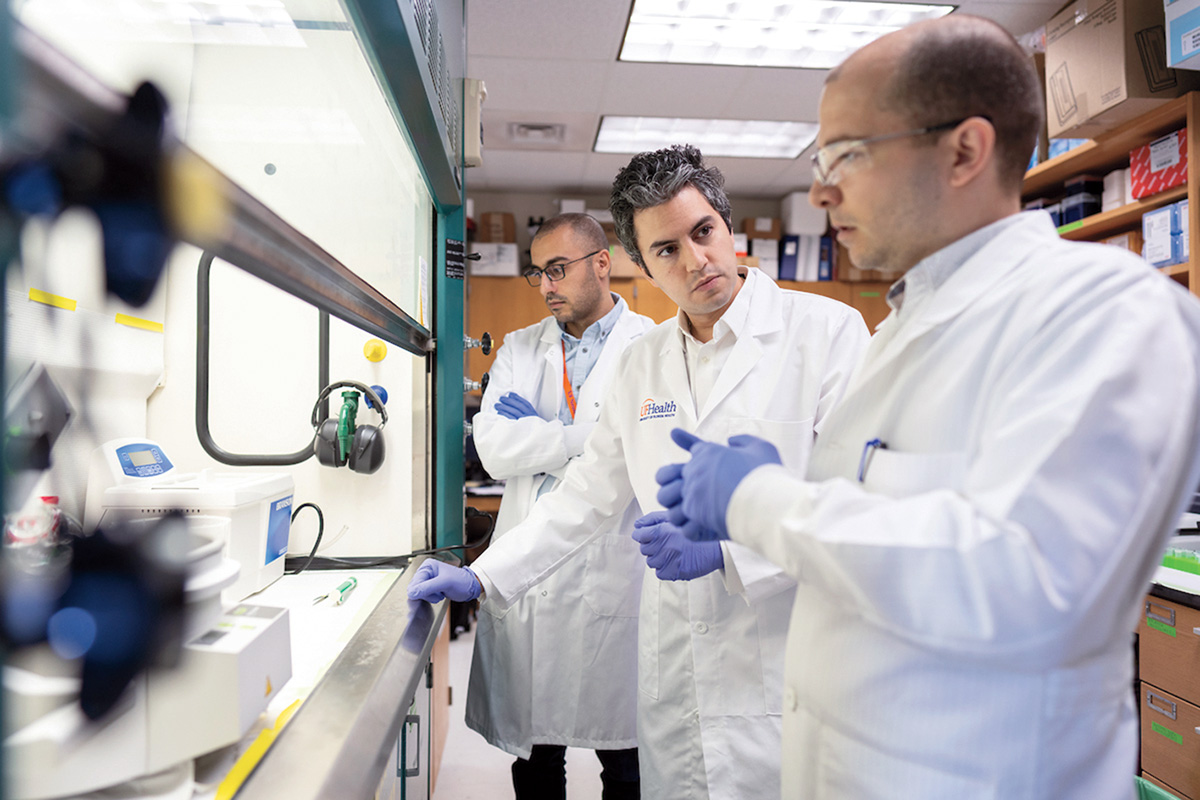
As doctors and scientists continue to search for more effective cancer treatments, researchers at the University of Florida and partner institutions may have achieved a breakthrough.
Researchers from UF and the University of Texas MD Anderson Cancer Center in Houston found a significantly longer survival rate for advanced lung cancer and melanoma patients who received a COVID-19 messenger RNA (mRNA) vaccine within 100 days of beginning immunotherapy.
Their research, presented in October at the European Society for Medical Oncology Congress in Berlin, builds on a previously published study from July that found an experimental mRNA vaccine (not specifically for COVID or any other type of virus) boosted the tumor-fighting effects of immunotherapy in a mouse-model study. Those results were published in the journal Nature Biomedical Engineering.
If the results continue to be successful, the use of these vaccines could revolutionize oncologic care, says Dr. Elias Sayour, the Stop Children’s Cancer/Bonnie R. Freeman Professor for Pediatric Oncology Research in the UF departments of neurosurgery and pediatrics and a research team leader.
“We could design an even better nonspecific vaccine to mobilize and reset the immune response in a way that could essentially be a universal, off-the-shelf cancer vaccine for all cancer patients,” he says.
The study findings presented in October were based on an analysis of patient records from MD Anderson from 180 advanced (stage 3 or 4) lung cancer patients who received a COVID vaccine within 100 days before or after they started immunotherapy. An additional 704 patients did not receive the vaccine.
Receiving the vaccine increased the median survival from 20.6 months to 37.3 months.
Another 43 patients with metastatic melanoma (the deadliest form of skin cancer) received the vaccine within the same timeframe while 167 patients did not. The median survival rate jumped from 26.7 months to 30 to 40 months.
Many times, patients with advanced cancers do not respond well to treatments and have already tried options such as radiation, surgery and chemotherapy. Patients were receiving immune checkpoint inhibitors, a type of cancer treatment also called immunotherapy.
Sayour says that the vaccine and the use of the checkpoint inhibitor drugs appears to “wake up the immune response” and helps to keep anti-cancer immune responses in the “on” position.
Sayour and fellow researchers plan to soon start a randomized Phase 3 trial called UNIFIER for patients with lung cancer randomized to receive COVID mRNA vaccines.
Although Sayour believes that the universal vaccine could assist with other types of cancer as well, he says this would need to be tested further.