












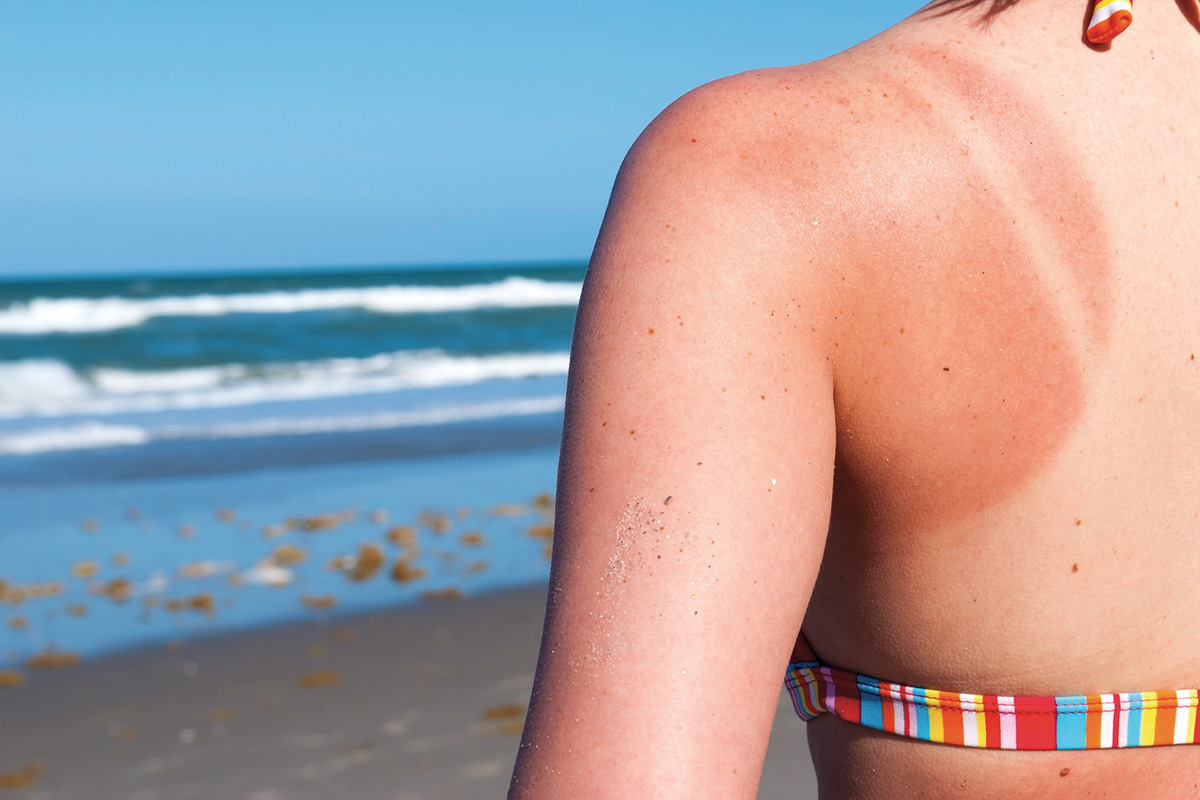
FLORIDA TREND: It seems people are much more conscious of the danger of the sun than decades ago when teens and young people used suntan oil to get darker. Is there any sign that awareness has resulted in less cancer?
Answer: Awareness has definitely increased, but there has not been a decrease in the incidence of skin cancer. The incidence of melanoma has actually increased. The reason is that these are complex multifactorial issues. For example, people are more aware, so they have skin checks more often. That will result in more skin cancers being found, resulting in an increase in the reported incidence. Another variable is that people use sunscreen, so they think they are protected and therefore may stay out in the sun longer. The average sunscreen user is not applying enough sunscreen, not applying it to all exposed areas (e.g., the ears) and not reapplying. As a result, they are not fully protected and are often still too exposed to the sun without realizing it.
Q & A
DR. JULIAN MACKAY-WIGGAN,
CLINICAL PROFESSOR, DEPARTMENT OF DERMATOLOGY, JULIA KOCH FAMILY AMBULATORY CARE CENTER— WEST PALM BEACH
FT: What are some sunscreen myths?
A: There are several:
Applying sunscreen in the morning is sufficient for protection throughout the day.
You are always fully protected from the sun when wearing sunscreen.
An SPF higher than 30 provides significantly more sun protection than SPF 30.
FT: Is the annual physical at a primary care provider sufficient for skin checks?
A: No. Specialists including dermatologists, cardiologists, GI, hematololgy/oncology, etc. have specialized training that allows for more accurate diagnosis and treatment of disorders in their areas of specialty.
FT: What are your personal favorite brands of sun-protective clothing? And suntan lotion?
A: There are many different effective brands. There is no one best sunscreen. Generally, the mineral-based sunscreens (zinc oxide and titanium dioxide) are more effective. They are immediately active once applied (unlike chemical sunscreens), they protect against a broader range of ultraviolet light, they are less likely to cause an allergic contact dermatitis and they are considered safer for coral reefs.
FT: In a dermatology practice, is the most common reason for a visit a screening for cancer or it it some other issue, such as cosmetic or psoriasis?
A: In general, the most common type of visit is a full skin check. However, there are many other common issues such as acne, eczema, etc. In many cases, patients often come in with multiple concerns in addition to wanting a full skin check. This is not optimal if the patient wishes to have a thorough full body skin exam. Of course, the type of care a patient will seek from any given dermatologist will depend on the perceived expertise of the dermatologist or dermatologist office. Cosmetic patients will gravitate to more cosmetically oriented practices, etc.
FT: There are so many psoriasis commercials on TV. Is it that big an issue or is it that competitive a market for pharma?
A: Psoriasis is a very common disorder. For decades there were limited treatment options — topical steroids, light therapy, tar treatment, methotrexate. The advent of biologic medications to more effectively treat psoriasis was of great benefit to patients with moderate to severe psoriasis. The research that led to the development of biologics has resulted in ongoing refinements to these medications. Undoubtably, a successful new medication encourages pharmaceutical companies to continue pursuing similar avenues of investigation. This may result in multiple similar drugs being released by different pharmaceutical companies.
FT: One last sun question: We’re in the Sunshine State. Do we have more skin cancer cases than states with longer winters and lots of cloudy days like, say, New York?
A: To answer that factually, we would need to mine databases regarding cancer incidence by state. With that said, the difference in incidence may not be as great as one might assume. There are many variables that affect skin cancer incidence. For example, people in states with less sun may try to overcompensate when they are on vacation, during their summer session or on occasions when they have more access to the sun. This can result in more severe or blistering sunburns, which may in some cases result in a higher risk for future skin cancer as compared to ongoing lower grade sun exposure. Lastly, some of the worst sunburns can occur on cloudy days or at higher elevations that may not seem especially sunny. In addition, in some states with less sun exposure, use of tanning beds is rampant compared to Florida. There is a statistically higher risk of melanoma with even one exposure to tanning beds.